
The Pentagon and defense contractor Lockheed Martin announced a framework agreement on October 22 to procure F-35 Joint Strike Fighters for the next decade. This potential deal, characterized by the Pentagon as a significant and unprecedented step, hinges entirely on Congress granting the U.S. military the necessary legal authority to enter into such a long-term, multiyear procurement contract.
Under the terms outlined in the preliminary agreement, Lockheed Martin would commit to producing 156 of the advanced fifth-generation fighter jets annually. This production volume would serve both the U.S. armed forces and various international customers across ten production lots, specifically Lots 21 through 30. Over this decade-long period, encompassing the agreement, the U.S. military is slated to purchase a minimum of 850 aircraft out of the total 1,560 jets produced. The framework also encompasses the initial acquisition of spare parts, essential modification kits, and support for the ongoing sustainment of the global F-35 fleet, as detailed in separate statements released by the Pentagon and Lockheed Martin.
Crucially, many specific details of the agreement remain to be finalized. Key elements such as precise pricing structures, definitive production schedules, and the exact distribution of F-35 variants among the U.S. Air Force, Navy, and Marine Corps have yet to be determined and will be subject to subsequent negotiations and formal contracting.
Michael Duffey, the Undersecretary of Defense for Acquisition and Sustainment, articulated the Pentagon’s perspective on the framework. In the official statement, he highlighted the transformative nature of the agreement, stating, “We have fundamentally changed how we stabilize the American defense industrial base to produce at speed and scale. This agreement with Lockheed Martin proves it. By aligning financial incentives with actual performance, we are ensuring our warfighters are equipped with the lethal capabilities they need to fight and win.” This sentiment underscores the Pentagon’s objective of fostering a more predictable and robust industrial base for critical defense systems.
Lockheed Martin, for its part, has committed to a substantial financial contribution, pledging to invest a minimum of $7 billion of its own capital into projects directly supporting the F-35 program. Jim Taiclet, President and CEO of Lockheed Martin, elaborated on the company’s view in their statement: “This multiyear framework strengthens the way we can plan and invest in the F-35 enterprise. With the greater certainty that comes from the U.S. government’s transformative approach to F-35 production and sustainment, we can make the upfront investments needed to expand capacity, improve efficiency, and build a more resilient supply chain.”
While the Department of Defense emphasized the agreement’s potential to establish “a stable, long-term procurement signal to modernize and expand” the F-35 program, it simultaneously underscored a critical caveat: the actual implementation of this agreement “remains subject to congressional authorization and appropriations.” This highlights that the framework is a preliminary step, dependent on legislative action.
Currently, Congress is evaluating proposals to grant the Pentagon the authority to enter into multiyear procurement contracts for major defense programs, including the F-35 and F-15EX fighters, as part of ongoing legislative efforts related to annual defense policy bills. The authority for multiyear procurement allows the government to commit to purchasing a certain number of units over several years, typically leading to more favorable pricing due to increased production stability for manufacturers. However, this specific legislative authority has not yet been finalized. Furthermore, the necessary annual appropriations — the funding itself — must also be approved by Congress for each year of the proposed agreement.
Lockheed Martin confirmed that if Congress successfully grants the multiyear procurement authority and allocates the required funding in the coming months, the company will then collaborate with the F-35 Joint Program Office. This collaboration would focus on finalizing all contract terms, establishing definitive pricing, and setting detailed production schedules, ultimately leading to a formal contract award.
The company projected that having predictable, multiyear procurement plans for the F-35 program could generate billions of dollars in savings. These savings would primarily stem from long-term pricing agreements and volume discounts achieved through larger, more consistent orders. Moreover, the proposed agreement is intended to integrate data from diverse sources into comprehensive analytics, which would provide enhanced visibility into parts inventory and readiness metrics. This data-driven approach aims to facilitate more transparent and informed decision-making across the program.
A key benefit cited by Lockheed Martin is the ability to forge long-term contracts with its extensive network of suppliers. This would enable the bulk purchase of raw materials and critical components, a shift from the current practice of annual contracting. Lockheed predicted that this change would significantly improve F-35 mission-capable rates by enhancing supply chain stability, which has historically been strained by annual contracting cycles. Approximately 60 percent of an F-35’s content originates from its suppliers, including major contributors like Northrop Grumman, which produces the center fuselage, and BAE Systems, responsible for the aft fuselage sections.
During an earnings call with investors on October 22, Mr. Taiclet emphasized that one of Lockheed’s most substantial costs arises from suppliers delivering components late or with quality deficiencies. He expressed confidence that this new agreement structure would help mitigate these issues by providing suppliers with greater production stability. Taiclet also informed investors that Lockheed and its suppliers would operate under a fixed-price escalation contract model. This type of contract sets prices that can increase under predetermined economic conditions, offering a balance of cost control and flexibility for inflationary pressures.
“We’ll all collectively—if we do well and perform well, and those investments pay off that we make—we will get to retain those profits under the fixed-price-with-escalator concept,” Taiclet explained. He noted that previously, any internal investments leading to improvements or cost reductions would often result in price and operating profit adjustments benefiting the government. This new model is expected to create a healthier and more predictable production system for the industry, even if the annual production rate remains at 156 aircraft.
Additionally, combining the procurement of aircraft production with the purchase of spare parts and modification kits within a single, overarching contract is anticipated to yield further volume savings and increase cost predictability for the program.
OJ Sanchez, President of Lockheed Martin Aeronautics, reinforced these benefits in a company statement: “Our new multiyear framework gives suppliers stability to plan for the future and invest with confidence, improving readiness across the F-35 fleet. This, in addition to the investments Lockheed Martin is making to the global spares pool, will directly translate into higher mission-capable rates and a more resilient supply chain—critical capabilities the warfighter needs to meet today’s mission and prepare for tomorrow’s threats.”
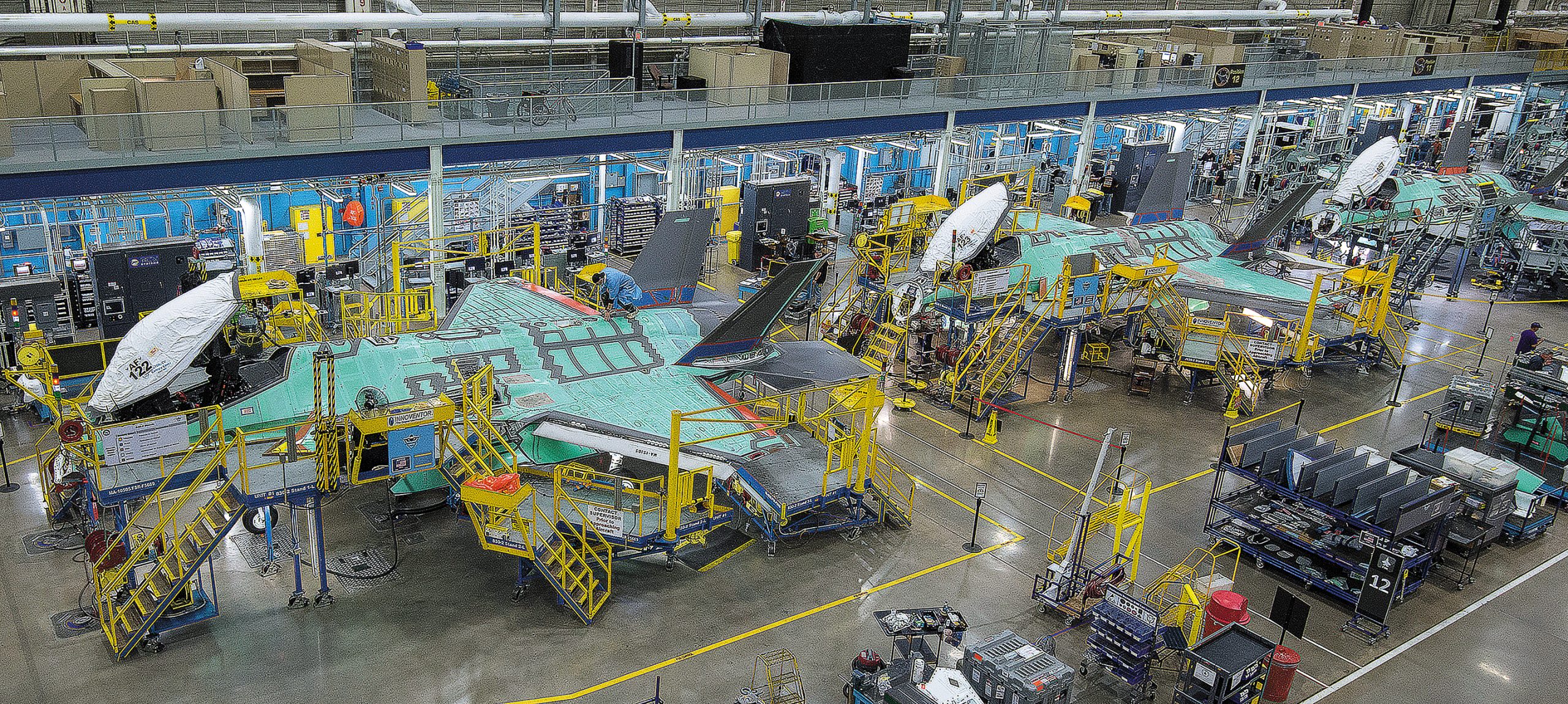
During the investor call, Mr. Taiclet reiterated Lockheed’s interest, first articulated in April 2025 (note: original source typo for year likely, contextually refers to a previous statement), in integrating sixth-generation technologies into the F-35 platform. He had previously referred to this concept as creating a “Ferrari” F-35, suggesting it could achieve approximately 80 percent of the capabilities of a purpose-built sixth-generation aircraft at half the cost. Lockheed’s primary F-35 manufacturing facility is located in Fort Worth, Texas.
Why This Matters
The framework agreement between the Pentagon and Lockheed Martin for the F-35 Joint Strike Fighter program represents a significant development with wide-ranging implications for national security, defense economics, and industrial strategy. The F-35 is not merely another fighter jet; it is the cornerstone of air power for the United States and many of its allies, designed for air superiority, ground attack, and reconnaissance missions in contested environments. This proposed long-term procurement strategy, if fully enacted, could redefine how major defense programs are managed.
For the **United States military and its taxpayers**, a multiyear procurement contract offers the potential for substantial cost savings. By committing to purchases over a decade, the government aims to leverage economies of scale and volume discounts, potentially saving billions of dollars compared to annual, fragmented contracts. This predictability also enables more stable long-term budgeting for defense planners, improving resource allocation for training, sustainment, and future modernization efforts. A more robust and resilient supply chain, promised by the agreement, directly translates to higher mission-capable rates for the F-35 fleet, ensuring that these critical assets are available when needed for defense and deterrence around the globe.
For **Lockheed Martin and the broader defense industrial base**, this framework provides unprecedented stability. A 10-year procurement signal allows companies to make strategic, long-term investments in manufacturing capacity, technological upgrades, and workforce development without the uncertainty of annual contract renewals. This stability can incentivize suppliers, many of whom are smaller businesses, to invest in their own capabilities, improve quality control, and reduce lead times for critical components. The fixed-price escalation model, while accounting for economic fluctuations, also offers a clearer path for companies to retain profits from efficiency improvements, fostering innovation and performance. This stability is crucial for maintaining a competitive and capable defense sector, essential for national security.
For **U.S. allies and international partners** who operate the F-35, this agreement signals a stable future for the program. Predictable production volumes could lead to more reliable delivery schedules and potentially lower unit costs for partner nations, strengthening global interoperability and collective defense capabilities. The F-35 is a key component of numerous allied air forces, and a healthy, efficient production line benefits all participants.
The **Congressional role** is paramount. Granting multiyear procurement authority requires careful legislative consideration, as it involves committing future appropriations and limits immediate flexibility in defense spending. Lawmakers must weigh the potential for cost savings and industrial stability against the need for oversight and adaptability in a rapidly changing geopolitical landscape. The outcome of these legislative decisions will set a precedent for how future large-scale defense programs are structured and funded.
Finally, the discussion about integrating **sixth-generation technologies into the F-35** highlights an adaptive approach to future warfare. Instead of solely relying on entirely new, costly platforms, evolving existing advanced systems like the F-35 could offer a more rapid and cost-effective pathway to maintain technological superiority against emerging threats. This strategy underscores a continuous need for innovation within established defense programs, ensuring that the F-35 remains relevant and effective for decades to come in a complex and challenging global security environment.