
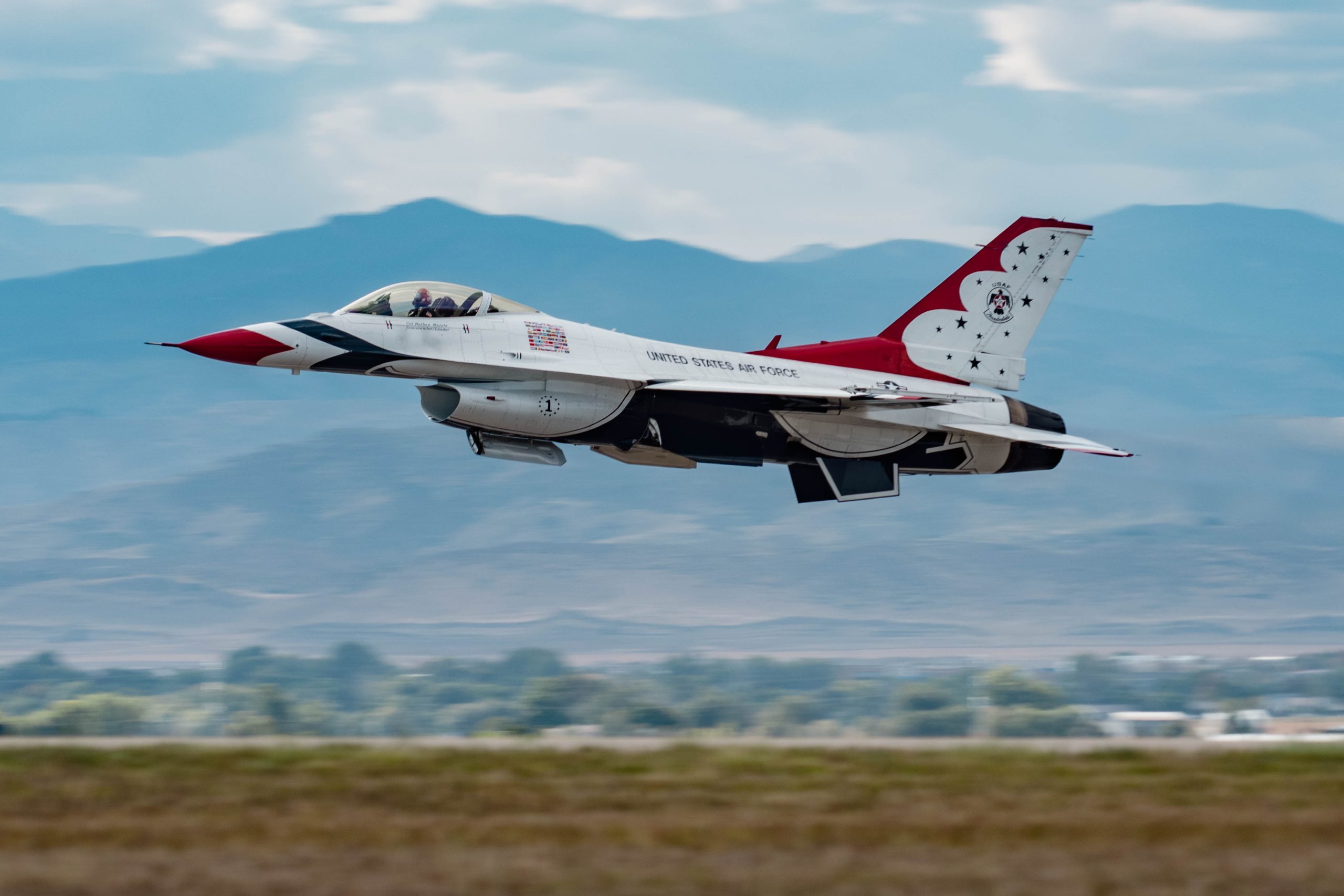
Two U.S. Air Force F-16 fighter jets, including one from the prestigious Thunderbirds demonstration team, crashed in separate incidents due to an identical, internal engine flaw that maintainers were unable to detect through standard inspections, according to recent official reports. In both cases, the pilots successfully ejected with minor injuries, while the aircraft were deemed total losses.
The most recent incident involved a Thunderbird F-16 that crashed on December 3, 2025, in the California desert. The investigation report for this mishap was released on September 21, 2026. This followed a similar crash on April 30, 2024, near Holloman Air Force Base, New Mexico, the findings of which were published in February 2025. Separate Air Force Accident Investigation Boards (AIBs) conducted thorough reviews and arrived at remarkably similar conclusions regarding the root cause.
The loss of the Thunderbird F-16 alone was valued at $33.5 million, highlighting the significant financial impact of these mechanical failures.
Both accidents were attributed to misaligned variable vanes within the high-pressure compressor of the Pratt & Whitney F100-PW-220 engine. Investigators determined that one or more of these vanes had turned from their proper position, leading to “abnormal aerodynamic forces” and “irregular wake patterns” as air passed through the engine. This created excessive stress on the compressor blades, ultimately causing them to fracture or crack and resulting in a “catastrophic” engine failure.
The Thunderbird investigation report referenced three known instances of compressor blades fracturing due to turned vanes, although it only explicitly detailed the Holloman and Thunderbird crashes. Publicly released AIB reports from the last decade do not contain details of a third specific instance involving fractured compressor blades in the F100-PW-220 engine.
A critical factor in both the Holloman and Thunderbird cases was the inability of field-level maintainers to visually inspect the misaligned vanes. While certain stages of the engine’s compressor can be examined using a borescope, the fifth stage of the engine core in the F100-PW-220 engine is not accessible for such inspection without a complete disassembly of the engine core.
Notably, both F-16 engines involved in these crashes had experienced Foreign Object Debris (FOD) events in the years prior to their respective failures. The Thunderbird jet’s engine had a FOD event in October 2021, and the Holloman F-16’s engine experienced one in August 2022. In both instances, maintainers identified damage to the early stages of the inlet fan. However, no issues were detected in the fourth, seventh, or eighth stages, which were inspectable via borescope.
Current Air Force technical orders for the F-16 do not mandate the removal and disassembly of the engine core to inspect the inaccessible stages after a FOD event, provided no damage is found in the surrounding, inspectable stages. The AIBs noted that it remains unclear whether these FOD events directly caused the vanes to turn, preventing a definitive link.
The accident investigation board for the Holloman F-16 crash indicated that an analysis by Pratt & Whitney suggested the FOD event as the probable cause of the vane turning. However, expert opinions diverged on whether damage could occur to a later engine stage without preceding damage being observed in earlier, inspectable stages, leading the board to deem the cause inconclusive.
Similarly, the board investigating the Thunderbird crash stated it was “impossible to conclusively determine” the exact cause of the turned vanes. Nonetheless, it highlighted that the inability to inspect the fifth and sixth stages following a FOD event “substantially contributed to the mishap.”
The report further elaborated, stating, “The post-FOD event guidance contains an inherent inability to inspect these specific sections of the engine core. Additionally, the core of the engine is only inspected during scheduled maintenance when a core component reaches its overhaul threshold, leaving time for potential damage to progress undetected.”
As of the reports’ releases, a spokesperson for the Air Force Life Cycle Management Center (AFLCMC) had not immediately commented on whether technical guidance might be updated to require more comprehensive inspections after FOD events or to implement other preventative measures. In February 2025, following the release of the Holloman crash report, the spokesperson had stated that the AFLCMC’s F-16 program office was “looking at this issue and is working closely with the Air Force Life Cycle Management Center’s Propulsion Directorate, the engineering authority for the engine, to correct any deficiencies.”
‘Ejecting Was Ultimately the Only Option’
Beyond the engine’s mechanical failure, the Thunderbird report also commended the pilot’s actions in attempting to save the aircraft. An experienced instructor pilot with nearly 1,400 flight hours, the pilot was engaged in a routine training flight, performing maneuvers such as loops and rolls from the Thunderbirds’ signature “delta formation.”
During the flight, the pilot experienced an engine stall, describing the sensation as if the “jet just … stopped midair.” In a sequence of desperate recovery attempts, the pilot initially traded speed for altitude, then engaged a secondary engine control, which proved unsuccessful. An engine restart was also attempted, but the pilot reported hearing “grinding” sounds. More than four minutes after the initial engine stall, with no viable alternatives, the pilot made the decision to eject.
The Accident Investigation Board ultimately concluded that “ejecting was ultimately the only option which provided a favorable outcome,” underscoring the pilot’s sound judgment under duress.
The ejection process itself was not without an issue: the F-16’s ACES II ejection seat is designed with two hoses that transfer hot gas from the ejection initiators to the sequence valves, which are meant to disconnect automatically. In the Thunderbird F-16, one of these hoses failed to disconnect properly and instead ripped away due to the forceful ejection.
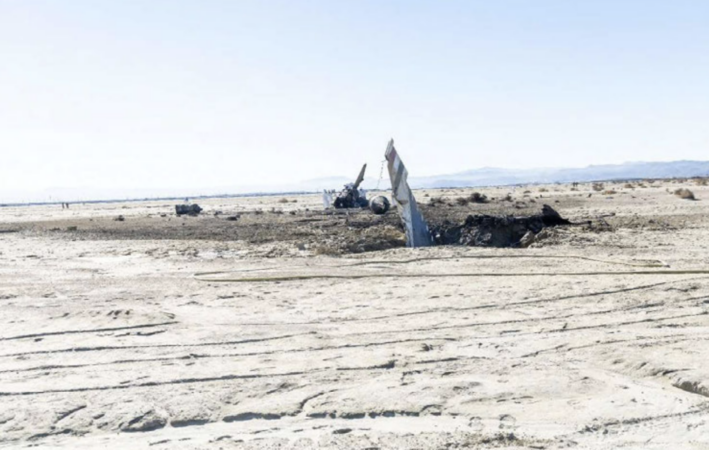
The aircraft crashed near Trone, California, a small desert community close to Death Valley, scattering debris up to 750 feet upon impact. A civilian witness who observed the crash was the first to reach the pilot. Navy search and rescue teams responded within minutes, transporting the pilot for medical evaluation. The pilot was released from medical care on the same day.
Why This Matters
These two F-16 crashes, stemming from an identical and undetectable engine flaw, highlight critical issues for the U.S. Air Force and global military aviation.
**Pilot Safety and Readiness:** While both pilots survived, the recurring nature of this specific engine failure poses a direct threat to the lives of highly trained personnel. The F-16 remains a workhorse aircraft for the U.S. and numerous allied nations, making the reliability of its propulsion system paramount for both combat readiness and routine training. Any systemic flaw that cannot be detected through current maintenance protocols represents a significant vulnerability.
**Financial and Resource Implications:** The loss of two F-16s, valued at tens of millions of dollars each, represents a substantial financial burden on taxpayers. Beyond the direct cost of the aircraft, investigations, potential redesigns, and fleet-wide inspections or overhauls of affected engines would incur further significant expenses. This impacts defense budgets and the allocation of resources.
**Maintenance Protocols and Engineering Challenges:** The core issue points to a gap in existing maintenance procedures. The inability to inspect critical internal engine components without full disassembly, especially after events like FOD that could induce unseen damage, suggests a need for re-evaluation of technical orders and potentially the development of new diagnostic technologies. This challenge extends to engine manufacturers like Pratt & Whitney, who may need to explore design modifications or advanced non-destructive inspection methods.
**Fleet Management and Obsolescence:** The F-16 is an aging platform, with some airframes having been in service for decades. As aircraft age, undetected material fatigue or subtle design vulnerabilities can become more pronounced. These incidents underscore the broader challenges of maintaining and extending the life of legacy fleets while ensuring safety and performance. Solutions found for the F-16 could inform maintenance strategies for other aging military aircraft.
**Confidence and Trust:** Such incidents can erode confidence in military equipment among service members, political leaders, and the public. Transparency in accident investigations and proactive steps to address identified deficiencies are crucial for maintaining trust in defense capabilities and the safety of those who operate them.
Ultimately, these F-16 crashes serve as a stark reminder of the continuous need for rigorous engineering, evolving maintenance practices, and robust safety protocols in modern military aviation to protect personnel and preserve critical assets. The Air Force’s ongoing efforts to address these deficiencies will be closely watched by domestic and international observers.