
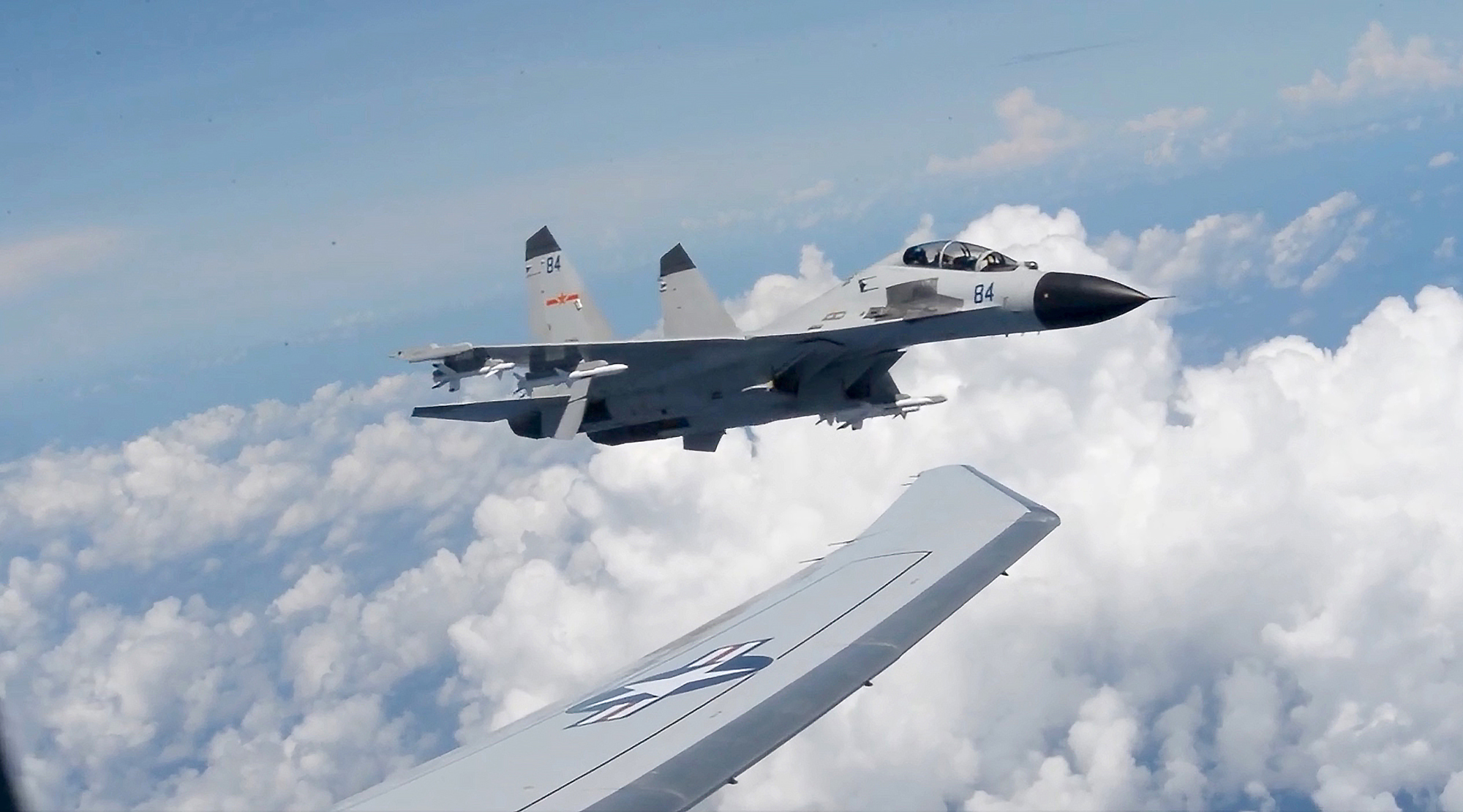
The United States Air Force is initiating a significant reduction of civilian positions at its leading research institute dedicated to Chinese military aviation, a move that has prompted concern among defense experts. These experts contend that the decision risks diminishing the service’s focus on what the Pentagon identifies as its most substantial long-term strategic competitor.
Brendan Mulvaney, Director of the China Aerospace Studies Institute (CASI), announced the development in a message dated September 22, stating, “We are disappointed to have to announce that Air University has decided to close the China Aerospace Studies Institute.”
CASI, primarily staffed by civilian scholars and analysts operating under Air University, a component of Air Education and Training Command, has for years been a crucial resource. Its mission has encompassed preparing comprehensive reports on the Chinese military, translating key Chinese military doctrine documents, and contributing to what is widely recognized as the largest open-source repository of information concerning the People’s Liberation Army’s capabilities in military aviation, space, cyber warfare, and missile forces.
An Air Force spokesperson, however, contradicted the notion of a complete closure when speaking to Air & Space Forces Magazine. The spokesperson asserted that the institute “is not closing” and affirmed that its core mission of analyzing developments in Chinese airpower would persist. Nevertheless, the spokesperson acknowledged that all civilian positions within CASI have been designated for downsizing. The statement did not provide a detailed explanation of how the institute would maintain its operational capacity and expertise once the personnel in these civilian roles transition to new employment.
“Air University continues to evaluate the alignment of the CASI mission to best support DAF priorities,” the spokesperson elaborated. “The mission will continue using assigned military personnel and civilian personnel to execute priorities outlined in their charter.”
Mulvaney’s internal update offered further clarification, indicating that as of October 1, the commencement of the new fiscal year, all civilian positions at CASI would be considered “unfunded.” While the positions formally still exist at present, their funding has been withdrawn. Mulvaney noted, “CASI has commitments that it has made and will honor, to the best of our ability, through at least March of 2027.”
He further expressed the anticipated outcome: “Unless we find a new home within the Department for the whole CASI team, I expect people to find other jobs and move on. Once all of the civilians eventually depart, CASI will close.”
The Air Force spokesperson did not provide specific details regarding how CASI might be restructured, nor how its accumulated expertise and established workflow would be preserved amidst the civilian staff reductions.
The announcement of these changes occurred shortly before a high-profile meeting between Chinese President Xi Jinping and U.S. President Joe Biden in November 2023, though sources familiar with the matter indicate that CASI’s operational status had been under review for several months prior to this public disclosure.
In contrast to the Air Force’s actions, no similar changes have been announced for analogous institutions within other branches of the U.S. military. The U.S. Naval War College’s China Maritime Studies Institute and the U.S. Army War College’s China Landpower Studies Center are slated to continue their respective research endeavors without similar civilian staff reductions.
Defense experts emphasize that the open-source nature of CASI’s research has been instrumental in enabling both the U.S. Congress and the broader public to gain a more comprehensive understanding of the Air Force’s primary long-term strategic competitor. The insights provided by CASI’s work have often informed policy discussions and strategic planning.
China’s rapid military advancements have significantly influenced much of the Air Force’s strategic thinking regarding its future force design and have served as a key justification for the development and acquisition of new platforms. These include the B-21 Raider stealth bomber, the F-47 Next-Generation Air Dominance fighter, and Collaborative Combat Aircraft. Service leaders have consistently cited the imperative to counter China’s growing capabilities in the Indo-Pacific region as a primary driver for these substantial investments.
Despite the Air Force’s stated strategic focus on China, the future of CASI appears to have been affected by a broader Department of the Air Force initiative to reduce civilian positions across various commands. Individuals familiar with the situation indicate that Air University is re-prioritizing funding towards more traditional civilian teaching roles essential for professional military education, rather than specialized research institutes like CASI.
One prominent China expert suggested that this strategic shift could hinder the Air Force’s ability to effectively communicate and justify its funding requirements to legislative bodies on Capitol Hill.
“I think the Air Force probably undervalues open-source intelligence and underappreciates this type of scholarly research on the People’s Liberation Army,” remarked J. Michael Dahm, a senior fellow for aerospace and China studies at AFA’s Mitchell Institute for Aerospace Studies. “Leaders seem to think classified information is somehow more valid than something gleaned from open-source. But the focus on the classified record undermines the Air Force’s ability to tell its story, especially on Capitol Hill and to the American people.”
Dahm further elaborated on the utility of such research: “Having unclassified, open-source intelligence about the Air Force’s pacing challenge helps tell that story. Getting rid of CASI would be a self-inflicted wound that exacerbates a long-standing Air Force problem.”
Dahm, a former intelligence community professional who previously served as the Senior Naval Intelligence Officer for China at the Office of Naval Intelligence and as the assistant U.S. Naval Attaché in Beijing, highlighted that institutions like CASI have played a critical role in filling gaps within U.S. research into adversary militaries.
“You can make the argument that collecting and analyzing Chinese-language open-source information should be a mission for the U.S. intelligence community. But the IC is consumed with analyzing and processing a torrent of classified information,” Dahm explained. “The researchers at CASI are a force multiplier that provide the intelligence community with valuable context, often pointing them toward issues they might otherwise miss.”
He also noted China’s contrasting approach, emphasizing that the country has placed “a much greater emphasis on open-source intelligence than we do in the U.S.”
“China’s military has closed many of its gaps with the West by digesting and analyzing the volumes of open-source information we put out there,” Dahm stated. “They institutionalized open-source scientific and technical research in the 1950s, and they have continued to harvest the volumes of scientific journal articles, trade brochures, operator manuals, and anything else they can lay their hands on to develop countermeasures against our technology and fuel their own military development. They are also downloading and translating U.S. military doctrine, safety manuals, incident reports, and lessons learned to inform their tactics and procedures. Eliminating CASI would be divesting the Air Force of its only institutional counterweights to China’s open-source intelligence machine.”
Why This Matters
The potential curtailment or effective closure of the China Aerospace Studies Institute (CASI) carries significant implications for U.S. national security and strategic competition with China. As the Pentagon increasingly identifies China as its primary pacing challenge, the reduction of an institute dedicated to understanding Beijing’s aerospace and military developments could create a critical intelligence gap. CASI’s unique focus on open-source intelligence provides invaluable, unclassified insights that inform policymakers, Congress, and the public, complementing the classified work of intelligence agencies. This transparency is crucial for building public consensus and securing support for necessary defense investments. Furthermore, experts warn that eliminating such an institution could weaken the U.S. ability to counter China’s own sophisticated open-source intelligence gathering, potentially leading to a strategic disadvantage. The decision highlights an ongoing debate within the Department of Defense about the value of specialized civilian research and open-source intelligence in a rapidly evolving geopolitical landscape.