
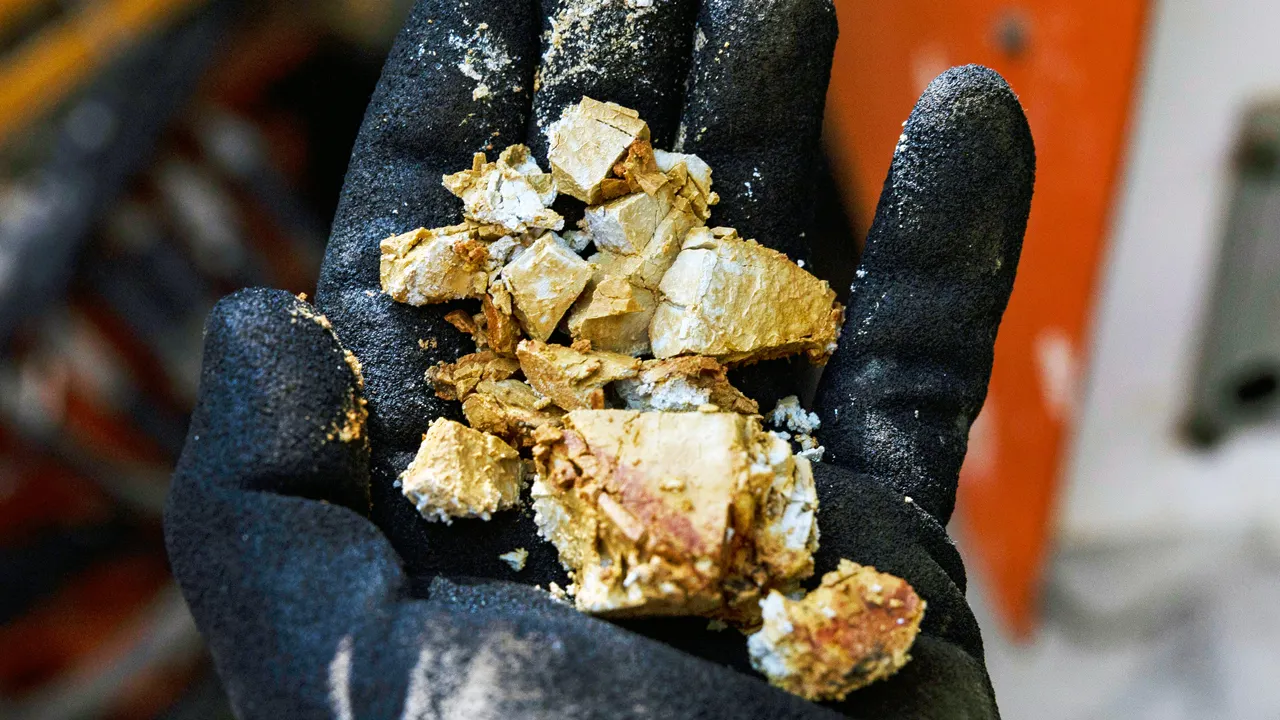
Pasqal CEO Wasiq Bokhari explains how quantum computing could improve rare-earth processing efficiency and help the U.S. and its allies strengthen critical mineral supply chains.
Key Takeaways
- Strategic Supply Chain Resilience:Quantum computing is emerging as a critical technological front in the West’s concerted efforts to de-risk essential supply chains, particularly rare earth elements, and reduce dependence on China. This initiative by Pasqal, USA Rare Earth, and Riven Systems targets a geopolitical vulnerability with a high-tech solution.
- Quantum’s Commercial Viability & Efficiency Gains:The partnership underscores the accelerating commercialization of quantum computing, moving beyond theoretical research into practical applications. By significantly improving rare-earth extraction and processing efficiency, quantum technology promises to unlock economic viability for previously marginal deposits, potentially reshaping the cost structure of critical minerals.
- Disruptive Innovation & Investment Horizon:Much like AI’s recent surge into mainstream consciousness, quantum computing is on the cusp of delivering tangible, disruptive impacts across industries, from materials science to defense. This marks a significant investment opportunity in foundational technologies poised to redefine industrial capabilities and national security postures.
In an increasingly complex geopolitical landscape, the race for control over critical mineral supply chains has intensified, making domestic resource independence a paramount strategic imperative. The United States and its allies, acutely aware of the vulnerabilities exposed by concentrated global supply, are now turning to cutting-edge technologies like quantum computing to forge new pathways to resilience. At the forefront of this technological offensive is Pasqal, a quantum computing firm, which is partnering with USA Rare Earth and Riven Systems to apply the nascent power of quantum mechanics to a decidedly real-world challenge: the efficient extraction and processing of rare earth elements.
Pasqal CEO Wasiq Bokhari articulated to FOX Business the core objective: to extract a greater yield of usable rare earth material from existing non-Chinese resources. This initiative directly addresses a significant market dislocation. China currently exercises near-monopolistic control over both the supply and processing of rare earth elements, which are indispensable components in everything from high-strength magnets used in electric vehicles and wind turbines, to advanced electronics, defense systems, and precision manufacturing. This dominance presents a dual threat: economic leverage and a strategic choke point in times of geopolitical tension.
Bokhari emphasized that for nations with smaller, less economically viable rare-earth reserves, efficiency becomes the ultimate differentiator. “When we have smaller reserves, then it becomes even more important to be more efficient at finding that element,” he stated. The challenge lies in the nature of rare earth deposits themselves; these elements are rarely found in isolation, often mixed intricately with other minerals, making their chemical separation a notoriously complex and energy-intensive process. Traditional methods, while effective to a degree, are often inefficient, leading to significant waste and higher operational costs, thus making many Western deposits commercially unviable compared to China’s large-scale, often environmentally less regulated, operations.
Pasqal is partnering with USA Rare Earth and Riven Systems to explore how quantum computing, artificial intelligence and chemical testing could improve rare-earth separation and processing.(Victor Moriyama/Bloomberg via Getty Images / Getty Images)
This is where quantum computing enters as a potential game-changer. Bokhari explained that quantum systems possess an unparalleled ability to model molecules and compounds at a foundational, quantum mechanical level. This capability allows researchers to delve deeper into the atomic and subatomic interactions of rare earth mixtures, potentially identifying novel properties or vulnerabilities that can be exploited for more efficient separation. “What we can do is we can create models of the molecules or the compounds that these rare earth elements occur in… be able to identify their specific properties that we can exploit to then separate them more effectively from other things that are not so rare,” he elaborated. Such insights could lead to breakthroughs in chemical processes, reducing the need for costly reagents, energy consumption, and waste byproducts – all factors that feed directly into the economic viability of a mining operation.
The collaboration itself is a strategic alignment of capabilities: Pasqal brings the quantum computing expertise, USA Rare Earth contributes its rare-earth resources and established processing know-how, and Riven Systems specializes in rapid chemical experimentation and testing, effectively bridging the gap between quantum simulations and real-world application. This synergistic approach highlights a broader trend: the convergence of advanced digital technologies with traditional heavy industries to unlock new efficiencies and de-risk critical supply chains, a move keenly watched by investors seeking exposure to disruptive innovation and national security plays.
The implications of success extend far beyond the mine site and processing facility. As Bokhari underlined, rare earths underpin a vast array of critical technologies. A secure, diversified supply chain for these materials directly impacts national defense capabilities, the growth trajectory of high-tech manufacturing, and the transition to green energy (e.g., EV batteries, wind turbines). The COVID-19 pandemic starkly illustrated the fragility of global supply chains. The prospect of an adversary controlling access to materials essential for defense systems or advanced industrial applications introduces a “geopolitical premium” to these commodities, making domestic resilience an investment in national security and economic stability. “They can constrict supply, which means we will not have access to those materials for our defense-related or non-defense-related applications,” Bokhari warned, echoing concerns widely held in defense and economic policy circles.

Pasqal CEO Wasiq Bokhari told FOX Business that quantum computing could help make the extraction and processing of limited rare-earth supplies more efficient.(FOX Business / Fox News)
Even marginal improvements in the separation process, compounded across stages, could translate into substantial gains in overall yield and profitability. “For every ton of rock that I put in, I want to get certain amounts of rare earth elements. And if I can improve that by a factor of two, factor of three, factor of 10, that matters a lot,” Bokhari stressed. Such efficiency gains could fundamentally alter the economic calculus for rare earth projects outside China, potentially opening up new mining ventures and processing facilities in allied nations, thereby diversifying global supply and mitigating market concentration risk.
While traditional computers excel at many tasks, quantum systems offer a distinct advantage in specific domains, particularly in modeling complex molecular interactions or sifting through vast solution spaces – precisely the kind of problems inherent in materials science and chemical engineering. Bokhari drew a compelling parallel between quantum computing today and the state of artificial intelligence before the generative AI explosion with tools like ChatGPT. He noted that AI had been “working under the radar for the longest time,” before a public “aha moment” solidified its mainstream relevance. “I would say as a comparison, quantum computing is only a few years behind,” he added, predicting a similar magnitude of impact. This projection underscores the belief among industry leaders that quantum computing is rapidly transitioning from theoretical promise to practical, commercially viable applications, warranting increased attention from technology investors.
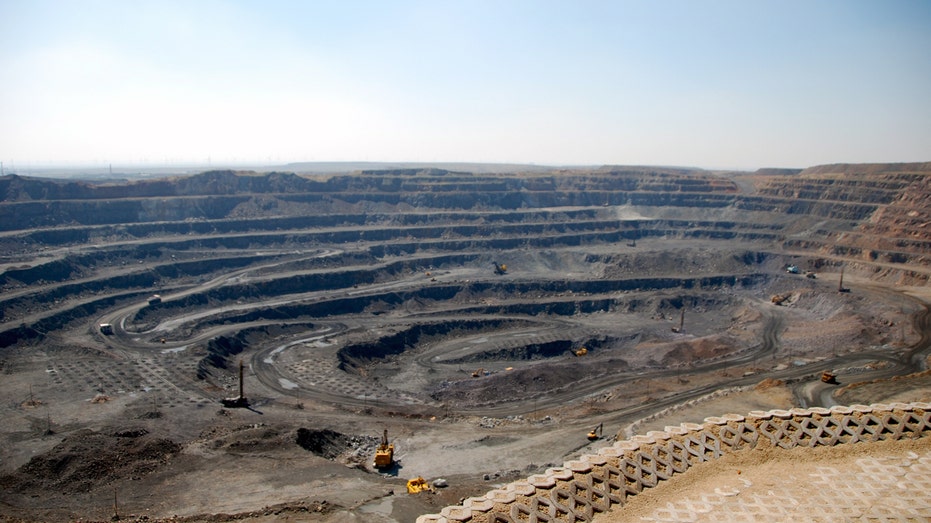
China controls significant portions of the global rare-earth supply and processing chain, while the U.S. and its allies are working to develop alternative sources.(Bert van Dijk/Getty Images / Getty Images)
Bokhari vehemently pushed back against the notion that practical quantum computing remains a distant, science-fiction concept. “Please don’t think of quantum computing as something that might be in the future. For Pasqal, it is here today,” he asserted. “In the end, it’s solving real business problems today.” This assertion is a critical message for the financial community: quantum computing is not merely an R&D expenditure but an emerging sector with tangible value propositions and immediate applications, poised to generate significant returns for early adopters and investors.
| Ticker | Security | Last | Change | Change % |
|---|---|---|---|---|
| PSQL | PASQAL HOLDING SA | 6.99 | -0.35 | -4.77% |

Rare-earth elements are used in technologies ranging from advanced electronics and manufacturing to U.S. defense systems.(iStock)
Market Impact
The collaboration between Pasqal, USA Rare Earth, and Riven Systems signals a significant inflection point for both the rare earth and quantum computing markets. For rare earths, this initiative could fundamentally alter the economics of extraction and processing, potentially reducing the “China premium” embedded in global pricing and fostering greater supply diversification. Successful implementation of quantum-enhanced efficiency could unlock significant value from previously uneconomical Western deposits, attracting further capital investment into domestic mining and processing infrastructure, aligning with government initiatives aimed at critical mineral independence. This move directly addresses geopolitical risk, offering a hedge against potential supply disruptions or export restrictions from dominant players. For the nascent quantum computing sector, this partnership serves as a powerful validation of its commercial viability beyond theoretical applications, potentially catalyzing broader enterprise adoption and investor interest. As quantum computing proves its ability to solve “real business problems” in strategic sectors, it solidifies its position as a disruptive technology poised for exponential growth, drawing comparisons to the early days of AI. Investors should monitor developments in both critical mineral technology and quantum computing for emerging opportunities in a landscape increasingly defined by technological innovation and strategic resource control.