

LendingTree’s chief consumer finance analyst, Matt Schulz, breaks down where Gen Z adults are moving in the U.S.
Key Takeaways
- Eroding Affordability:The national starter home inventory has dwindled, and prices have surged over 30% since 2019, primarily due to persistent supply-demand imbalances, high construction costs, and elevated interest rates, severely impacting first-time buyers.
- Shifting Market Composition:Condominiums and townhomes now constitute a significantly larger share of starter-priced inventory, reflecting builders’ adaptation to land scarcity and cost pressures, and potentially offering a more attainable entry point in dense urban areas.
- Localized Market Dynamics:While national trends point to scarcity, regional markets show diverse patterns. Areas with robust population growth and limited new construction are seeing the sharpest declines in starter home availability, while some previously booming markets may be rebalancing.
The American dream of homeownership, particularly for first-time buyers, is becoming an increasingly elusive aspiration. A new analysis by Realtor.com paints a stark picture of a housing market undergoing significant shifts, where the supply of starter homes has become markedly scarcer and more expensive compared to pre-pandemic levels. This trend is not merely a statistical anomaly but a critical indicator of broader market forces, including persistent inflation, elevated interest rates, and evolving demographic pressures.
According to Realtor.com’s senior economist Hannah Jones, the national share of starter homes – defined as properties priced at approximately 80% of a metro’s median list price, typically smaller and more accessible – declined from 38.1% of active inventory in August 2019 to 36.2% by August 2026. This seemingly modest percentage drop represents a staggering deficit of over 21,000 homes that would have been starter-priced today had the 2019 share been maintained. Concurrently, the median price for these entry-level homes soared by 30.8% over the same period, climbing from about $260,000 to $340,000.
This dual squeeze – fewer homes at higher prices – has profound implications for market accessibility. For a generation of aspiring homeowners, particularly younger cohorts like Gen Z, this represents a significant hurdle. As LendingTree’s chief consumer finance analyst, Matt Schulz, notes, understanding where these demographics are moving is crucial, but their ability to afford entry into these markets is increasingly compromised by an affordability crisis exacerbated by macroeconomic factors.
Starter home inventory has declined as a share of the national housing market, though Realtor.com found some metros have seen it rise since 2019.(Angus Mordant/Bloomberg via Getty Images)
The Shifting Composition of Starter Inventory
Beyond the raw numbers, the composition of available starter homes has also undergone a significant transformation. Condominiums and townhomes are now playing a much larger role in this segment. In August 2019, condos constituted 18% of starter-price inventory nationwide. This figure steadily climbed to 20% by 2022 and reached 27.1% by August 2026. This shift underscores a critical market adaptation: as land costs continue to escalate and regulatory hurdles for single-family development intensify, builders are increasingly pivoting towards higher-density housing solutions.
This trend is a direct response to market demands for more attainable housing options, especially in urban and suburban areas where land is scarce and expensive. While single-family homes remain the aspiration for many, the growing prominence of condos and townhomes in the starter segment reflects an evolving reality of homeownership, offering a potentially more accessible entry point, albeit often with trade-offs in terms of private outdoor space or perceived value appreciation compared to detached homes.
Regional Disparities: A Tale of Two Markets
The national narrative, however, masks significant regional disparities. The 100 largest metro areas in the country exhibit a diverse range of changes in their starter home shares between 2019 and 2026. This highlights the localized nature of housing market dynamics, where factors like population growth, job markets, and new construction rates can diverge sharply.
Some metros have defied the national trend, seeing gains in their share of starter homes. Boise, Idaho, for instance, recorded the largest increase, with a 4.7% rise. This could be attributed to a rebalancing after its explosive post-pandemic growth, where rapid appreciation may have pushed some properties previously considered “mid-tier” down into the starter price band as the market cooled or new, more dense construction came online. Other notable gainers include Portland, Oregon, and Vancouver, Washington (4% increase), Des Moines, Iowa (3.7%), San Jose, California (2.9%), and Denver, Colorado (2.5%). The inclusion of high-cost tech hubs like San Jose and Denver suggests that even in these expensive markets, some adjustments or new developments are creating a slightly larger, albeit still challenging, entry-level segment, perhaps signaling a shift in developer focus or market correction from peak valuations.

Starter homes are generally lower priced, and Realtor.com defined them as the tier of homes about 80% below the local median price.(Brett Coomer/Houston Chronicle via Getty Images)
Conversely, many metros, particularly in the rapidly growing Sun Belt region, have seen dramatic declines in starter home inventory. Columbia, South Carolina, experienced the steepest drop, with an 8.3% decrease. Other hard-hit areas include Winston-Salem, North Carolina (7.5% decline), Cape Coral and Fort Myers, Florida (6.9% decline), and Augusta and Richmond County in Georgia and South Carolina (6.5% decline). These areas have witnessed robust population influxes and economic expansion, leading to intense demand. Developers in these booming markets often prioritize higher-margin, larger-scale homes, and investors frequently compete for entry-level properties, further constricting supply for traditional first-time buyers. Fresno, California, was the only metro outside the South in the top five declines, sharing a 6% drop with Greensboro and High Point, North Carolina.
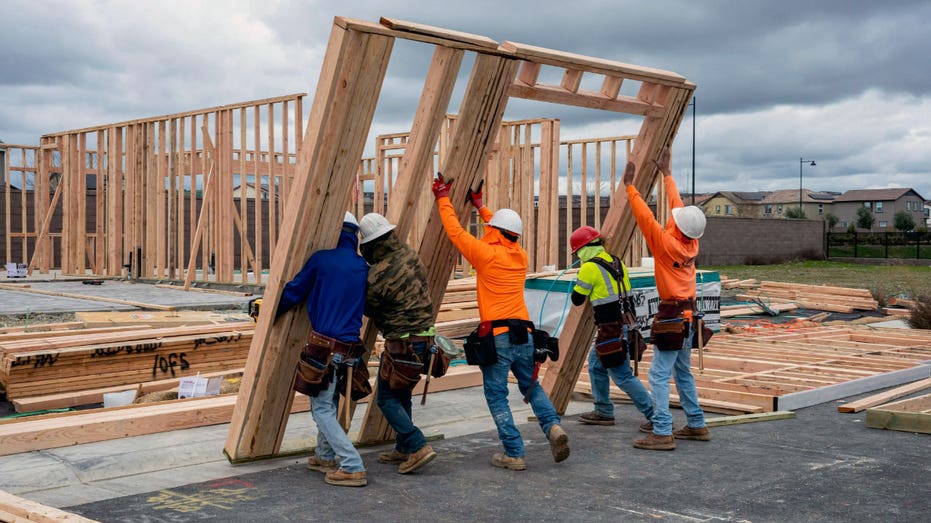
Starter home inventories have declined in a number of metro areas in the Sunbelt region.(David Paul Morris/Bloomberg via Getty Images)
Macroeconomic Headwinds and Future Outlook
The challenges in the starter home market are intricately linked to broader macroeconomic conditions. The Federal Reserve’s aggressive stance on inflation, manifested through successive interest rate hikes, has directly impacted mortgage rates. While the article notes “more homes, more price cuts – but buyers still aren’t biting as mortgage rates climb,” this highlights the double-edged sword: even if price growth moderates or homes see minor cuts, the higher cost of borrowing can negate any perceived savings, pushing monthly payments beyond reach for many budget-conscious first-time buyers. This dynamic is a significant factor in why, despite increased inventory in some segments, overall buyer demand remains subdued.
Furthermore, the ongoing housing supply deficit, a legacy of underbuilding post-2008, continues to exert upward pressure on prices, especially for entry-level homes. While “Baby Boomers are poised to unleash millions of homes,” as one headline suggests, the timing and affordability of these potential listings remain uncertain, and they are unlikely to provide an immediate panacea for the current supply crunch. In a counterintuitive twist, “buying a new home is now cheaper than an existing one in many markets,” as builders, facing financing costs and slower sales, offer incentives to move inventory, a strategy less available to individual sellers of existing homes.
Market Impact
The persistent scarcity and rising cost of starter homes have far-reaching implications for the entire housing ecosystem and the broader economy. For first-time buyers, it delays wealth accumulation, forcing continued reliance on rentals and hindering financial stability. This reduced homeownership rate among younger demographics can dampen consumer spending in related sectors (home improvement, furnishings) and slow economic growth. Existing homeowners, particularly those looking to downsize or move up, face a bottleneck as the entry-level segment struggles, impacting mobility within the market. Builders are increasingly incentivized to construct higher-margin homes, further exacerbating the starter home shortage unless policy changes or market corrections significantly alter their cost structures. For investors, the scarcity of affordable properties continues to make entry-level housing an attractive, albeit ethically complex, asset class, potentially outbidding individual buyers. Ultimately, the market’s inability to provide accessible entry points risks creating a more stratified society, where homeownership becomes an increasingly exclusive privilege, with long-term consequences for economic equity and social mobility.
CLICK HERE TO DOWNLOAD THE FOX NEWS APP