
New Networked Laser Detection System Aims to Enhance Battlefield and Infrastructure Security
Sentinel Photonics, a company based in Farnborough, has introduced a new system designed to significantly improve the detection and localization of laser activity across various environments. Named LASARD MAX Connect, the product networks multiple laser detection sensors, consolidating their inputs into a single, real-time operational picture. This integrated view allows operators to pinpoint the source of laser emissions by cross-referencing bearings from multiple sensors, thereby providing critical targeting data.
The core of the LASARD MAX Connect system lies in its ability to link individual MAX sensors to a central hub. These sensors operate passively and continuously, scanning for laser activity across a designated area. By channeling all detected events through a central application, Connect ensures that every operator on the network perceives the identical real-time situation, fostering a unified understanding of potential threats or activities. This shared situational awareness is crucial in dynamic and contested operational zones where rapid information dissemination can be vital.
A key capability of the system is its precision in locating laser sources. When two or more networked sensors detect the same laser event, the system automatically calculates the intersection of their individual bearings. This triangulation process generates accurate targeting data, allowing operators to identify the exact origin of the laser. Such precision moves beyond mere detection, providing actionable intelligence that can be used for defensive measures or counter-actions. The flexibility of deployment allows sensors to be strategically positioned across a range of locations, including forward operating bases, sensitive governmental or corporate facilities, and critical national infrastructure, with connectivity established through either mesh radio networks or fixed wired infrastructure, depending on operational requirements and environmental constraints.
Beyond real-time localization, the LASARD MAX Connect system also contributes to long-term intelligence gathering. By sharing detections across the network, it systematically builds a comprehensive threat library based on observed activity within a unit’s operational environment. This continuously updated database includes various laser signatures, which are then pushed from the central application to every connected sensor simultaneously. This ensures that the entire network benefits from collective intelligence, adapting and updating its detection capabilities in unison to recognize new or evolving threats as they emerge.
Jackson White, chief operating officer at Sentinel Photonics, emphasized the system’s relevance in modern conflict scenarios. “Contested battlespaces generate events at a pace that often overwhelms traditional, standalone sensors,” White stated. He elaborated that the MAX sensor is designed to capture a full spectrum of laser events, encompassing both military and civilian sources, out to a range of 10 kilometers. “Essentially, if a threat discharge is capable of seeing you, MAX is engineered to detect and capture that event,” he added. White further explained the operational advantages of networking sensors: “Connecting multiple sensors through a single hub empowers teams to monitor broader areas effectively, to retain vital intelligence for reviewing activity trends over time, and crucially, to act decisively on alerts rather than expending resources to actively hunt for them.”
The integration capabilities of LASARD MAX Connect are a significant feature. The system is engineered to feed seamlessly into existing C4ISR (Command, Control, Communications, Computers, Intelligence, Surveillance, and Reconnaissance) architectures. This allows it to alert operators and cue effectors – such as defensive systems or countermeasures – without necessitating a separate workflow or additional operator intervention. Furthermore, the system automatically logs all site-wide laser activity, creating a detailed historical record that can be reviewed later for post-event analysis, threat pattern identification, and operational improvements.
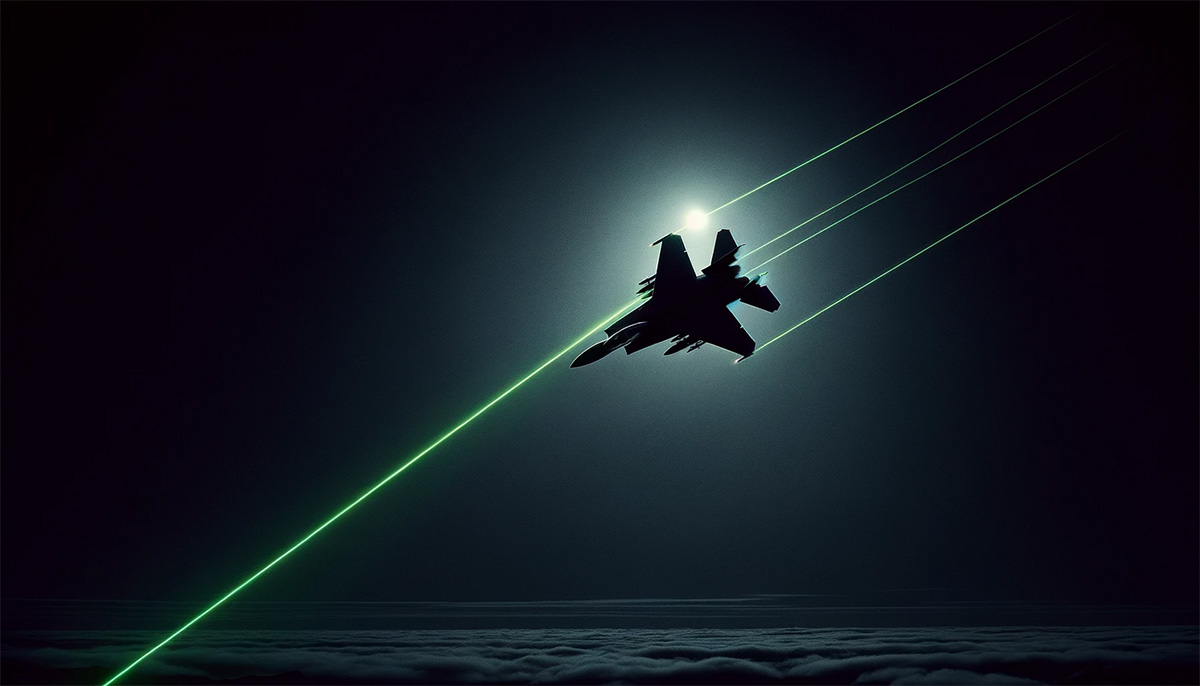
The increasing prominence of laser threat warning systems stems from a global shift in military and security technology. Directed energy weapons, which utilize high-energy lasers to neutralize targets, are transitioning from developmental stages into fielded operational systems. Concurrently, laser rangefinders and designators are becoming more widespread and accessible, often integrated into increasingly inexpensive and ubiquitous platforms, including commercial drones. A laser trained on a specific position frequently serves as a precursor to an impending attack or a targeting operation. Consequently, the ability to rapidly detect and precisely locate the source of such a laser provides a critical tactical advantage, enabling a unit to respond proactively and direct its own countermeasures or defensive fire.
Sentinel Photonics highlights that its systems are ITAR-free. This designation signifies that the equipment does not contain United States-controlled technology, thereby exempting its onward sale from the stringent American export licensing requirements that typically apply to defense articles. This characteristic simplifies international procurement and deployment, potentially making the LASARD MAX Connect system more accessible to a wider range of global defense and security customers without being subject to U.S. export controls.
Why This Matters
The introduction of the LASARD MAX Connect system addresses a growing and complex challenge in modern security and defense: the proliferation and evolution of laser-based threats. This technology signifies a critical advancement in situational awareness and defensive capabilities, with implications spanning military operations, critical infrastructure protection, and national security.
Firstly, the ability to network multiple sensors and generate a consolidated, real-time picture of laser activity fundamentally enhances an operator’s understanding of their environment. In contested battlespaces, where precision and speed are paramount, early and accurate detection of laser designators or rangefinders can provide invaluable seconds or minutes for troops to take cover, deploy countermeasures, or engage the threat. This moves beyond simple warning, providing actionable intelligence for immediate response. For critical national infrastructure, such as power grids, communication hubs, or sensitive government facilities, this system offers a robust layer of defense against reconnaissance or targeting efforts that might precede a physical or cyber attack, where lasers could be used for surveillance or to assess vulnerabilities.
Secondly, the system’s capacity to build a threat library and automatically update all connected sensors represents a significant leap in adaptive defense. As new laser technologies emerge or existing ones are repurposed, the collective intelligence of the network allows for rapid adaptation and improved detection capabilities across an entire operational area. This means that once a new signature is identified, the entire defense perimeter immediately gains the ability to recognize it, creating a more resilient and responsive security posture against evolving threats, including those from increasingly sophisticated and accessible commercial technologies.
Thirdly, the seamless integration into existing C4ISR architectures is crucial for operational efficiency. In today’s interconnected defense landscape, systems must communicate and share data effortlessly to avoid information silos and streamline decision-making. By plugging directly into established command and control networks, LASARD MAX Connect avoids creating additional workload for operators and ensures that laser threat intelligence contributes directly to the overall tactical picture, enabling faster, more coordinated responses from various effectors like jammers, smoke generators, or even kinetic interceptors.
Finally, the ITAR-free status of Sentinel Photonics’ systems has significant geopolitical implications. By removing the need for U.S. export licenses, the technology becomes more readily available to a broader international market. This can empower more nations to enhance their defensive capabilities against laser threats without being constrained by the complex and often lengthy U.S. regulatory processes. This accessibility could foster greater security cooperation among allies and partners, potentially leading to more widespread adoption of advanced laser detection technologies globally and contributing to a more balanced defense landscape against these emerging non-kinetic threats.