
White House National Economic Council Director Kevin Hassett analyzes the September CPI report, consumer spending and addresses negative views on the economy from voters on ‘Varney & Co.’
Key Takeaways for Investors:
- **Persistent Inflationary Pressures Stoke Hawkish Fed Sentiment:** The September CPI report, with its 0.6% monthly and 3.7% annual increase, surpassed market expectations, signaling that inflationary forces remain robust. This hotter-than-anticipated data reinforces the Federal Reserve’s commitment to a higher-for-longer interest rate strategy, potentially leading to further tightening or a prolonged period of restrictive monetary policy, impacting borrowing costs and growth projections.
- **Consumer Spending Resilience Tested by Rising Costs:** While the report noted stable food prices month-over-month, the overall surge in the “all items” index continues to erode consumer purchasing power. Investors should monitor how this dynamic impacts discretionary spending, corporate earnings, and sector-specific performance, particularly for companies reliant on robust consumer demand in the face of persistent cost pressures.
- **Political Rhetoric Amplifies Market Volatility Amid Election Cycle:** The highly charged political debate surrounding inflation ahead of the 2026 midterm elections adds a layer of uncertainty for markets. While politicians attribute blame, investors should focus on the tangible economic data and potential policy implications, such as fiscal measures or regulatory shifts, that could arise from changes in congressional control, rather than getting caught in the political noise.
Financial markets reacted with caution following the release of a hotter-than-expected Consumer Price Index (CPI) report on Wednesday, which immediately ignited a fresh round of political debate ahead of the pivotal 2026 midterm elections. While Democrats lambasted President Donald Trump and the White House championed economic growth, the underlying data points to persistent inflationary pressures that continue to challenge consumer budgets and complicate the Federal Reserve’s monetary policy trajectory.
The U.S. Bureau of Labor Statistics (BLS) reported that “The Consumer Price Index for All Urban Consumers (CPI-U) increased 0.6 percent on a seasonally adjusted basis in September after rising 0.4 percent in August.” This monthly acceleration was notably higher than the consensus market expectation, which had largely anticipated a more modest cooling of price increases. Compounding this concern, the BLS added that “Over the last 12 months, the all items index increased 3.7 percent before seasonal adjustment,” indicating a sustained level of inflation that remains well above the Federal Reserve’s long-term target of 2%. This figure, while a slight deceleration from previous peaks, underscores the challenge of bringing inflation fully under control without inducing a significant economic slowdown.
The immediate political fallout was swift and sharp. The House Democratic Caucus declared on X, “Trump promised to lower costs and end inflation on day one. The exact opposite has happened. This president has been a total failure.” This sentiment was echoed by House Democratic Caucus Chair Pete Aguilar, D-Calif., who stated, “Inflation is up. The cost of gas and groceries is soaring. Inland Empire families are paying more for everything. This Trump economy has been a total failure.” House Democratic Whip Katherine Clark, D-Mass., also weighed in, asserting, “The GOP economy is a failure. Inflation remains too high, as families struggle to afford the basics. House Democrats are ready to win in November and stop this mess.” These statements reflect a strategy to frame economic struggles directly at the current administration, aiming to sway voters who are feeling the pinch of higher prices in their daily lives.
CONSUMER INFLATION ROSE FASTER THAN EXPECTED IN SEPTEMBER, CPI REPORT SHOWS
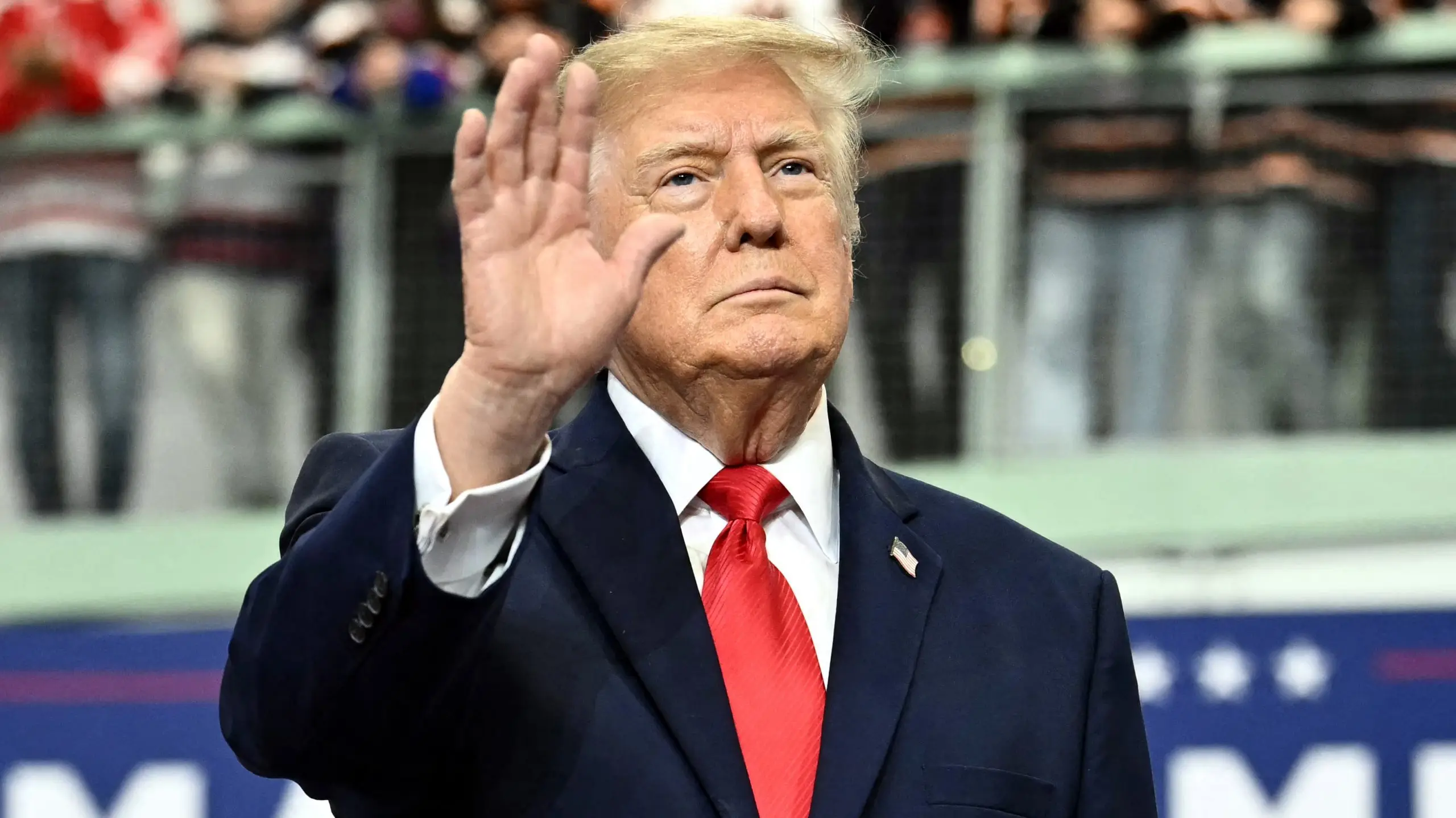
President Donald Trump arrives to speak during a campaign rally at Curtis D. Menard Memorial Sports Center in Wasilla, Alaska, on Oct. 13, 2026.(Kent NISHIMURA / AFP via Getty Images / Getty Images)
The latest CPI report’s timing, less than a month before Election Day, intensifies the political and economic stakes. With the Republican Party currently holding a slim majority in both chambers, Democrats are aggressively campaigning to reclaim control. For investors, this political tug-of-war introduces an element of policy uncertainty, as shifts in congressional power could lead to different legislative priorities, particularly regarding fiscal spending, taxation, and regulatory frameworks, all of which have direct implications for various sectors of the economy.
The White House, meanwhile, countered the Democratic critique, with an official indicating to Fox News Digital that “President Trump is bringing inflation down after it was astronomically high under Biden” and emphasizing that “food prices remain stable, unchanged, month-over-month.” The CPI report indeed noted that “the food index was unchanged in September after rising 0.1 percent in each of the preceding 2 months,” offering a sliver of relief in one key category of consumer spending. This stability in food prices, however, did little to offset the broader increases driven by other components such as energy, housing, and services, which collectively pushed the “all items” index higher.
SCHUMER WARNS OF REPUBLICAN ADVANTAGE THAT COULD CHANGE THE BATTLE FOR SENATE CONTROL
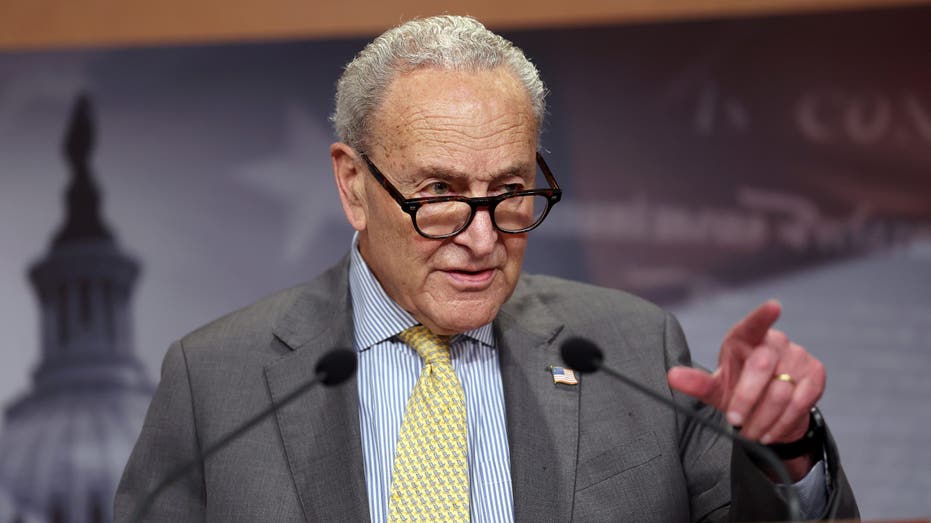
U.S. Senate Minority Leader Chuck Schumer, D-N.Y., takes a question during a press conference on China AI export controls at the U.S. Capitol on Sept. 23, 2026 in Washington, D.C.(Kevin Dietsch/Getty Images / Getty Images)
Further Democratic criticism came from Senate Minority Leader Chuck Schumer, D-N.Y., who posted on X, “Donald Trump’s ‘Golden Age’ means never ending, higher prices for the American people while he gets a ballroom and billionaires get tax cuts.” Former Transportation Secretary Pete Buttigieg, who served under President Joe Biden, also pointed fingers, stating, “Inflation is up again. Not because of a pandemic. Not because of a natural disaster. Because of Trump’s war, tariffs, and corporate tax breaks. It really is this simple: Republicans took over, and then drove up the cost of living in America.” These arguments highlight the ongoing debate over the root causes of inflation, with Democrats often pointing to supply-side issues, geopolitical conflicts, and corporate policies, while the administration tends to emphasize demand-side factors and inherited economic challenges.
In a detailed statement, White House spokesman Matthew Middleton defended the administration’s economic policies to Fox News Digital: “President Trump has implemented an aggressive, pro-growth economic agenda that has blunted Biden’s inflation crisis, driven economic growth, increased wages and created private-sector jobs in areas that had been hollowed out and shipped overseas.” Middleton acknowledged “temporary disruptions as a result of the Iran conflict” but affirmed the administration’s commitment to “continue to deliver economic wins for the American people over the next two years.” This acknowledgement of geopolitical factors is significant, as energy prices, heavily influenced by global events, play a substantial role in broader inflationary trends.
US ECONOMY GREW AT A FASTER PACE THAN EXPECTED IN SECOND QUARTER
Fisher Investments founder Ken Fisher discusses the U.S. 10-year Treasury yield, saying that long-term interest rates are ‘not a problem,’ but he says the Federal Reserve is growing the amount of money too fast.
Middleton further highlighted the administration’s efforts, stating, “While Democrats pretend to care about ‘affordability’ this administration has delivered tangible wins to make life more affordable for American families: President Trump signed the largest working-class tax cuts in history, cut the cost of prescription drugs, added more than one million private-sector jobs, locked in nearly 20 trade deals and will continue to put American workers first.” These claims point to a supply-side economic strategy aimed at fostering business growth and competition, which theoretically should counter inflationary pressures over time. However, the immediate impact of such policies on the latest CPI figures remains a point of contention.
The backdrop of this inflation debate includes other economic indicators, such as the previously reported faster-than-expected GDP growth in the second quarter. This mixed economic picture — robust growth alongside persistent inflation — presents a challenging environment for policymakers and investors alike. Fisher Investments founder Ken Fisher, in an interview on ‘Varney & Co.’, offered a nuanced perspective on interest rates, stating that long-term yields are “not a problem” but criticizing the Federal Reserve for “growing the amount of money too fast.” This view suggests that while higher long-term rates might reflect a healthy economy, the underlying monetary expansion could still be a driver of inflation, a point that merits consideration for market participants tracking the Fed’s quantitative tightening efforts.
CLICK HERE TO DOWNLOAD THE FOX NEWS APP
Market Impact:
The September CPI report’s unexpected strength sent a clear signal to financial markets: inflation remains entrenched, increasing the likelihood of the Federal Reserve maintaining its restrictive monetary policy for longer, or even considering further rate hikes. This realization immediately impacted bond markets, with Treasury yields rising as investors priced in a more hawkish Fed stance, consequently increasing borrowing costs for corporations and consumers. Equity markets, particularly growth stocks sensitive to higher interest rates, faced downward pressure as future earnings streams are discounted more heavily. Sectors like consumer discretionary may experience headwinds if inflation continues to erode purchasing power, while defensive sectors or those with strong pricing power might show resilience. The political rhetoric, while not directly influencing monetary policy, contributes to market volatility by clouding the outlook for future fiscal policy and regulatory environments. Investors should brace for continued market choppiness, with a focus on companies with robust balance sheets, strong cash flows, and proven ability to navigate an inflationary and high-interest-rate landscape, while closely monitoring upcoming economic data and central bank communications for clearer directional cues.