
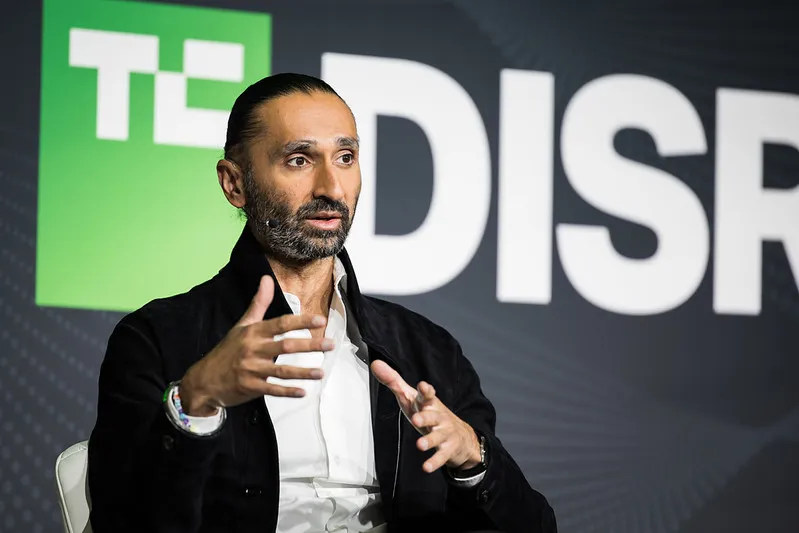
Private equity giant Blackstone is putting itself at the center of the AI boom, firm veteran Jas Khaira discussed last week on stage at TechCrunch Disrupt.
It is writing checks via various strategies, ranging from offering massive loans to data centers to investing in frontier AI models and applications.
Earlier this year, the firm launched Blackstone N1 (BXN1), a San Francisco-based central hub for its AI initiatives. The group is led by Khaira, who relocated from New York to be at the epicenter of AI.
Unlike earlier tech cycles such as mobile or SaaS, which allowed companies to reach significant scale with moderate capital, the transition to AI requires staggering amounts of investment. That need for capital is precisely why Blackstone, with its $1.3 trillion in assets under management, could play such a critical role in this tech shift.
Khaira emphasized that Blackstone sets itself apart from traditional venture capitalists through its focus on compute financing and its ability to offer flexible capital structures, ranging from debt to equity. And it has been investing aggressively.
“We’re the largest owner of compute outside of the hyperscalers today, whether it’s investments in neo clouds, investments in data centers, and being able to use that compute strategically to support companies,” Khaira said.
For instance, BXN1 played a key role in several compute-related deals, among them Crux AI, a neocloud launched in partnership with Google to commercialize its custom TPUs, to which Blackstone committed $5 billion as an investor. It also backed four-year-old Etched, a chip startup whose rapid development has caught investor attention. Neoclouds are cloud providers that rent out AI GPU infrastructure.
Blackstone pioneered a financing structure that allowed it to lend massive sums to venture-backed cloud neoclouds by analyzing both committed customer contracts and using GPUs pledged as collateral.
Blackstone’s first such deal came in 2023 with CoreWeave, shortly after that neocloud saw demand explode following the launch of ChatGPT. Despite having only “30 million of revenue and minimal profitability” at that time, according to Khaira, CoreWeave approached Blackstone for a $2.3 billion loan.
CoreWeave was borrowing against the considerable value of its large collection of Nvidia GPUs, with Nvidia also an investor. Blackstone also grew more comfortable with the loan because CoreWeave had contracts with blue-chip customers like Microsoft.
That transaction quickly became the financing model for how Blackstone and other credit institutions provided billions in follow-on debt to CoreWeave and rival neoclouds.
“One of the primary things that we’re looking to is the nature of the customer. And if the customer is an investment-grade customer — let’s say it’s Microsoft or let’s say it’s Meta — the risk gets priced relative to that customer,” Khaira said.
Building on its success with CoreWeave, Blackstone struck other neocloud financing deals, including co-leading alongside Coatue a $10 billion credit facility for Australian GPU provider Firmus earlier this year.
Khaira acknowledged that in recent weeks, the large debt burdens accumulated by these companies and other neocloud operators have begun to raise red flags. Coreweave’s debt alone has since ballooned to about $50 billion, causing Altimeter Capital founder Brad Gerstner to note in a recent CNBC interview, “The collateral that CoreWeave is putting up which is really only GPUs is not good enough anymore. They used that in the past to get cheap debt.”
Khaira said that on the credit side, the market jitters stem from a combination of factors. Interest rates ticked up in September, and hotter-than-expected inflation signals that borrowing costs may keep climbing. The flood of AI infrastructure debt offerings isn’t helping either.
“We’re also seeing higher credit spreads,” Khaira said, explaining that lenders are charging higher premiums on top of already higher base interest rates to finance the AI buildout. “The cost of capital to price in debt for a Meta or a Microsoft has widened out,” he added, pointing out that even tech giants with massive balance sheets and solid earnings are paying more to borrow.
Concerns about the rising cost of debt have spilled into the stock market. Shares of CoreWeave dropped over 20% in recent days, while Firmus scrapped its planned IPO on the Australian Securities Exchange at a target valuation of roughly $30 billion.
“Ultimately, the market wasn’t there at that valuation, and so I think as a result, that deal didn’t get done,” Khaira said about Firmus’ cancelled listing.
“The market is thinking what is the right price for neoclouds, what is the right price for these businesses in this moment when interest rates are moving up,” he said.
Despite those pressures on some infrastructure providers, AI companies simply can’t get enough compute to power their models. Their appetite continues to drive data center buildout.
Khaira downplayed worries of doom-mongers that the massive accumulation of AI infrastructure debt could lead to a widespread credit crisis, or worse, crash the economy altogether. “This doesn’t feel like something where you’ve got 2008 banks that are shaky credits,” he said.
Instead, he pointed out that because the vast majority of data centers are built for hyperscalers, the debt financing them is ultimately backed “by the most creditworthy companies in the world.”
Beyond funding data centers, Blackstone is helping companies adopt AI through a $1.5 billion joint venture called “Ode with Anthropic,” formed alongside Anthropic and Hellman & Friedman this year. Ode supplies forward-deployed engineers to help companies adopt AI and integrate it into their operations, starting with Blackstone’s 280 portfolio companies.
When asked if Blackstone-owned companies are seeing tangible gains from AI, Khaira conceded that “there is definitely ROI, but it is uneven.” He described technology adoption as something that could move in a “sawtooth-type pattern,” which, to skeptics, can look like an oversupply of compute before adoption catches up.
When you purchase through links in our articles, we may earn a small commission. This doesn’t affect our editorial independence.
{content}
Source:{feed_title}
Key Takeaways
- **Blackstone as the AI Capital Engine:** With $1.3 trillion in assets, Blackstone is uniquely positioned to fund the “staggering” capital requirements of the AI era, unlike previous tech cycles.
- **Pioneering Compute Financing:** The firm developed an innovative debt financing model for AI infrastructure (“neoclouds”) using GPUs as collateral and leveraging blue-chip customer contracts, exemplified by its early $2.3 billion loan to CoreWeave.
- **Navigating Market Volatility & Long-Term Vision:** While rising interest rates and mounting debt burdens for some neoclouds have introduced market jitters, Blackstone maintains that its investments are backed by creditworthy hyperscalers and is also actively investing in AI adoption through ventures like Ode with Anthropic.
Blackstone’s $1.3 Trillion Gambit: Fueling the AI Revolution From Compute to Adoption
In the burgeoning landscape of artificial intelligence, where innovation is as insatiable as the demand for computational power, a surprising player has emerged as a central pillar: private equity titan Blackstone. With a colossal $1.3 trillion under management, the firm isn’t just watching the AI boom unfold; it’s actively underwriting its very infrastructure and accelerating its adoption. Jas Khaira, a seasoned Blackstone veteran and the architect behind its dedicated AI hub, Blackstone N1 (BXN1), recently articulated the firm’s multifaceted strategy on stage at TechCrunch Disrupt, painting a picture of a capital behemoth uniquely poised to shape the future of AI.
The AI Gold Rush: Why Capital is King
The current AI revolution stands in stark contrast to previous tech cycles. Eras like mobile or SaaS allowed companies to scale significantly with relatively moderate capital outlays. AI, however, is a different beast entirely. Training and running sophisticated models demands “staggering amounts of investment” in high-performance GPUs, massive data centers, and the energy to power them. This unprecedented need for capital creates a fertile ground for firms like Blackstone, whose deep pockets and diverse financing strategies – from debt to equity – become indispensable.
Recognizing this fundamental shift, Blackstone launched BXN1 earlier this year. Headquartered in San Francisco, the epicenter of AI innovation, this group serves as the nerve center for all of Blackstone’s AI initiatives. Led by Khaira, who relocated from New York for the role, BXN1 embodies the firm’s strategic commitment to being at the forefront of this technological transformation. Khaira highlighted that Blackstone’s approach differs significantly from traditional venture capital, emphasizing its unparalleled focus on compute financing and its capacity to offer flexible capital structures tailored to the unique demands of the AI ecosystem.
Pioneering the Compute Economy: Blackstone’s Innovative Financing Model
“We’re the largest owner of compute outside of the hyperscalers today,” Khaira stated, underscoring Blackstone’s aggressive investment in the foundational infrastructure of AI. This includes substantial commitments to “neoclouds” – specialized cloud providers that rent out AI GPU infrastructure – and direct investments in data centers. The firm’s strategy isn’t merely about writing large checks; it’s about pioneering novel financing structures that enable the rapid expansion of this critical compute capacity.
A prime example of this innovation is Blackstone’s approach to lending massive sums to venture-backed neoclouds. The firm developed a unique financing model that assesses both committed customer contracts and uses the value of pledged GPUs as collateral. This structure proved instrumental in deals like the one with Crux AI, a neocloud partnered with Google to commercialize its custom TPUs, where Blackstone committed $5 billion. Similarly, the firm backed four-year-old chip startup Etched, showcasing its interest in the very foundations of AI hardware.
Blackstone’s breakthrough in this space came in 2023 with CoreWeave. Following ChatGPT’s launch, demand for CoreWeave’s services exploded. Despite having only “$30 million of revenue and minimal profitability” at the time, CoreWeave secured a $2.3 billion loan from Blackstone. Key to the deal was the substantial value of CoreWeave’s Nvidia GPUs, with Nvidia itself being an investor. Crucially, the presence of contracts with “blue-chip customers” like Microsoft provided an additional layer of comfort, demonstrating a reliable revenue stream. This transaction quickly became the blueprint for subsequent multi-billion-dollar debt facilities provided by Blackstone and other credit institutions to CoreWeave and its rivals, with Khaira emphasizing, “if the customer is an investment-grade customer — let’s say it’s Microsoft or let’s say it’s Meta — the risk gets priced relative to that customer.” Building on this success, Blackstone co-led a $10 billion credit facility for Australian GPU provider Firmus earlier this year.
Navigating the Headwinds: Debt, Rates, and Market Jitters
However, the rapid accumulation of AI infrastructure debt has not been without its challenges. Khaira acknowledged that “red flags” have begun to emerge. CoreWeave’s debt, for instance, has surged to an estimated $50 billion. Brad Gerstner, founder of Altimeter Capital, voiced concerns in a recent CNBC interview, suggesting that “The collateral that CoreWeave is putting up which is really only GPUs is not good enough anymore. They used that in the past to get cheap debt.”
Khaira attributed these market jitters to a confluence of macroeconomic factors. Rising interest rates since September, coupled with persistent inflation signals, suggest that borrowing costs will continue their upward trajectory. The sheer volume of AI infrastructure debt offerings has also contributed to an increase in “credit spreads,” meaning lenders are now demanding higher premiums on top of elevated base interest rates. Even tech giants with robust balance sheets like Meta or Microsoft are facing higher borrowing costs, a clear indication of a tightening credit environment.
These concerns have reverberated through the stock market, with CoreWeave shares recently dropping over 20%. The Australian GPU provider Firmus, for its part, scrapped its ambitious IPO plans at a target valuation of roughly $30 billion. “Ultimately, the market wasn’t there at that valuation,” Khaira admitted, highlighting the market’s current uncertainty in valuing neoclouds amidst rising rates.
Despite these pressures, Khaira remained steadfast in his conviction, downplaying fears of a widespread credit crisis akin to 2008. He argued that the vast majority of data centers are built for hyperscalers, meaning the underlying debt is ultimately backed “by the most creditworthy companies in the world.” He believes the market is simply recalibrating, searching for the “right price for neoclouds, what is the right price for these businesses in this moment when interest rates are moving up.” The fundamental driver, he stressed, remains: AI companies cannot get enough compute to power their models, ensuring continued demand for data center buildout.
Beyond Infrastructure: Fostering AI Adoption
Blackstone’s AI strategy extends beyond merely funding the hardware. The firm is also actively invested in ensuring its portfolio companies can effectively adopt and integrate AI into their operations. This is exemplified by “Ode with Anthropic,” a $1.5 billion joint venture formed this year alongside Anthropic and Hellman & Friedman. Ode’s mission is to provide forward-deployed engineers who work directly with companies, starting with Blackstone’s impressive roster of 280 portfolio firms, to embed AI solutions.
When questioned about the tangible gains from AI within Blackstone-owned companies, Khaira offered a candid assessment: “there is definitely ROI, but it is uneven.” He characterized technology adoption as a “sawtooth-type pattern,” where periods of significant investment in compute might initially appear as an oversupply before widespread adoption and tangible benefits fully materialize. This nuanced view acknowledges the complexities of integrating transformative technology and underscores Blackstone’s long-term perspective on the AI journey.
The Bottom Line
Blackstone’s aggressive foray into the AI ecosystem, spearheaded by its compute financing innovations and strategic adoption initiatives, positions it as a critical enabler of the current technological revolution. While the market is experiencing natural jitters amidst rising interest rates and mounting debt for some AI infrastructure providers, Blackstone remains confident in the fundamental demand for compute and the creditworthiness of the ultimate beneficiaries. The firm’s dual approach – funding the foundational hardware and actively fostering AI integration – suggests a nuanced, long-game strategy that aims to solidify its influence across the entire AI value chain, even as the “uneven ROI” of adoption continues to play out.