
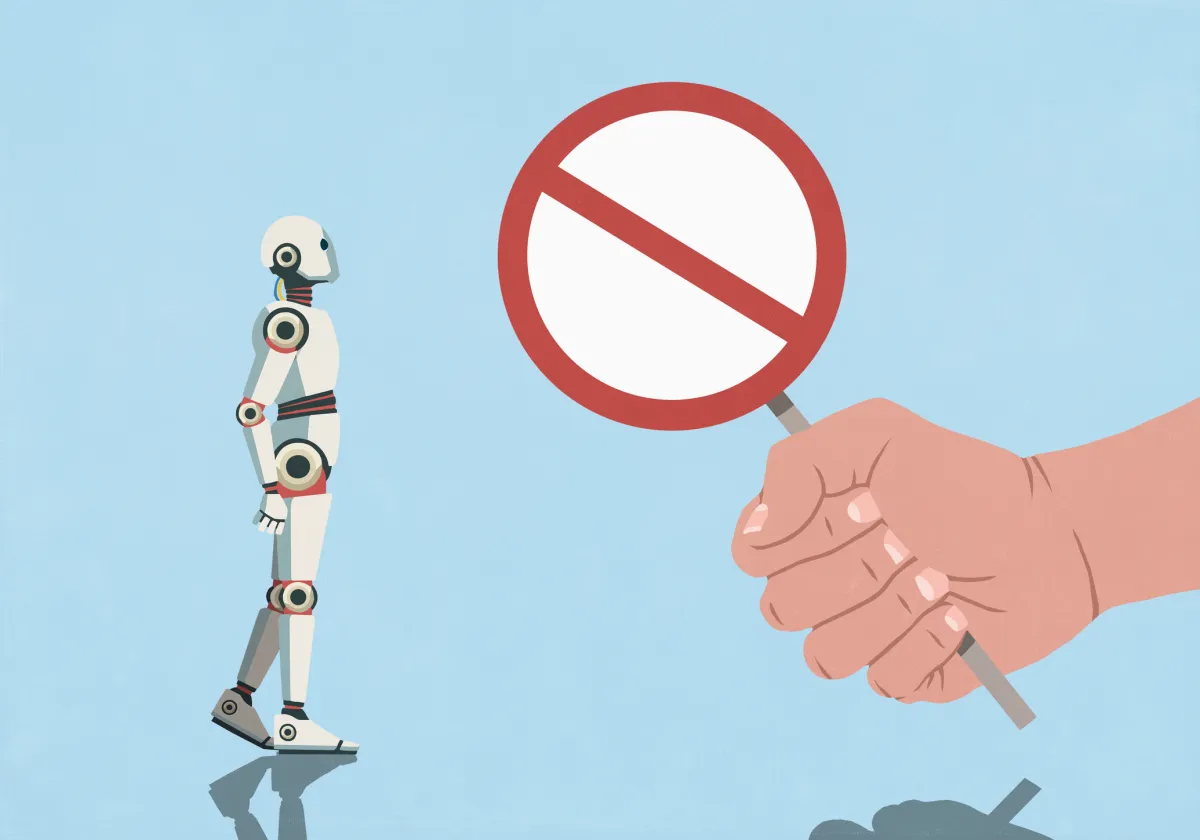
Pope Leo XIV has decried AI as a threat to human dignity, but it’s not just the devoutly faithful who might worry about how AI squares with their beliefs. David Durman, a nontheistic Humanist, recently secured a religious exemption from using AI in the workplace.
**Key Takeaways**
* **Philosophical Convictions Meet AI:** David Durman, a Humanist, has successfully secured a workplace exemption from using AI, highlighting how personal philosophical beliefs, not just traditional religious ones, are emerging as grounds for conscientious objection to new technologies.
* **A Broader Precedent for Protection:** This case, following a similar accommodation for a Unitarian Universalist engineer, underscores that legal protections for workplace accommodations extend beyond specific faiths to encompass deeply held moral and ethical frameworks, particularly regarding AI’s impact on human well-being and agency.
* **The Evolving Workplace:** As AI integration accelerates, employers face a growing need to navigate individual ethical concerns and offer flexible accommodations, signaling a shift towards more personalized employment agreements in the face of widespread technological adoption.
***
The rapid ascent of artificial intelligence into everyday workflows is prompting unprecedented questions about ethics, human dignity, and even faith. While high-profile figures like Pope Leo XIV have voiced concerns about AI’s potential to undermine human value, a more personal, equally profound challenge to AI integration is quietly emerging from the individual workplace. This challenge centers not just on spiritual dogma, but on deeply held philosophical convictions, as evidenced by David Durman, a nontheistic Humanist, who recently secured a landmark religious exemption from using AI in his professional duties.
Durman’s achievement marks a significant moment, not only for Humanists but for anyone grappling with the ethical implications of AI. It solidifies a precedent that deeply held moral frameworks, even those outside traditional religious institutions, can provide a legitimate basis for seeking workplace accommodations against technologies deemed incompatible with one’s core beliefs.
The Precedent Set: A Humanist’s Stand Against AI
David Durman, an administrator at the University of Kentucky, embodies a modern-day conscientious objector to the pervasive march of artificial intelligence. His successful bid for a workplace accommodation, allowing him to abstain from AI use, stems from his unwavering commitment to Humanism. As Durman explained to TechCrunch, “Humanism is a collection of beliefs about the human experience and how humans interact with the world.” It fundamentally centers on “human well-being and flourishing, both individually and collectively […] and implores a person to try to improve both their well-being and their flourishing as well as the others around them.”
For Durman, the increasing reliance on AI directly contradicts these core tenets. He meticulously articulated his concerns to the American Humanist Association (AHA), a nonprofit dedicated to advancing secular humanism, seeking their guidance on how to secure legal protections against mandatory AI use at work. His conviction is clear: utilizing this technology actively undermines the very principles of human agency and improvement that define his worldview.
Why AI Sparks Conscience: The Humanist Perspective
Durman’s objection to AI isn’t a blanket rejection of technology, but a nuanced philosophical stance rooted in the potential erosion of human faculties and societal well-being. He argues that the active application of human minds is fundamental to our development as moral actors. “The way we become moral actors for ourselves and for others is through the active application of our minds, and the diminishing of that [through AI use] is going to necessarily have a negative impact on our ability to do so,” he stated, reflecting on the critical role of independent thought and reasoning.
His concerns extend beyond individual cognitive impacts. In a compelling statement published by the AHA, Durman outlined a broader spectrum of perceived harms: “AI is interfering with people’s ability to earn a living, the environmental costs spell disaster for humanity and our planet, and its supplanting and theft of human creativity threaten elements of our culture like art and literature that make society flourish.” These points underscore a holistic view of human flourishing – encompassing economic stability, ecological responsibility, and cultural preservation – all of which Durman believes are jeopardized by an unchecked proliferation of AI.
Humanism, while not anti-religious, often appeals to individuals who prioritize scientific inquiry and moral reasoning over supernatural explanations, yet still seek a robust ethical framework. Durman’s case exemplifies how this framework can lead to significant ethical clashes with emerging technologies.
Beyond Faith: A Broader Ethical Landscape
Durman is not an isolated voice in this growing chorus of ethical concerns. The very notion of “human dignity” has become a central point of debate, resonating across diverse belief systems. Alexandria Huiskens, Staff Attorney at the AHA, emphasized this breadth: “Concern about AI and human dignity can run through several different faiths and traditions, whether that’s Catholic teachings, or Universalism, or Humanism, and we want Humanists or nontheists to know that they fall into these categories — that they are also protected by the law at work.” This statement highlights a crucial legal distinction: protections for “religious” accommodation are increasingly interpreted to include deeply held ethical or moral convictions that function similarly to religious beliefs in an individual’s life.
Indeed, Durman was inspired by an earlier, equally groundbreaking case. Erin Maus, a Unitarian Universalist and software engineer, had previously secured similar protections, demonstrating that even in highly technical roles, accommodations are possible. While Maus’s situation was particularly unusual given the commonality of AI assistance in modern software development, it paved the way for individuals like Durman to consider similar paths.
Workplace Accommodations in the AI Era
The University of Kentucky’s response to Durman’s request provides a template for how institutions may navigate these nascent challenges. University spokesperson Jay Blanton confirmed to TechCrunch that the institution reviews requests for religious accommodations on an individual basis, carefully weighing the employee’s specific job responsibilities against the circumstances of their request. “In this case, the university determined that an accommodation could be provided while allowing the employee to continue performing the essential functions of their position,” Blanton stated, underscoring the feasibility of such arrangements.
The university also acknowledged the dynamic nature of technology, noting, “As technology and job responsibilities evolve, accommodations may be reviewed to ensure they remain reasonable and workable.” This forward-looking clause suggests that such exemptions are not necessarily permanent, but subject to ongoing evaluation as the technological landscape and job requirements continue to shift.
Durman’s administrative role, which primarily involves supporting researchers with grant applications, presented a more straightforward case for accommodation compared to Maus’s software engineering position. He was not explicitly required to use AI, but observed that colleagues and leadership were increasingly recommending its adoption. His proactive pursuit of an exemption aimed to secure his position before a suggestion could become an unavoidable mandate, demonstrating foresight in navigating the evolving digital workplace.
The Ripple Effect: Paving the Way
Durman is the first Humanist to publicly discuss securing such workplace accommodations, a significant milestone that extends the reach of protected beliefs into the realm of AI ethics. His hope is that his experience will empower others. “I’m obviously not trying to tell people how to think or feel… But I do hope that it encourages people who have similar concerns to pursue not necessarily religious exemption, but pursue their concerns to the best of their ability where they feel is the most appropriate,” Durman reflected.
This growing trend of individuals seeking exemptions based on ethical objections to AI signals a critical juncture for employers and policymakers. It forces a re-evaluation of what constitutes “reasonable accommodation” in a rapidly automating world and highlights the need for clear guidelines to balance technological progress with individual freedoms and philosophical integrity. As AI becomes increasingly ubiquitous, the dialogue around human dignity, agency, and the very definition of work will only intensify, making these early cases invaluable blueprints for the future.
**Bottom Line**
David Durman’s successful AI exemption, grounded in Humanist principles, is a powerful indicator that ethical and philosophical objections to AI are gaining legal traction in the workplace. This precedent, combined with earlier cases, broadens the scope of protected beliefs beyond traditional religions, compelling organizations to proactively address the complex interplay between advanced technology and individual conscience. As AI further embeds itself into professional life, employers must prepare for an era where accommodating diverse ethical perspectives becomes as critical as managing technological integration, ensuring human values remain at the core of an increasingly automated world.
{content}
Source:{feed_title}