
Key Takeaways:
Routine Tech Upgrade, Critical System Failure:The nationwide flight ground stop was initiated by a seemingly standard infrastructure upgrade – replacing copper wire with fiber optic – that inadvertently caused a router to overload a vital communication system, effectively ruling out initial fears of cyberattack or AI malfunction.
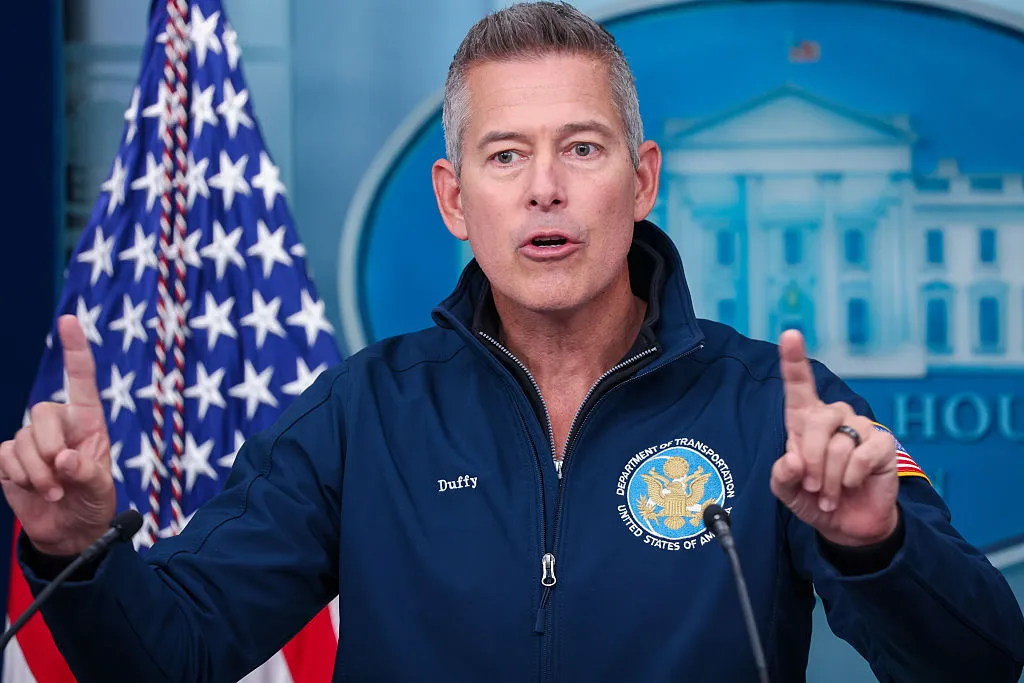
A Stark Call for Infrastructure Modernization:This incident serves as a critical real-world example of the vulnerabilities within the nation’s aging aviation infrastructure, reinforcing Transportation Secretary Sean Duffy’s persistent advocacy for substantial congressional funding to upgrade outdated technology.
Operational Protocols Under Intense Scrutiny:The timing and execution of high-stakes system upgrades are now a central focus of the FAA’s review, prompting a commitment to reevaluate operational protocols for when and how such critical maintenance work, even at remote sites, is conducted.
Air Travel Grounded: When ‘Routine Maintenance’ Exposes Systemic Fragility
Across the United States, the meticulously choreographed ballet of air travel came to an abrupt, grinding halt. For hours, the nation’s airspace was effectively closed, not by a nefarious cyberattack, a catastrophic equipment failure of a novel AI system, or a security breach, but by a surprisingly mundane culprit: a seemingly routine technical upgrade. Transportation Secretary Sean Duffy confirmed that a nationwide ground stop, which stranded thousands and disrupted millions of journeys, was the direct consequence of a router overloading a critical communication system, following the upgrade of copper wiring to fiber optic cable at a remote location.
This unprecedented disruption, marking only the third nationwide ground stop in the 21st century, sent a tremor through both the aviation industry and the traveling public. While initial speculation, particularly in our hyper-connected digital age, leaned towards more sinister possibilities involving sophisticated digital threats, officials quickly moved to clarify the precise nature of the crisis. It was, at its core, a stark and sobering reminder of the delicate balance between technological progress and the inherent risks associated with maintaining vast, complex, and often interconnected legacy infrastructure.
The Upgrade That Unraveled a Nation’s Airspace Network
The genesis of the problem lay in what should have been a standard, beneficial infrastructure improvement. According to Secretary Duffy, the incident originated from work undertaken by L3Harris, a long-standing and trusted contractor for the Federal Aviation Administration (FAA), at a specific, remote facility. The task at hand was the modernization of an older copper wire system, transitioning it to a more advanced, higher-capacity fiber optic cable. Such upgrades are indispensable for enhancing the speed, reliability, and overall security of data transmission within the sprawling digital nervous system that underpins safe and efficient air traffic control.
However, in the immediate aftermath of this upgrade, a newly integrated router evidently failed to operate as intended. Instead of seamlessly integrating with the existing network, it began to catastrophically overload a pivotal communication system. This system is not merely a convenience; it is the lifeblood for relaying critical information, such as Notices to Air Missions (NOTAMs), to pilots and air traffic controllers. NOTAMs provide real-time, essential data on everything from potential airborne hazards and temporary flight restrictions to runway closures and changes in navigation aids. When this indispensable system became unstable, the chain reaction was swift and devastating, leaving the FAA with no option but to implement the drastic, system-wide ground stop.
The Investigation: Decoding the Failure – Incompetence or Flawed Hardware?
Secretary Duffy addressed the potential causes with a directness that underscored the gravity of the situation. “What we’re working to determine was whether we had incompetence — meaning, was it user error or [installer] error from L3Harris? Or did they install a faulty router?” he stated during a Saturday press conference that, ironically, appeared to grapple with technical issues itself. This pointed inquiry immediately placed the contractor’s execution and the integrity of the supplied equipment at the forefront of the ongoing root cause analysis.
Rebecca Guy, the FAA’s acting CTO, offered further technical insight into the observed symptoms. Her team identified “two places that were actually pinging our network at a very high rate — a thousand connections over every four to five seconds.” This extraordinarily high and abnormal network traffic was a clear indicator of severe instability within the communication backbone, necessitating immediate intervention. Guy explained, “When we started to see the occurrence where our network was having instability, we started to look at what was the cause. And as such, we saw two places that were actually pinging our network at a very high rate… We disabled both of those, right away and were able to stabilize our network.” The swift identification and isolation of these problematic network nodes were instrumental in restoring partial stability, yet the fundamental questions regarding the initial failure persist and are central to preventing future recurrences.
The Cost of Deferred Modernization: Secretary Duffy’s Persistent Plea for Funding
This incident serves as a stark, undeniable real-world validation of a point Transportation Secretary Duffy has repeatedly and emphatically made: the critical and immediate need for increased Congressional funding to modernize the nation’s aging aviation equipment. The FAA’s vast technological infrastructure, much like that supporting many other critical national sectors, is a complex amalgamation of systems, some of which date back decades. Upgrading these systems is not merely a matter of technological vanity; it is fundamentally about ensuring the resilience, reliability, and paramount safety of the entire national air transportation network.
While the proximate cause was a specific technical misstep, the deeper vulnerability lies in a system that proved capable of being brought to its knees by a single point of failure during what was intended to be routine maintenance. This points to an underlying systemic issue where comprehensive redundancy and robust fault tolerance may not be uniformly implemented across all components, especially in less visible, remote operational locations. The narrative of “routine maintenance” leading to such widespread and impactful disruption powerfully reinforces the argument that persistent underinvestment and deferred modernization in critical infrastructure inevitably culminate in operational crises with national ramifications.
Operational Protocols Under Review: The Timing Question
Another critical aspect that immediately came under scrutiny was the timing of the upgrade. Why was such a pivotal “switchover” or system change conducted at 3 PM on a Friday afternoon, a period of high air traffic volume, rather than during the quieter overnight hours typically reserved for high-risk system modifications? Secretary Duffy addressed this by explaining that while major airport system upgrades are indeed meticulously scheduled for late-night windows to minimize disruption, remote location switchovers often occur during daytime hours. However, he conceded, acknowledging the severity of the outcome, “There will be reevaluation of when we do this work.” This statement signals a necessary and likely significant shift in operational planning, recognizing that even seemingly isolated infrastructure changes can have unpredictable and far-reaching national impacts.
Massive Disruption and Lingering Aftershocks
The immediate impact of the nationwide ground stop was both profound and extensive. According to aviation data firm Cirium, a staggering figure of over 8,200 flights were canceled on Friday evening alone as the system buckled under the pressure. The cascading effects, however, extended far beyond the initial lifting of the ground stop. An additional 3,000 flights were canceled on Saturday, a clear indicator of the enormous logistical challenge facing airlines as they scrambled to reposition aircraft and crews, reschedule tens of thousands of passengers, and untangle the complex web of disruptions created by the unprecedented halt. Travelers faced not only extended delays and missed connections but also the chaotic and frustrating aftermath of a global air travel system struggling desperately to regain its equilibrium.
Dispelling the AI and Cyberattack Speculation
In an era where sophisticated cyber threats are a constant concern and artificial intelligence rapidly permeates new domains, initial public speculation inevitably gravitated towards more malicious causes. However, FAA Administrator Bryan Bedford was resolute and unequivocal in his dismissal of such theories. “We see zero evidence of anything nefarious and zero evidence of anything AI-related,” Bedford firmly asserted, emphasizing, “We want to be clear that we have an equipment issue, and we’re working through what this defective piece of equipment was.” This swift and clear clarification was paramount in preventing widespread panic, curbing misinformation, or misdirected blame.
Adding a layer of perhaps unfortunate context, the incident occurred just one day after the FAA announced the rollout of an AI tool specifically designed to assist air traffic controllers – a move that had already drawn criticism from the controllers’ union, which claimed it was not adequately consulted in the system’s design. Despite this temporal proximity, officials were careful and firm in separating the two events. While Homeland Security Secretary Markwayne Mullin’s somewhat jocular remark about “SI [super intelligence]” when questioned about AI might have offered a moment of levity, the official and consistent stance remained crystal clear: this was a confluence of hardware and process failure, not a sophisticated cyber event or an autonomous AI gone rogue.
The Bottom Line: A Resounding Wake-Up Call for Infrastructure Resilience
The nationwide flight ground stop stands as a potent and unequivocal reminder that in our increasingly digital, interconnected, and globally reliant world, even “routine maintenance” on a single, seemingly remote piece of critical infrastructure can cascade into a national-level crisis. It powerfully underscores the non-negotiable importance of not only aggressively modernizing aging infrastructure but also meticulously ensuring that robust operational protocols, exhaustive testing procedures, and comprehensive redundancy measures are meticulously in place for every single component, irrespective of its perceived size or remote location. As the FAA delves into its extensive root cause analysis, the incident mandates a deeper, systemic reevaluation of how the nation vigilantly safeguards its essential services from the myriad unforeseen vulnerabilities inherent in complex technological systems. The continuous, safe, and efficient functioning of air travel, a cornerstone of modern commerce, tourism, and connectivity, depends entirely on addressing these challenges with unwavering commitment and foresight.
When you purchase through links in our articles, we may earn a small commission. This doesn’t affect our editorial independence.
{content}
Source:{feed_title}