
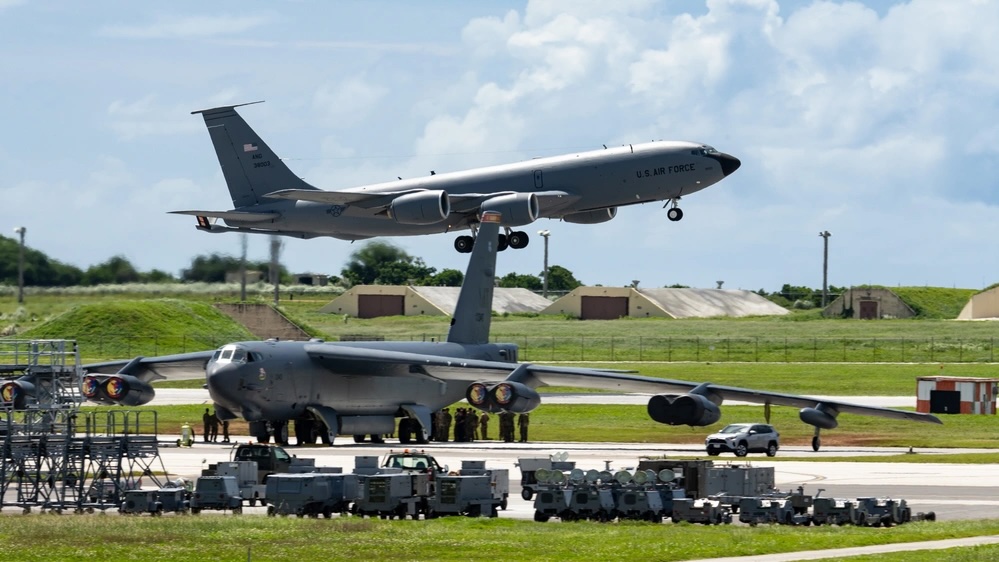
U.S. Air Force Launches Major Connectivity Overhaul for Mobility Fleet
KISSIMMEE, Fla.—The United States Air Force has unveiled a comprehensive plan to significantly upgrade communication and data-sharing capabilities across its entire fleet of aerial refueling and cargo aircraft. This initiative, known as MAF NEXUS, addresses a critical and long-standing issue within the mobility air force, which gained renewed urgency following a fatal KC-135 Stratotanker crash during Operation Epic Fury earlier this year.
Air Mobility Command (AMC) officials announced at the Airlift/Tanker Association symposium this month that MAF NEXUS, currently an initial development and prototyping program, is set to become an official program of record in the next budget cycle. This designation will secure earmarked funding in the fiscal year 2028 budget, ensuring dedicated resources for its long-term implementation and broader deployment across the force.
For many years, enhancing beyond-line-of-sight connectivity within the mobility fleet has been a stated priority for Air Force leaders. However, despite its recognized importance, it had not consistently topped the service’s broader modernization agenda. That dynamic shifted significantly in March when a KC-135 Stratotanker crashed in western Iraq during combat operations. The incident, which resulted in the deaths of all six crew members, occurred after the aircraft reportedly crossed paths and collided with another KC-135. While the crash remains under investigation and officials have provided no preliminary indications of cause, emphasizing it was not due to hostile or friendly fire, former air mobility leaders have publicly highlighted the event as a stark reminder of the urgent need for improved battlespace awareness and robust connectivity among mobility assets.
AMC’s efforts to tackle this communications challenge predate the recent tragedy, with work on the issue spanning several years. In 2023, the command initiated a focused experiment that successfully led to the development of the Airlift Tanker Open Mission Systems (ATOMS) by Sierra Nevada Corporation (SNC). ATOMS is engineered to integrate and connect multiple communication pathways and sensor inputs, thereby creating a unified, common operating picture for aircrews. This capability is designed for implementation across key mobility platforms, including the KC-46 Pegasus and KC-135 Stratotanker aerial refuelers, as well as the C-17 Globemaster and C-130 Hercules airlifters.
Through rigorous live testing in various military exercises, notably the recent Mobility Guardian 2025 conducted in the Pacific region, SNC has refined ATOMS, reducing its size to a portable, backpack-sized configuration. This compact design allows aircrews to carry the system aboard aircraft and connect to both classified and unclassified internet networks using touchscreen tablets. This innovative approach promises to deliver real-time information directly to the flight deck, significantly enhancing situational awareness and decision-making capabilities in dynamic operational environments.
General Kenneth S. Wilsbach, Air Force Chief of Staff, underscored the transformative potential of these advancements during his address at the symposium on November 6. “Imagine landing with more situational awareness than you had at takeoff,” General Wilsbach stated. “Aircrews tell us the value here cannot be overstated, particularly for dynamic taskings and distributed command and control requirements. … We’re excited to take this capability into the future as part of the MAF Nexus program of record.” He further praised AMC for its accelerated development timeline, noting that the command compressed “years of traditional development and testing into just six months” to bring a combat-tested capability to fruition, highlighting the urgency and efficiency of the initiative.
AMC officials confirm that tankers equipped with ATOMS have already utilized the system during operational deployments. The command is actively fielding the new capability, with “dozens” of aircraft already connected and plans for “more on the way,” according to General Wilsbach. Colonel Paul Tucker, director of AMC’s Commander’s Initiative Group, provided specific details at the Airlift/Tanker symposium, indicating that 31 KC-46s have so far been equipped with ATOMS Lite kits. Secretary of the Air Force Troy E. Meink has reportedly directed AMC to deploy “as many [kits] as we can afford right now,” leading to the procurement of 35 aircraft kits. For the C-17 fleet, AMC has contracts for 14 ATOMS installations, with kits prepared for an additional 26 aircraft. Budget documents reflect a request for $3 million in fiscal year 2027 funding to acquire 12 C-17 ATOMS kits, representing an initial investment in an anticipated $180 million plan to outfit 222 C-17s with ATOMS through 2031.
Regarding the KC-135 Stratotanker, Colonel Tucker stated that the program office is integrating the ATOMS architecture into its ongoing Real Time Information in the Cockpit 2.0 (RTIC 2.0) upgrade. Proposed funding in the fiscal year 2027 budget includes $91 million for up to 103 RTIC 2.0 aircraft kits, with an additional $102 million anticipated for the effort through 2031. For the C-130 Hercules, however, only one ATOMS prototype currently exists, indicating a staggered implementation across the diverse mobility fleet. This phased deployment strategy reflects the complexities of integrating new systems across various aircraft types and ages, each with unique technical requirements and operational demands.
The ATOMS system will ultimately be incorporated into the broader MAF NEXUS program, which envisions equipping the entirety of the mobility fleet with advanced beyond-line-of-sight connectivity. A core tenet of MAF NEXUS is its modular, open architecture design. This framework will facilitate software and hardware component upgrades from multiple vendors, promoting competition, fostering innovation, and preventing reliance on single-source suppliers. Furthermore, its scalable components are designed for rapid modernization, eliminating the need to redesign entire platforms every time a new capability is introduced or a vulnerability needs to be addressed. This open architecture approach is a significant shift from traditional, proprietary defense systems, promising greater flexibility, adaptability, and cost-efficiency in the long term.
AMC plans to begin scaling the MAF NEXUS program in fiscal year 2028. Colonel Tucker noted that the exact pace of this expansion is yet to be determined, as the command seeks to “kind of stabilize a little bit as it’s fielding.” Further testing of MAF NEXUS is scheduled for Emerald Flag 2026 at Eglin Air Force Base, Florida. “We’re going back to Emerald Flag in December; that is our final field test of a software baseline that we expect to be more like the fielded solution,” Tucker explained. “So, as long as that stabilizes, we’re going to publish … [what amounts to the baseline software] for MAF NEXUS. And then ATOMS will continue to evolve,” signifying an iterative development process.
Parallel to MAF NEXUS and ATOMS, other significant connectivity enhancement efforts are also underway. The Air Force is seeking approximately $83 million in its fiscal year 2027 budget for the Pegasus Advanced Communications Suite (PACS) for the KC-46. This program aims to upgrade the Tactical Data Link 16 uplink in PACS to a more modern version of Link 16, a vital beyond-line-of-sight and line-of-sight communication capability widely used by U.S. and NATO strike aircraft. Budget documents project total spending of $504 million on PACS through 2031, indicating a substantial long-term investment in KC-46 communication capabilities.
However, the immediate progress of these ambitious programs faces budgetary uncertainty. All fiscal year 2027 funding requests are currently paused as Congress deliberates its defense appropriations bills in the aftermath of recent elections. Pentagon funding is presently frozen at fiscal year 2026 base spending levels, which represents approximately $858 billion annually—roughly 40 percent less than the amount requested for 2027. This fiscal constraint could significantly impact the speed and scope of these critical modernization initiatives, potentially delaying their full implementation.
General Wilsbach reiterated the overarching imperative for speed and adaptability in military technology. “We need the ability to upgrade our systems with software, not at the depot,” he emphasized. “We need pipelines that can close a vulnerability or add capabilities in hours, not months. We’re headed in the right direction, but we must move faster.” This sentiment underscores the Air Force’s recognition that technological superiority in future conflicts will depend not just on advanced hardware, but on the agility to rapidly update and integrate software-defined capabilities to counter evolving threats.
Why This Matters
The Air Force’s MAF NEXUS program and its associated initiatives represent a pivotal shift in how the U.S. military intends to operate its global mobility fleet. This comprehensive overhaul of communication and data-sharing capabilities is not merely a technical upgrade; it is a strategic imperative with far-reaching implications for national security, global power projection, and the safety of military personnel.
Enhanced Operational Effectiveness:In an increasingly contested global environment, the ability of military aircraft to share information rapidly, securely, and comprehensively is paramount. Mobility aircraft—tankers and cargo planes—are the backbone of global reach, enabling power projection, humanitarian aid, and logistical support for forces worldwide. Without robust, beyond-line-of-sight connectivity, these aircraft operate with limited situational awareness, hindering real-time decision-making and potentially making them vulnerable. MAF NEXUS ensures that these essential assets are fully integrated into the broader battlespace, capable of receiving dynamic taskings and contributing to distributed command and control, which is essential for successful operations against technologically advanced adversaries. This means faster responses, more precise operations, and a more resilient logistical chain capable of adapting to fluid and complex situations.
Improved Crew Safety and Awareness:The renewed impetus for MAF NEXUS, spurred by the tragic KC-135 crash, highlights the direct link between advanced connectivity and crew safety. When aircraft lack a common operating picture and the ability to communicate seamlessly with each other and ground control, risks of inadvertent collisions, operational missteps, or delayed responses to emergent threats increase significantly. By providing aircrews with enhanced situational awareness—knowing the precise location and intent of other aircraft, both friendly and potentially hostile, as well as real-time threat data—MAF NEXUS aims to mitigate such dangers, safeguarding the lives of military personnel involved in critical missions and reducing the potential for costly accidents.
Strategic Preparedness for Great Power Competition:The U.S. military is actively preparing for potential conflicts with peer or near-peer adversaries, where traditional communication methods are likely to be degraded or denied. The modular, open architecture approach of MAF NEXUS is crucial because it allows for rapid adaptation and integration of new technologies from various vendors, ensuring that the mobility fleet remains technologically superior and resilient to evolving threats. This agility in modernization, moving from “months to hours” for updates, is a foundational element of maintaining a competitive edge and projecting credible deterrence globally, particularly in regions where military presence and responsiveness are vital.
Pioneering Open Architecture in Defense:The Air Force’s commitment to an open architecture with MAF NEXUS is a significant trendsetter for the broader defense industry. Moving away from proprietary, closed systems fosters innovation, reduces vendor lock-in, and can potentially lower long-term maintenance and upgrade costs by enabling competition among suppliers. This approach creates a more dynamic ecosystem for defense technology development, allowing for faster integration of commercial off-the-shelf solutions and accelerating the fielding of advanced capabilities to warfighters, thereby enhancing overall technological readiness.
Challenges of Funding and Implementation:Despite the critical importance of these initiatives, their successful and timely implementation faces immediate budgetary hurdles. The current freeze in defense spending at fiscal year 2026 levels, significantly below the requested amount for 2027, poses a tangible threat to the pace of these vital upgrades. Delaying these programs could have long-term consequences, impacting the Air Force’s ability to maintain its operational advantage, protect its personnel, and respond effectively to global crises. The outcome of congressional budget negotiations will directly influence the speed at which these essential modernization efforts can proceed, underscoring the tightrope walk between strategic necessity and fiscal reality in national defense planning.