
NATO Maritime Group One Commands Key Anti-Submarine Warfare Exercise in Baltic Sea
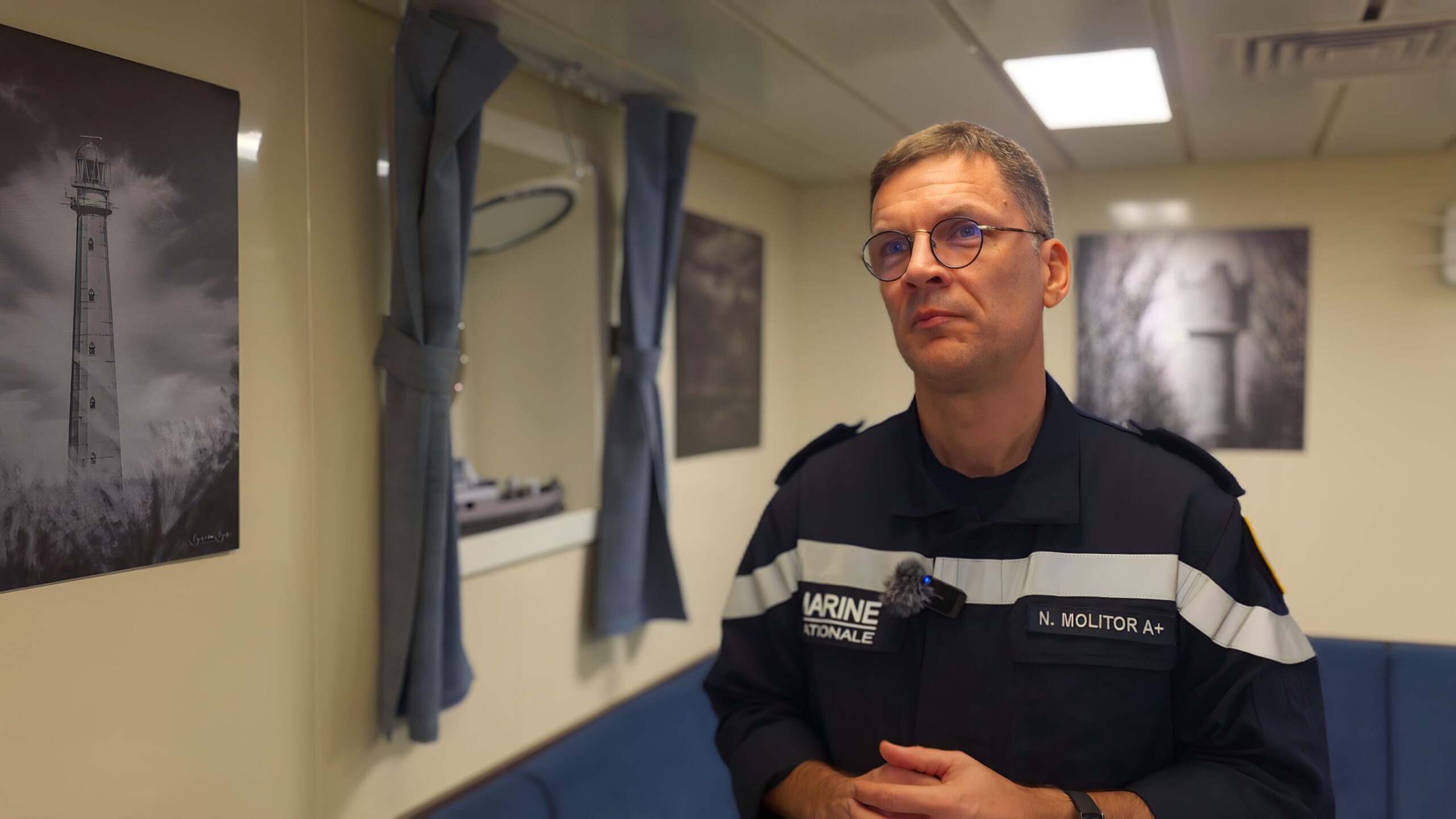
Rear Admiral Nicolas Molitor of the French Navy currently commands Standing NATO Maritime Group One (SNMG1), one of the Alliance’s permanent naval task groups. This force recently served as the focal point for Exercise Dynamic Merlin, NATO’s anti-submarine warfare (ASW) exercise conducted in the strategic waters of the Baltic Sea.
Speaking from on board the group’s Dutch flagship, HNLMS Den Helder, Rear Admiral Molitor highlighted the significance of commanding SNMG1, emphasizing its role in fostering cohesion among allied navies for a shared objective. He noted that this marks the second occasion in two years that France has undertaken command of SNMG1, underscoring a consistent commitment to NATO’s maritime operations.
Molitor articulated a clear vision for the group, stating, “Commanding SNMG1 is a very good opportunity. It’s the second time in two years that France commits to commanding SNMG1. It is about understanding the maritime environment. It is about being ready, being stronger together with the nations that are joining, and it’s very rich in these different dimensions, working with everybody together.”
Objectives: Interoperability, Deterrence, and Unity
The primary objectives for SNMG1 under Rear Admiral Molitor’s command are multifaceted, focusing heavily on enhancing operational readiness and collective strength. “The main objective is also, of course, working on interoperability,” he explained. “So it’s about tactics, it’s about techniques, and to see how we can best integrate with allies.” This focus on interoperability ensures that diverse national navies can operate seamlessly as a unified force, coordinating their actions and sharing best practices.
A secondary, yet equally critical, goal involves sharpening the tactical skills of the ships and their crews. This continuous refinement of combat readiness serves a broader strategic purpose: “This all in the overarching aim is to show NATO’s unity and its ability to deter and act and operate whenever necessary.” Deterrence, in this context, refers to NATO’s visible and credible capacity to defend its territory and interests, thereby discouraging potential adversaries.
SNMG1 brings together a diverse array of naval assets from multiple NATO member and partner nations, including the Netherlands, Germany, Canada, Denmark, and Finland. Rear Admiral Molitor observed that NATO’s standardized procedures generally facilitate quick integration among these forces. However, he also candidly acknowledged that achieving seamless coordination is not always without its challenges. “Sometimes, of course, some nations are acting differently,” he stated. “So the challenge is maybe sometimes to understand each other and make sure that in the end the effects are really achieved as we are imagining them, but in general it’s very easy to aggregate and work together.” This highlights the ongoing effort required to harmonize different national doctrines and operational approaches for maximum effectiveness.
Adapting to Evolving Threats: Drones and Missiles
During a press conference held aboard HNLMS Den Helder, Rear Admiral Molitor addressed a range of contemporary threats. Appearing alongside NATO’s submarine commander, Rear Admiral John Craddock, and the Chief of the Royal Swedish Navy, Rear Admiral Johan Norlén, Molitor confirmed that while Exercise Dynamic Merlin primarily focused on anti-submarine warfare, it also incorporated scenarios testing the participating ships’ resilience against missile and drone threats.
When questioned about the adequacy of counter-drone defenses, particularly in light of lessons learned from recent conflicts such as the war in Ukraine, Rear Admiral Molitor emphasized the realism of the exercise. Crews were made aware of the existence of drone threats but were not provided with advance warning of their simulated arrival. “It will be live, so they will be challenged like it would happen in real life,” he explained. “And so that’s also the mindset. We have to practice. We have to practice and train as we fight, and so the ships will be faced [with] real life situations, and they will then just have to react, and we will see if they are able to detect, to react properly, and to destroy these targets.” This approach aims to replicate the unpredictable nature of real-world engagements, stressing rapid response and adaptability.
Regarding the technological aspect of counter-drone capabilities, Molitor described it as “a domain that is in continuous evolution.” He underscored the value of exercises like Dynamic Merlin in evaluating the reliability and effectiveness of existing equipment when confronted with actual, dynamic threats. This ongoing assessment is crucial for NATO forces to maintain a technological edge and adapt to rapidly advancing adversary capabilities.
Operating in the Unique Baltic Sea Environment
Rear Admiral Molitor also drew attention to the distinct operational environment of the Baltic Sea, contrasting it with traditional naval domains. “We have the blue water navies, which are used to working in the Atlantic Ocean with deep waters, and we are here in an environment where the waters are very, very shallow, and this is very specific,” he noted. The shallow depths and complex littoral geography of the Baltic present unique challenges for naval operations, particularly for anti-submarine warfare, which typically relies on deep-water acoustics.
To address these specific conditions, SNMG1 regularly trains alongside regional experts. This collaboration ensures that the group benefits from specialized local knowledge and adapts its tactics to effectively operate in such a challenging environment. NATO’s overall presence in the Baltic has reportedly increased, driven by the need to enhance situational awareness of maritime activities and to safeguard the vital sea lines of communication (SLOCs) that are critical for the region’s economic stability and security.
“The Baltic Sea is surrounded by NATO allies, and we have to make sure that all these allies, their interests, their territory, their population is protected,” Molitor affirmed. This statement underscores the collective defense mandate at the heart of NATO’s operations in the region, aiming to ensure the security of all member states bordering the Baltic Sea.
Exercise Dynamic Merlin and the ongoing operations of Standing NATO Maritime Group One thus represent a continuous effort by the Alliance to enhance its collective defense capabilities, adapt to evolving threats, and maintain stability in strategically vital maritime areas.
Why This Matters
The activities of Standing NATO Maritime Group One (SNMG1) and exercises like Dynamic Merlin in the Baltic Sea hold significant geopolitical and strategic importance. Firstly, the Baltic Sea itself is a critical waterway, often referred to as a “NATO lake” due to its bordering countries almost entirely consisting of Alliance members, with the notable exception of Russia’s Kaliningrad Oblast. Ensuring the free movement of shipping and the security of sea lines of communication (SLOCs) within this region is paramount for the economic prosperity and energy security of numerous European nations. Any disruption to these routes, whether from conventional military actions or hybrid threats, could have severe consequences for trade, energy supplies, and overall regional stability.
Secondly, these exercises directly address the evolving security landscape in Europe, particularly in light of Russia’s full-scale invasion of Ukraine. The Baltic Sea region has seen increased military activity and heightened tensions, making NATO’s visible presence and readiness crucial for deterrence. Anti-submarine warfare (ASW) capabilities, a key focus of Dynamic Merlin, are particularly vital in this context. Submarines, especially those operating in complex, shallow-water environments like the Baltic, pose a significant threat to naval assets and critical infrastructure, including underwater data cables and energy pipelines. NATO’s continuous training and interoperability in ASW demonstrate its commitment to counter potential undersea threats and protect its members’ maritime interests.
Furthermore, the inclusion of counter-drone defense scenarios reflects NATO’s proactive approach to adapting to modern warfare. The conflict in Ukraine has dramatically highlighted the pervasive and disruptive role of unmanned aerial systems (UAS) across all domains of combat. By subjecting crews to live, unannounced drone threats, NATO aims to improve its tactical responses and evaluate the effectiveness of rapidly evolving counter-drone technologies. This ensures that the Alliance remains prepared for the diverse and complex challenges of 21st-century conflict, integrating new lessons learned from ongoing conflicts into its operational doctrines.
Finally, the emphasis on interoperability and unity among multinational forces reinforces the core principle of collective defense under Article 5 of the NATO treaty. By regularly bringing together navies from various nations – each with its own equipment, procedures, and training – exercises like Dynamic Merlin strengthen the Alliance’s ability to act as a cohesive and formidable force. This unified front sends a clear message of solidarity and resolve, enhancing NATO’s credibility as a deterrent and ensuring the collective security of its member states in a volatile geopolitical environment.