
Stay informed with free updates
Simply sign up to the Cyber Security myFT Digest — delivered directly to your inbox.
Key Takeaways:
- **Systemic Operational Risk:** Recent widespread outages, often self-inflicted due to aggressive AI-driven software patching, highlight a growing systemic operational risk across critical infrastructure and financial services, shifting investor focus from external cyberattacks to internal resilience.
- **Accelerated Cybersecurity Arms Race & Investment:** The rapid integration of AI in vulnerability research is fueling an intense cybersecurity arms race, compelling organizations to significantly increase IT spend on patching and system upgrades, creating both opportunities for security solution providers and immense pressure on corporate IT budgets.
- **Market Volatility & Sectoral Impact:** These incidents introduce an unpredictable element into market stability, potentially affecting valuations in technology, financial, and aviation sectors as firms grapple with reputational damage, operational disruption costs, and the need for substantial, ongoing investment in digital infrastructure robustness.
In an increasingly interconnected global economy, the digital arteries that power commerce, communication, and critical services are showing signs of unprecedented strain. A recent wave of operational outages, impacting giants from Microsoft and JPMorgan to the Federal Aviation Administration (FAA) and even the National Security Agency (NSA), has sent ripples through markets, prompting a re-evaluation of digital resilience and systemic risk. Far from being the result of coordinated cyberterrorism, these disruptions are now largely attributed by US officials and cybersecurity experts to an aggressive, AI-driven race to patch software vulnerabilities – a phenomenon that underscores both the transformative power and the inherent instability of modern digital infrastructure.
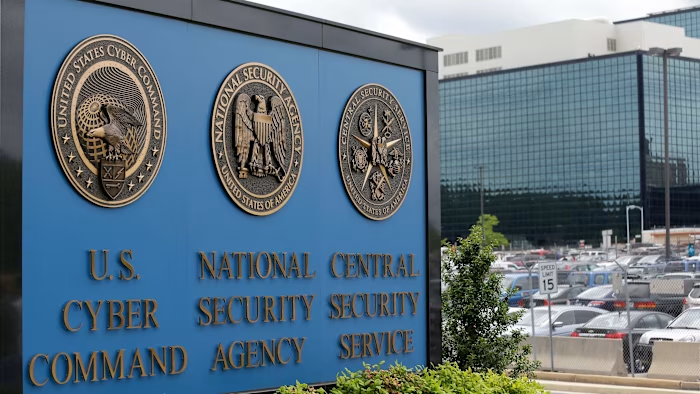
The past week’s disruptions were stark. Microsoft 365 services were crippled for nearly 24 hours, impacting businesses and institutions across over 70 countries. The FAA’s system instability grounded flights across the entire US network, leading to widespread travel chaos and significant economic repercussions. JPMorgan Chase Bank customers, alongside those at several other US banks, found themselves locked out of online services due to a software bug. Even the NSA, typically seen as the vanguard of digital security, reportedly experienced an outage connected to a classified internal communications network. For investors and market analysts, these incidents are not isolated technical glitches but critical indicators of broader systemic vulnerabilities that demand urgent attention.
Mark Warner, vice-chair of the Senate select committee on intelligence, articulated the prevailing consensus, stating, “At this point, there is no indication that these incidents are the result of a cyber attack, foreign interference or some co-ordinated effort. What appears to be happening instead is a consequence of how quickly artificial intelligence is changing the cyber security landscape.” This assessment shifts the market narrative from geopolitical threats to internal operational fragility, raising questions about corporate IT governance and the capacity of existing systems to cope with the accelerating pace of technological change.
AI’s role is a double-edged sword. Its capacity to rapidly analyze vast quantities of code and identify bugs and fixes far quicker than human teams has indeed revolutionized vulnerability research. This technological leap has ignited a fierce cybersecurity arms race, compelling organizations to detect and patch flaws preemptively before malicious actors can exploit them. However, as Warner pointed out, this accelerated pace puts “enormous pressure on companies and government agencies to patch those vulnerabilities immediately, often all at once.” The resultant strain on systems “that weren’t built to handle that pace of change” is proving to be a significant source of operational instability.
The financial implications are substantial. For major technology providers like Microsoft, widespread outages translate directly into reputational damage, potential client churn, and perhaps even contractual penalties for service level agreement (SLA) breaches. In the financial sector, JPMorgan’s incident highlights the fragility of digital banking, impacting customer trust and potentially leading to lost transaction opportunities. The FAA’s grounding of flights exacts a heavy toll on airlines, logistics companies, and the broader economy, underscoring the critical dependence of supply chains and tourism on seamless digital operations. Anne Neuberger, former deputy national security adviser and a former NSA director, echoed this sentiment, noting, “No one is immune as organisations rush to secure systems one step ahead of attackers. In some cases, applying multiple patches will lead to outages. I suspect that is what occurred here.” The NSA’s explanation of “temporary degradation during scheduled routine maintenance” further reinforces the narrative of internal, rather than external, challenges.
This dynamic has significant implications for corporate capital expenditure and strategic planning. Companies are now faced with the imperative of not only investing in advanced AI-driven cybersecurity tools but also in modernizing their underlying IT infrastructure to support the rapid deployment of patches. This will likely drive increased demand for cloud-native solutions, automation platforms, and robust testing environments, creating a burgeoning market for cybersecurity and IT modernization vendors. Conversely, firms with antiquated legacy systems face escalating operational risks and potentially prohibitive upgrade costs, which could depress their valuations.
Cynthia Kaiser, a former deputy assistant director at the FBI’s cyber division, provided a crucial warning for this volatile environment. While the outages may not be direct attacks, the “race to patch software vulnerabilities inevitably creates friction and disruption.” More ominously, she cautioned that “Even when an outage isn’t caused by a cyber attack, these moments of operational distraction leave dangerous gaps open for threat actors and opportunists to take advantage.” This introduces a secondary layer of market risk: the potential for opportunistic cybercriminals to exploit the chaos and distraction caused by patching-induced outages to launch data breaches, ransomware attacks, or other forms of digital intrusion. Such secondary attacks could lead to regulatory fines, litigation, and further erosion of market confidence, adding to the financial burden of the initial disruption.
Market Impact
The recent spate of digital outages signals a paradigm shift in how markets perceive and price digital risk. Investors are now forced to consider not just the threat of sophisticated external cyberattacks, but also the systemic operational fragility inherent in an environment driven by rapid AI-powered development and patching. This will likely lead to a re-rating of companies based on their demonstrable operational resilience and IT infrastructure robustness. Sectors heavily reliant on uninterrupted digital services, such as financial technology, aviation, and e-commerce, face heightened scrutiny and potentially increased compliance costs. Conversely, the cybersecurity sector, particularly firms offering AI-driven vulnerability management, automated patching, and robust observability platforms, stands to benefit from accelerated corporate spending. However, even these providers will be under immense pressure to deliver solutions that enhance stability rather than introduce further friction. The overarching trend points towards an era where digital resilience becomes a core competitive advantage and a critical factor in market valuation, challenging traditional investment models that may have overlooked the intrinsic vulnerabilities of our hyper-connected world.