
Key Takeaways:
- Accelerating Threat:AI is dramatically increasing the speed, sophistication, and scale of cyberattacks, making traditional, outdated defense systems increasingly obsolete.
- Critical Mismatch:A dangerous gap exists between the rapid evolution of AI-powered offensive capabilities and the slow pace of adopting advanced defensive technologies, particularly in legacy infrastructures.
- Urgent Imperative:While AI offers the potential for superior defense, organizations and governments must “pick up the pace” in securing their systems, investing in AI-driven solutions, and fostering proactive cybersecurity strategies to avert widespread disruption.
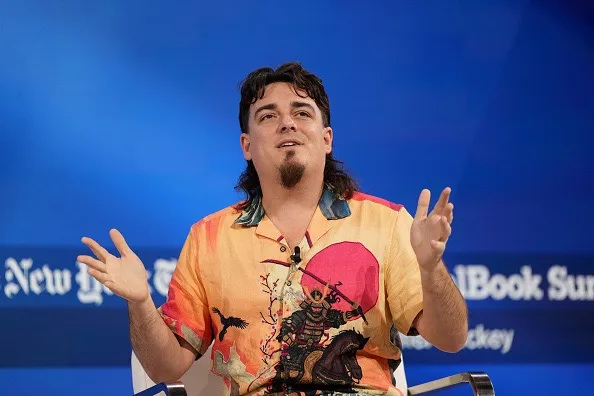
The digital world is at a critical juncture, facing a rapidly escalating threat landscape where artificial intelligence is not just a tool for innovation, but a potent weapon in the hands of malicious actors. This stark warning came from Palmer Luckey, the visionary co-founder of Oculus and Anduril Industries, during his appearance at The New York Times DealBook Summit. Luckey’s insights underscored a pressing reality: AI-powered cyberattacks are moving with an unprecedented velocity, leaving antiquated defense mechanisms struggling to keep pace, if not entirely overwhelmed.
“We’re seeing the natural effects of a lot of these advanced AI tools allowing for the creation of various exploits,” Luckey stated, drawing a direct line between recent widespread tech outages and the burgeoning capabilities of AI in offensive cyber operations. While official explanations for the latest disruptions often pointed to companies scrambling to patch newly discovered vulnerabilities, Luckey shifted the focus to the foundational weakness: the pervasive use of outdated technology ill-equipped to withstand the onslaught of modern, AI-enhanced threats.
The AI-Driven Offensive: A New Era of Cyber Warfare
The advent of advanced AI tools has revolutionized the art of hacking. Attackers can now leverage machine learning algorithms to automate reconnaissance, identify vulnerabilities at machine speed, and craft highly sophisticated, polymorphic malware that constantly changes its signature to evade detection. AI can also power hyper-realistic phishing campaigns, conduct large-scale social engineering, and even predict defensive maneuvers. This allows for the rapid generation of “various exploits” that Luckey highlighted, making zero-day vulnerability discovery and exploitation far more accessible and efficient for adversaries.
Luckey elaborated on the geopolitical dimensions of this new threat, explaining that U.S. adversaries are actively exploiting the growing mismatch between cutting-edge attack capabilities and stagnant defense systems. These campaigns are driven by a dual motive: strategic objectives such as espionage, intellectual property theft, and critical infrastructure sabotage, alongside significant financial gain. He singled out North Korea as a particularly active participant in these state-sponsored cyber operations, underscoring the severe and tangible risks to national security and economic stability.
The Defense Dilemma: Legacy Systems vs. AI Velocity
The core of the problem, as Luckey articulated, lies in the inertia of legacy systems. Many organizations, from government agencies to large corporations, operate on IT infrastructures built decades ago, layered with patches and workarounds. These systems are inherently slower to update, more complex to secure, and often lack the architectural flexibility required to integrate modern, AI-driven defensive solutions. The sheer volume and speed of AI-generated threats overwhelm traditional, human-centric security operations centers (SOCs) that rely on manual analysis and rule-based systems.
The urgency of this situation was vividly illustrated by an unexpected development at the summit itself. Andrew Ross Sorkin, the interviewer, revealed that U.S. Vice President J.D. Vance had canceled his scheduled appearance due to the recent tech outages, redirecting his attention to high-level meetings concerning the escalating cyber crisis. This incident served as a potent, real-time indicator of the severity and immediate impact of the problem, elevating it from a theoretical concern to a matter of national importance.
Given these alarming developments, Sorkin’s question to Luckey was direct: “how worried should we be about all this?” Luckey’s response was characteristically blunt: “It depends on how well prepared you are.” He then added an ominous prediction, “You guys are going to find out what’s going on soon enough,” suggesting that the full scope and impact of these AI-powered attacks are yet to be widely understood or publicly revealed. This statement carries a chilling implication that what we’ve seen so far might only be the tip of a much larger iceberg.
AI as the Ultimate Defender: A Race Against Time
Despite the grim outlook, Luckey also offered a glimmer of hope, positing that AI could ultimately become the defender’s most powerful ally. “In the long run, the advantages are going to accrue to the side that is most effectively using AI for defense,” he asserted. The key, however, lies in the speed and efficacy of adoption. While it’s true that “everything can be hacked – they are right, for now,” as Luckey conceded, this status quo is not inevitable. AI can enable defenders to predict threats, detect anomalies in real-time, automate threat response, and even develop proactive countermeasures that learn and adapt.
The current imbalance is stark: “there’s a mismatch between the attackers who are very fast-moving and using technology and old, outdated systems that are not able to adopt technology as quickly as it is developed.” This gap is not merely technological; it’s also a matter of organizational agility, investment priorities, and strategic foresight. Bridging this chasm requires a concerted, urgent effort across all sectors.
Luckey’s concluding remarks served as a powerful call to action: “And I think… people are going to have to pick up the pace.” His final imperative was unequivocal: “It’s time to start running.” This isn’t just about incremental improvements; it demands a fundamental shift in how organizations approach cybersecurity, prioritizing rapid adoption of advanced AI defenses, fostering a culture of continuous innovation, and investing significantly in the necessary talent and infrastructure. The race is on, and the stakes could not be higher.
Bottom Line:
Palmer Luckey’s stark warning at the DealBook Summit encapsulates the defining cybersecurity challenge of our era: a rapidly expanding threat surface powered by AI that is overwhelming legacy defenses. The current mismatch between sophisticated AI-driven attacks and outdated security postures is not merely causing outages but poses an existential risk to critical infrastructure, economic stability, and national security. While AI offers the potential for a robust defense, realizing this future demands immediate, decisive action. Organizations and governments must urgently accelerate their investment in advanced AI security solutions, modernize their IT architectures, and embrace a proactive, dynamic approach to cybersecurity. Failing to “pick up the pace” could leave us vulnerable to disruptions far more severe than those witnessed recently, with profound and lasting consequences. The time for deliberation is over; the time for action is now.
When you purchase through links in our articles, we may earn a small commission. This doesn’t affect our editorial independence.
{content}
Source:{feed_title}