
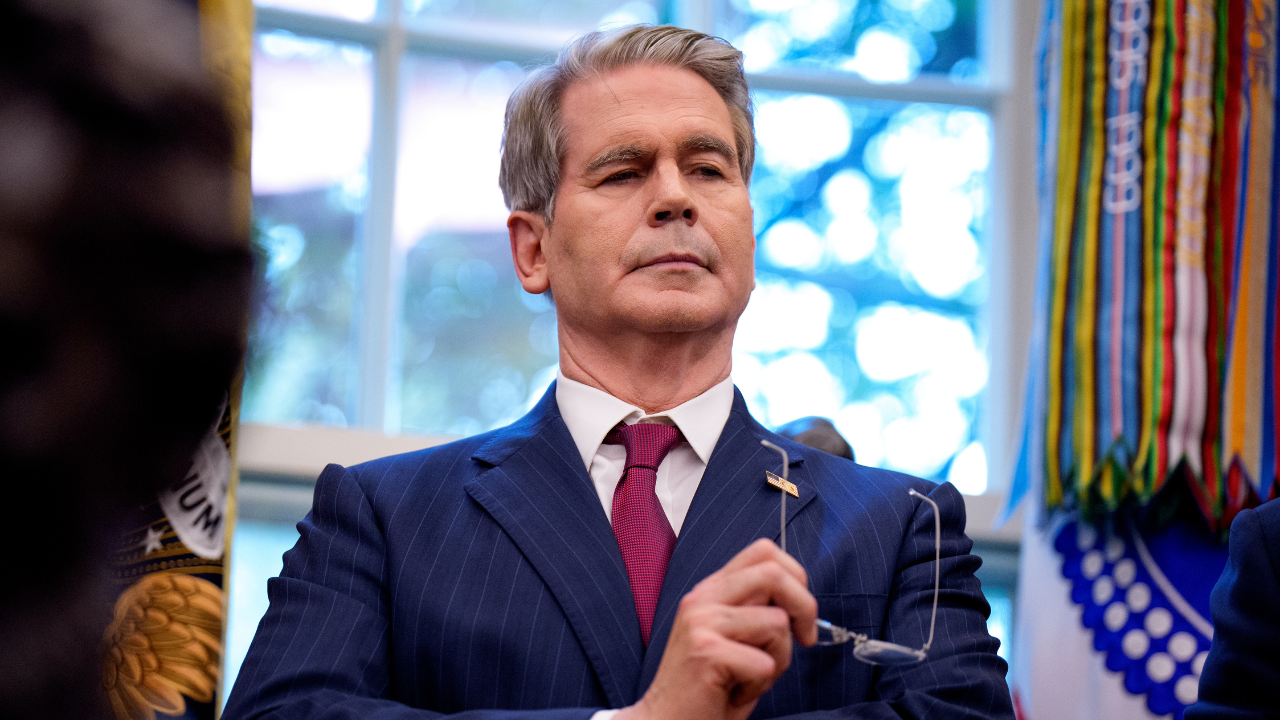
On ‘Kudlow,’ Treasury Secretary Scott Bessent elaborates on the United States’ freshly unveiled $20 billion maritime reinsurance initiative, the ongoing strife in Iran, and other topics.
Treasury SecretaryScott Bessentstated Friday on “Kudlow” that Iranians are contending with challenges on dual fronts, concurrently cautioning about when the nation will face its subsequent formidable military action from U.S. forces.
“Our most extensive aerial bombardment will commence this evening, and we’ll inflict the greatest harm upon the Iranian projectile platforms, the manufacturing plants producing these projectiles, and we are considerably weakening their capabilities,” Mr. Bessent conveyed to Larry Kudlow, host of FOX Business’s “Kudlow” program, on Friday.
After suffering defeat in the armed conflict sphere, following what Bessent characterized as the United States’ “decisive” series of attacks, Iran has been compelled to utilize an alternative strategy: the economy.
U.S. CONSIDERS REQUESTING CHINA TO LIMIT ACQUISITIONS OF RUSSIAN AND IRANIAN CRUDE
Fumes ascend over the urban core after an Israeli army initiates a second series of aerial bombardments on Iran on February 28, 2026.(Fatemeh Bahrami/Anadolu via Getty Images / Getty Images)
“Since military success eluded them there [in a military capacity], they’re endeavoring to foment financial disorder, and I doubt they will manage to accomplish this,” he added.
This development occurs as the Trump administration strengthens coverage for American ships navigating the waters of theStrait of Hormuz, a crucial crude passage bottleneck largely under Iranian dominion.
Roughly one-fifth of the global petroleum and natural gas supplies transits this essential maritime route, and Bessent said a shutdown of which could destabilize energy markets.
“At the onset of hostilities, [insurers] withdrew all coverage for any ships traversing to and from the Strait of Hormuz, or in the broader Gulf region,” Bessent elucidated.
Seeking to reestablish trust in sea commerce amidst the hostilities in Iran, theInternational Development Finance Corporation (DFC)declared on Wednesday its intention to offer as much as $20 billion incoverage for shipsnavigating the passage.

A naval ship is observed traversing the Strait of Hormuz, a crucial maritime channel through which a significant portion of global petroleum and natural gas transits on March 1, 2026. (Sahar AL ATTAR / AFP via Getty Images / Getty Images)
FUTURES EXCHANGE KALSHI FACES LAWSUIT REGARDING $54 MILLION WAGERS ON IRANIAN LEADERSHIP FOLLOWING THE APPLICATION OF A ‘DEATH EXEMPTION’ CLAUSE
“This initiative aims to grant cargo carriers with coverage, whether they are conveying petroleum, goods, or agricultural nutrients,” Bessent divulged.
Tehran maintains that the Hormuz Strait remains navigable, however, it declared it would bar passage to vessels linked withIsraeli or American affiliations, the Secretary of the Treasury clarified.
Bessent proceeded to address the question of if American ships would require safeguarding while traversing the Iranian-governed channel as friction escalates between the two countries.

Petroleum vessel docked in a harbor within the Strait of Hormuz(Giuseppe Cacace/AFP via Getty Images / Getty Images)
ACCESS THIS LINK TO ACQUIRE THE FOX NEWS APPLICATION
“A readiness exists to transit the strait provided we also furnish amaritime convoywhen necessary,” he informed FOX Business.
Bessent observed that ships from Iran and China have been witnessed navigating successfully during the ongoing hostilities and pledged to resolve the predicament.
“We shall anticipate communication from CENTCOM regarding their assessment of when secure transit becomes viable…” he stated. “The timeframe, whether one or two weeks, remains uncertain, however, we are progressing towards a resolution.”