
Campbell’s Sharp Cuts Signal Broader Consumer Staples Pressures Amidst Challenging Economic Climate
Key Takeaways
- Aggressive Restructuring:Campbell’s is undertaking significant operational overhaul, including a 13% reduction in its salaried workforce and closing two snack plants, to combat “unacceptable results” and improve profitability amidst a challenging consumer landscape.
- Consumer Sensitivity vs. Pricing Power Dilemma:The company faces a critical trade-off, with budget-conscious consumers increasingly gravitating towards private-label and value brands, leading to volume declines even as Campbell’s implements price increases to protect margins from elevated input costs.
- Conservative Outlook Signals Persistent Headwinds:Campbell’s fiscal 2027 guidance, projecting net sales declines of 2% to 4% and adjusted EPS below consensus estimates, suggests a prolonged period of strategic adjustments and market headwinds, impacting investor sentiment on its turnaround prospects.
In a decisive move reflecting the persistent pressures gripping the consumer staples sector, Campbell’s, the iconic food giant, has announced a significant restructuring effort. The company is cutting 13% of its salaried workforce, impacting approximately 560 jobs based on its reported 4,300 salaried employees, and closing two snack plants. This aggressive stance underscores CEO Mick Beekhuizen’s acknowledgement that the company’s “results remain unacceptable,” signaling a proactive approach to “addressing reality head-on” rather than passively awaiting an environmental improvement.
Humilis Investment Strategies CEO and CIO Brian Belski discusses the benefits of 401(k) investing, midterm market volatility, strong fundamentals and his surprise sector pick for the fourth quarter on ‘Varney & Co.’
This internal overhaul comes at a time of considerable macroeconomic volatility, as highlighted by market observers like Brian Belski discussing “midterm market volatility” and the importance of “strong fundamentals.” For Campbell’s, these fundamentals have been tested by a confluence of factors, primarily the sustained resistance from budget-conscious shoppers. Lower-income households, particularly, have increasingly shifted their spending towards cheaper, private-label, and value brands, directly impacting the sales volumes of established packaged food companies.
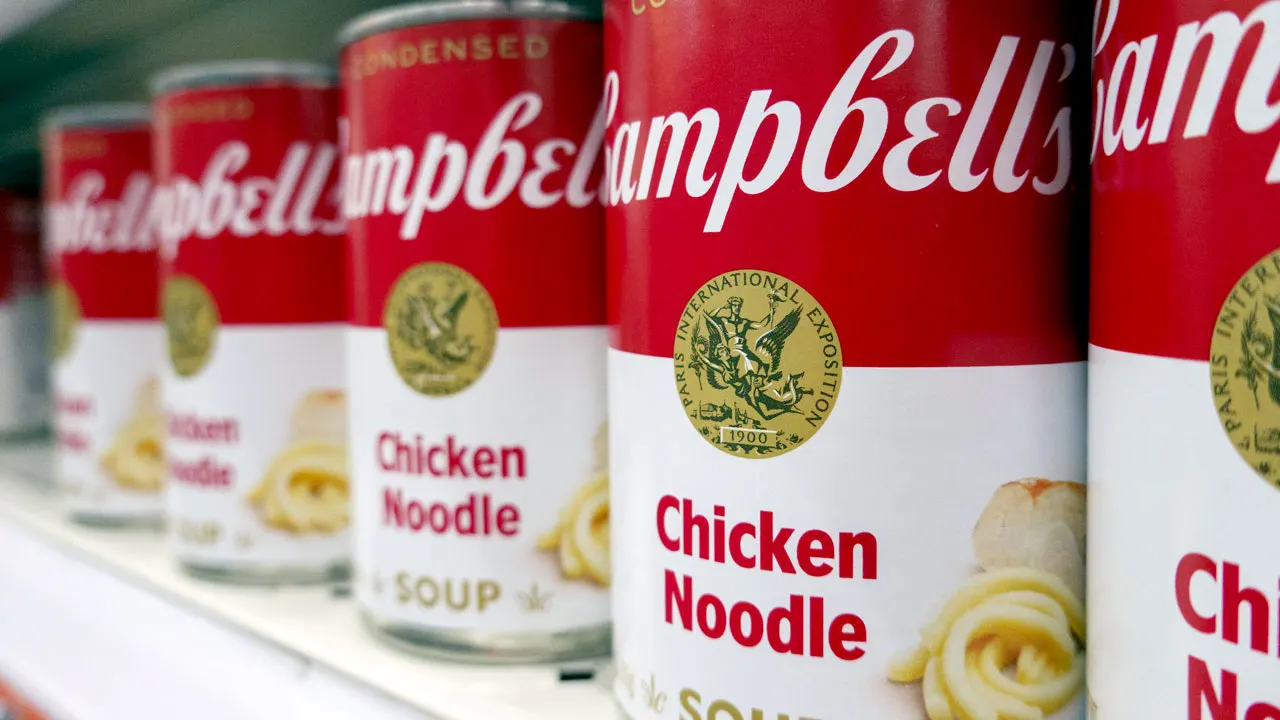
Cans of Campbell’s chicken noodle soup for sale are displayed at a store on July 22, 2026, in Washington, D.C.(Kevin Carter/Getty Images)
Despite this consumer pushback, Campbell’s, like many peers in the sector, has implemented successive price increases over recent years. This strategy was designed to protect crucial profit margins against the escalating costs of raw materials, logistics, and necessary investments in product innovation, such as new soup and sauce launches, and seasonal merchandising programs. CFO Todd Cunfer detailed average price increases of 4% to 5% across roughly 60% of its portfolio, anticipating the benefits to begin flowing through in the second quarter of the current fiscal year, albeit acknowledging an anticipated hit to sales volumes.
The company’s latest financial disclosures reveal the extent of these challenges. For the fourth quarter, Campbell’s reported net sales falling 8% to $2.14 billion, narrowly missing analysts’ consensus estimates of $2.15 billion. Adjusted earnings per share, however, came in at 39 cents, aligning with expectations. A deeper dive into segment performance shows the underlying tension: volumes in the snacks segment fell 6% even as prices rose 1%, while in the meals and beverages segment, volumes managed a 3% gain with prices remaining flat. This divergence underscores the delicate balance companies like Campbell’s must strike between pricing power and maintaining consumer demand in a price-sensitive market.
Looking ahead, the company’s fiscal 2027 outlook painted a more cautious picture, further weighing on market sentiment. Campbell’s projects net sales to decline by 2% to 4%, a more pessimistic forecast compared to analysts’ expectations of only a 0.8% drop, according to data compiled by LSEG. Similarly, its forecast for adjusted earnings per share of $1.65 to $1.80 fell below the Street’s estimates of $1.86. These revised expectations suggest that the path to recovery and sustainable growth may be longer and more arduous than previously anticipated by the market.
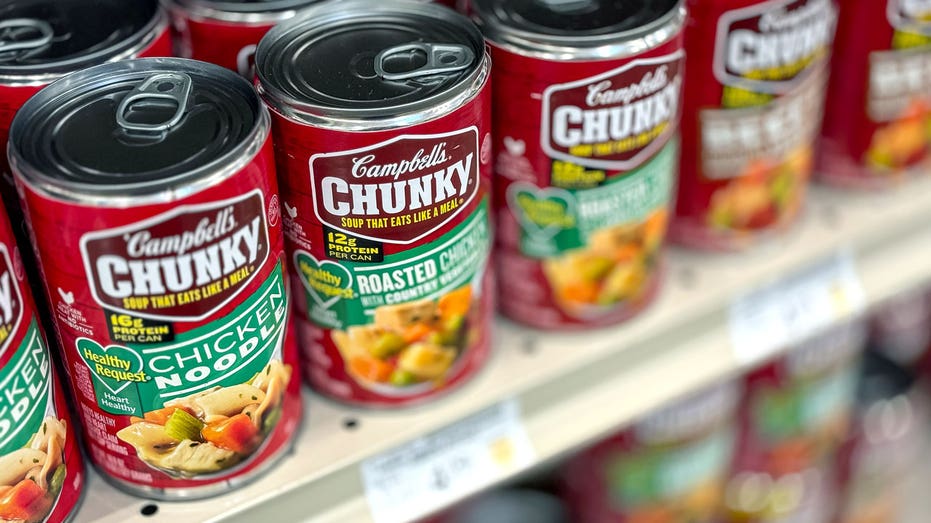
Campbell’s soup at a supermarket in Hercules, Calif., Dec. 8, 2025(David Paul Morris/Bloomberg via Getty Images / Getty Images)
To navigate these headwinds, Campbell’s has articulated a clear strategic roadmap focused on operational efficiency and financial de-risking. The announced job cuts and plant closures are part of a broader plan to generate approximately $500 million in cost savings by fiscal 2030. CEO Beekhuizen emphasized that this program is geared towards “increasing speed and accountability and improving our margins and cash flow.” Furthermore, a core priority for the company is to “reduce financial risk and maintain our investment-grade credit rating,” a critical objective for ensuring access to capital markets at favorable rates, especially in an environment of rising interest rates.
Campbell’s is not alone in its efforts to streamline operations and cut costs. Recent announcements from other major corporations, such as Uber’s plan to cut thousands of jobs, Microsoft’s reduction of 4,800 positions, and similar actions by a “top tobacco company,” highlight a broader corporate trend. This wave of restructuring across diverse sectors suggests that businesses are proactively adjusting to a potentially slower economic growth environment, elevated inflation, and increased scrutiny on profitability and operational efficiency. For consumer goods companies, this often means tough choices between maintaining market share and protecting margins, with Campbell’s currently favoring the latter through cost rationalization.
| Ticker | Security | Last | Change | Change % |
|---|---|---|---|---|
| CPB | THE CAMPBELL’S CO. | 21.38 | -0.74 | -3.37% |
Market Impact
Campbell’s latest announcements sent a clear signal to investors, with the stock (CPB) declining by 3.37% following the news. This immediate negative reaction underscores market skepticism regarding the efficacy and timing of these restructuring efforts, particularly in light of the subdued fiscal 2027 guidance that fell below analyst consensus. For the broader consumer staples sector, Campbell’s struggles serve as a bellwether, highlighting the enduring challenge of balancing pricing power with consumer affordability in a stubbornly inflationary yet recession-wary environment. Investors will be closely watching whether these aggressive cost-cutting measures translate into tangible margin improvement and cash flow generation, or if the deeper underlying issue of waning consumer loyalty to traditional brands persists. The company’s commitment to maintaining its investment-grade credit rating is a positive sign for financial stability, but the path to sustainable top-line growth remains nebulous. The market will be scrutinizing future earnings reports for any indication that these operational overhauls are indeed leading to a more competitive and profitable Campbell’s, or if it’s merely a defensive maneuver in a tightening market where strong fundamentals, as discussed by experts like Brian Belski, are increasingly vital for investor confidence.