

Trump’s escalating trade war with Canada could raise costs for businesses and consumers in key battleground states before voters head to the polls.
U.S.-Canada Trade War: A Deep Dive into Market Volatility and Regional Economic Strain
**Key Takeaways:**
1. **Escalating Costs & Supply Chain Risk:** The U.S.-Canada trade dispute introduces significant cost pressures and supply chain vulnerabilities for businesses, particularly in integrated sectors like automotive and agriculture, threatening profit margins and consumer purchasing power across key battleground states.
2. **Regional Economic Headwinds:** Tariffs on critical inputs and exports create direct economic headwinds for manufacturing, agricultural, and transportation sectors in states like Michigan, Ohio, and Pennsylvania, potentially leading to production cuts, delayed investments, and a drag on regional GDP growth.
3. **Market Volatility & Policy Uncertainty:** Persistent trade friction and the looming threat of further tariffs contribute to elevated market volatility and investor uncertainty, as businesses grapple with unpredictable policy environments that can impact earnings forecasts, capital allocation, and overall market sentiment.
President Donald Trump’s escalating trade war with Canada is not merely a political talking point; it’s emerging as a tangible economic headwind, raising fresh concerns among analysts and investors in battleground states ahead of the November midterms. The imposition of tariffs on billions of dollars’ worth of goods, coupled with Washington’s ban on nearly $1 billion in Canadian imports – spanning alcohol, dairy products, and even motorcycles – signals a hardening stance that carries significant market implications.
The latest measures, which took effect on September 29th, underscore a protracted negotiation stalemate. While the administration champions these tariffs as a mechanism to repatriate manufacturing and safeguard American industries, the market reality is far more nuanced. Businesses face the looming threat of reduced production capacity, consumers could see an uptick in retail prices, and manufacturers, wary of an unpredictable trade landscape, may defer critical capital investments. This translates directly into pressure on corporate earnings, potential supply chain disruptions, and a dampening effect on economic growth forecasts in vulnerable regions.
The trade fight has escalated under Trump and Canadian Prime Minister Mark Carney, with negotiations breaking down and both countries imposing new measures targeting each other’s goods. (Getty Images)
“The cost of living, cost of goods, cost of doing business is such an important factor for Americans who are going to be casting a ballot,” David Clement, policy director of the Consumer Choice Center, told Fox News Digital, highlighting the potential for this economic friction to translate into electoral consequences. From a market perspective, this implies a direct impact on consumer discretionary spending and the profitability of companies operating within these sectors.
Clement specifically identified Ohio, Illinois, Michigan, Pennsylvania, and Wisconsin as states most acutely exposed to Canadian retaliation. Their deeply intertwined manufacturing, agricultural, and cross-border supply chains make them economic flashpoints. “American manufacturers or American businesses who rely on Canadian inputs are going to start to feel the pain right in the lead up to going to the ballot box,” he added. For investors, this translates into increased risk for publicly traded companies domiciled in or heavily reliant on these states, potentially impacting their quarterly earnings reports and stock performance.
The escalation, particularly following Canada’s retaliatory tariffs in September, suggests a deepening impasse. U.S. Trade Representative Jamieson Greer’s acknowledgement at a recent G20 trade ministers meeting that key issues remain unresolved only fuels market uncertainty, signaling that this geopolitical risk premium is unlikely to dissipate soon.
Ohio: Manufacturing and Metals at Risk
Ohio’s economy, a robust industrial heartland, stands particularly vulnerable, with roughly $2.3 billion in exports exposed to Canadian retaliation, according to Clement. The state’s machinery, transportation equipment, minerals, and metals industries are deeply reliant on Canadian buyers and integrated cross-border supply chains. Tariffs act as an immediate price hike, making Ohio-made goods less competitive in the Canadian market. For companies like those in the industrial machinery sector, this could mean reduced order books, diminished revenues, and pressure on profit margins. Furthermore, if Ohio manufacturers rely on Canadian inputs, increased import costs could squeeze margins from both ends, forcing them to either absorb costs or pass them on to consumers, risking demand destruction.
Michigan: Auto Industry’s Integrated Vulnerability
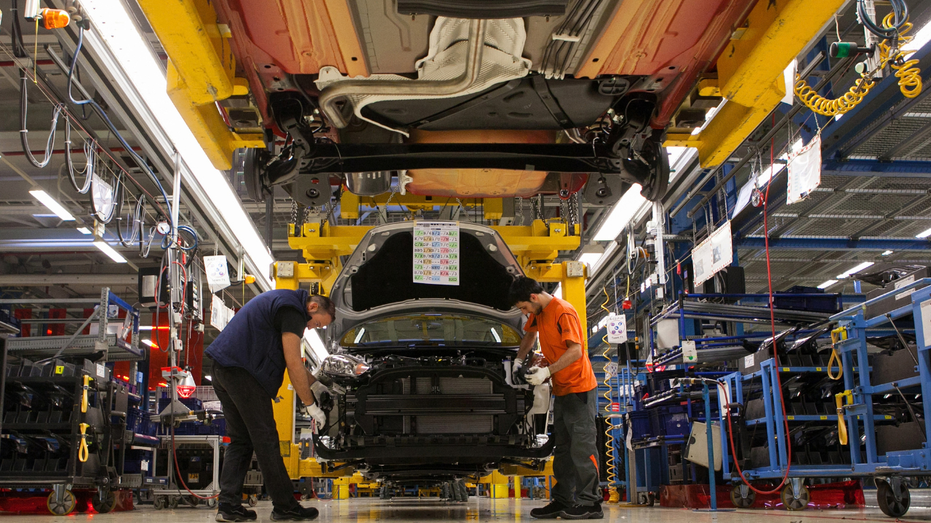
Michigan’s auto industry faces heightened uncertainty as tariffs threaten the deeply integrated supply chain connecting the state with Canada.(Krisztian Bocsi/Bloomberg/Getty Images)
Michigan embodies perhaps the clearest and most immediate market risk due to its profoundly integrated auto industry, intricately linked with neighboring Ontario. The auto sector operates on a “just-in-time” supply chain model, where components can traverse the U.S.-Canada border multiple times during a vehicle’s assembly. Tariffs, in this context, are not a one-time charge but a cumulative cost, increasing at each stage of production. This significantly inflates manufacturing expenses for major automakers and their extensive network of suppliers, directly impacting their profitability and potentially leading to higher sticker prices for consumers, which could curb vehicle sales.
“Most Americans don’t know that a single component on a U.S.-assembled vehicle can cross the border upwards of eight times before it’s actually completed,” Clement emphasized, illustrating the complexity. The stakes could rise dramatically if the administration proceeds with a proposed 50% tariff on Canadian auto exports, effective January 1st, should an agreement remain elusive. Such a move would send shockwaves through the entire North American auto market, threatening widespread production cuts, job losses, and a significant reassessment of investment strategies within the sector, undoubtedly weighing heavily on auto stocks and related indices.
Pennsylvania: Machinery and Equipment Hit
Pennsylvania’s economy, with nearly $1.8 billion in exports exposed, including critical machinery and equipment, faces a dual market challenge. The state’s manufacturers depend on Canada as a major customer for their finished products. Simultaneously, many also rely on Canadian inputs for their production processes. This creates a double burden: tariffs make imported materials more expensive, eroding input margins, while making finished Pennsylvania products harder to sell in Canada due to increased export costs. This scenario could force companies to reduce production, defer technology upgrades, and possibly scale back hiring plans, directly impacting industrial output metrics and investor confidence in the state’s manufacturing base.
Illinois: Agricultural and Industrial Exposure

President Donald Trump has defended the tariffs as a way to protect American industries and bring manufacturing back to the United States. (Getty Images)
Illinois, a nexus of manufacturing, agriculture, and transportation, faces broad market exposure. Its businesses export machinery, food products, and chemicals to Canada, while countless companies across the Midwest depend on Canadian materials and components. Tariffs make Illinois’s agricultural and manufactured exports less competitive, potentially leading to lost market share and reduced revenues for its businesses. For example, higher costs for Canadian steel or aluminum inputs for Illinois manufacturers will eventually translate into higher production costs, which could be passed onto consumers in the form of elevated prices, contributing to inflationary pressures and potentially impacting the consumer staples sector.
Wisconsin: Dairy and Agricultural Squeeze
Wisconsin’s economy is intrinsically linked to Canada, particularly through its agriculture, manufacturing, and prominent food production sectors. The state exports significant volumes of dairy products, machinery, and agricultural equipment. Canadian retaliatory tariffs on these goods make them more expensive for Canadian buyers, incentivizing them to seek alternative suppliers. This poses a direct threat to Wisconsin farmers and manufacturers, many of whom operate on narrow margins and rely heavily on predictable, tariff-free access to the Canadian market. The loss of consistent demand could lead to financial strain, impacting land values, agricultural futures, and the overall stability of the state’s rural economy. This vulnerability highlights the interconnectedness of global supply chains and the immediate financial impact of trade disputes on specific regional industries.
Even if the midterms bring a shift in congressional control, the inherent broad authority of the presidency over trade policy suggests that these tariffs may not dissipate quickly. However, the ongoing dispute’s tangible impact on prices, employment, and corporate balance sheets is becoming an undeniable market factor. As these economic pressures intensify in the states crucial to congressional control, trade policy is likely to remain a dominant narrative for both political and financial markets.
Market Impact
The escalating U.S.-Canada trade dispute injects a significant layer of volatility and uncertainty into North American financial markets. Investors are increasingly factoring in the potential for eroded corporate profit margins, particularly within the automotive, industrial manufacturing, and agricultural sectors, as tariff costs permeate integrated supply chains. This directly impacts earnings forecasts for publicly traded companies and could lead to downward revisions in analyst ratings. Furthermore, the threat of rising consumer prices due to passed-on tariff costs could dampen consumer spending, a key driver of economic growth, potentially affecting retail and consumer discretionary stocks. Market sentiment is likely to remain cautious, with a heightened geopolitical risk premium influencing asset allocation decisions and potentially leading to a flight to safety. The lack of resolution and the looming threat of further escalations, especially in critical sectors like auto, suggest that trade policy will continue to be a primary driver of market fluctuations, requiring vigilant monitoring from investors and businesses alike.