
ACUA Ocean and Forssea Robotics Successfully Complete Pioneering Remote Subsea Operations Trials in Plymouth
Plymouth, UK – In a significant step forward for autonomous maritime technology, ACUA Ocean and Forssea Robotics have successfully concluded a three-week trial in Plymouth, demonstrating the seamless integration and remote operation of an uncrewed surface vessel (USV) with a remotely operated underwater vehicle (ROV). The extensive programme saw more than 40 remotely controlled deployments of the ROV directly from shore, marking a critical milestone in the development of autonomous subsea inspection and intervention capabilities.
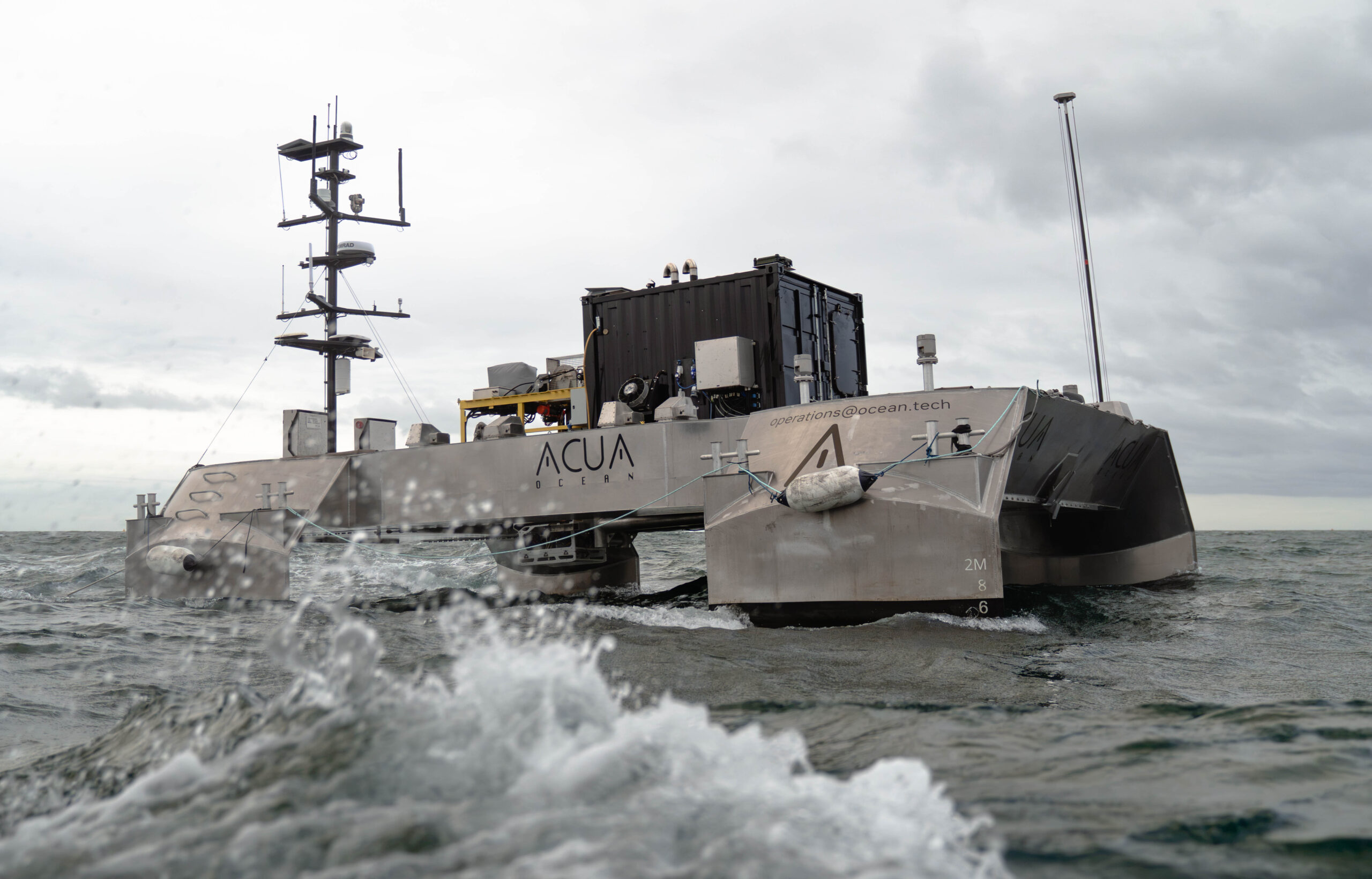
The trials featured ACUA Ocean’s USV Pioneer, a vessel designed for endurance and robust seakeeping in remote maritime operations, paired with Forssea Robotics’ 170kg ARGOS ROV. This compact underwater vehicle is specifically engineered for inspection, survey, and light-intervention tasks. To ensure precise underwater tracking during operations, the combined system utilised a Sonardyne Mini-Ranger 2 ultra-short baseline (USBL) positioning system, mounted aboard the Pioneer, which tracked a WSM6+ transponder carried by the ARGOS ROV.
A key objective of the programme was to validate the capability for entirely remote operations. All launches, dives, and recoveries of the ROV were commanded from ACUA Ocean’s dedicated Remote Operations Centre at Turnchapel Wharf in Plymouth, UK. Demonstrating truly distributed control, Forssea personnel simultaneously supervised these intricate operations from their company headquarters in Sète, France, highlighting the potential for geographically dispersed teams to collaborate on complex offshore missions without requiring personnel at sea.
The entire programme was conducted under a contract with the European Space Agency (ESA), underscoring the European commitment to advancing space-derived and autonomous technologies for Earth applications. The primary aim was to rigorously test whether standard inspection, survey, and light-intervention tasks – traditionally requiring large, crewed support vessels – could be efficiently and safely conducted using an uncrewed surface platform. This aligns with a broader industry push to reduce the human footprint and operational costs associated with offshore activities.
Over the three-week period, the system completed more than 40 ROV deployments, showcasing its reliability and efficiency. This included a particularly productive day during which eight launch-and-recovery cycles were successfully executed. The ARGOS ROV demonstrated its operational capabilities by reaching and inspecting the seabed in waters deeper than 20 metres, operating effectively with up to 35 metres of tether. Practical inspection work formed a core part of the trials, with the ROV successfully locating and filming various targets, including the wreck of the Poulmic, a natural seabed feature, and a concrete target block strategically placed in Cawsand Bay.
A significant aspect of the trials focused on the system’s resilience in challenging maritime conditions. ACUA Ocean and Forssea Robotics reported that operations were successfully conducted in one-metre waves with winds consistently averaging 18 knots and gusting between 20 and 30 knots. Furthermore, a demanding operation south of Plymouth Breakwater saw the system perform effectively in waves reaching approximately two metres, with the companies reporting no adverse effect on the ROV’s performance. This robust performance in adverse weather conditions suggests a potential to significantly expand the operational window for subsea tasks, a critical advantage over traditional crewed vessels.
To maintain precise positioning of both the surface vessel and the underwater vehicle during operations, the trials employed both manual station keeping and advanced dynamic positioning (DP) techniques. This hybrid approach allowed for optimal control and stability, critical for accurate inspection and survey work. The remote monitoring capabilities were further highlighted by a live ROV dive stream directly to Eckernförde in Germany for the Cyber Innovation Hub of the Bundeswehr (German Armed Forces). This demonstration proved the system’s capacity for real-time, cross-border monitoring, allowing stakeholders in different countries to observe and potentially contribute to ongoing subsea missions remotely.
Commenting on the success, Neil Tinmouth, CEO of ACUA Ocean, stated in a joint news update, “These trials prove we can open a weather window that conventional crewed vessels cannot work in, giving operators a wider weather window for inspection campaigns. Just as importantly, running inspection campaigns from an uncrewed surface vessel takes significant cost out of the work – fewer support vessels, fewer people offshore and far less weather-related downtime.” His remarks underscore the dual benefits of enhanced operational resilience and substantial cost savings.
The companies are strategically targeting a diverse range of sectors with this combined autonomous system. These include offshore energy operators, who require frequent inspection and maintenance of critical assets; subsea inspection and maintenance providers; operators of critical underwater infrastructure such as cables and pipelines; and various survey organisations. The integrated solution promises to provide a more efficient, safer, and environmentally friendly alternative to current methods.
Forssea Robotics supplied the ARGOS ROV with a dedicated integration kit specifically designed for use aboard the USV Pioneer, enabling the two sophisticated systems to operate as a cohesive, remotely supervised package. The modular design of the ARGOS ROV further enhances its versatility, allowing it to carry different payloads tailored to the specific inspection or survey task at hand, from high-resolution cameras to various sensors.
Gautier Dreyfus, CEO of Forssea Robotics, expressed his satisfaction with the collaboration: “All of us at Forssea are hugely proud of this milestone and impressed by Pioneer’s sea-state capabilities. Seeing how smoothly the ROV integration and the multiple launch-and-recovery sequences went over the past few weeks was hugely satisfying. My congratulations to the ACUA engineering teams – we are excited to see what comes next.” His comments reflect the success of the technical integration and the strong partnership between the two companies.
This pioneering work is part of a broader, industry-wide initiative aimed at significantly reducing the reliance on large, crewed support vessels for routine subsea inspection and monitoring operations. Uncrewed surface vessels offer a transformative approach by carrying advanced sensors or deploying underwater systems, while human operators remain safely ashore. This paradigm shift not only reduces the number of personnel required at sea but also mitigates the associated risks and logistical complexities.
ACUA Ocean and Forssea Robotics anticipate that this configuration will be particularly valuable for tasks around offshore wind farms, extensive pipeline networks, and other critical subsea infrastructure. These assets often require frequent, repetitive inspection and monitoring missions, which currently necessitate vessels to remain on station for extended periods, incurring significant costs and logistical challenges. The autonomous system provides a cost-effective and continuous monitoring solution.
During the Plymouth programme, the partners meticulously focused on validating several key aspects: proving the repeated and reliable launch and recovery of the ROV from the USV, maintaining robust communications and precise positioning between the two autonomous platforms, and demonstrating comprehensive remote control of the combined system during complex operations in dynamic coastal waters. The successful validation of these elements lays a robust foundation for future commercial deployment and expanded capabilities.
Why This Matters
The successful trials by ACUA Ocean and Forssea Robotics represent a pivotal advancement in the realm of autonomous maritime operations, with far-reaching implications across multiple sectors. This integration of an Uncrewed Surface Vessel (USV) with a Remotely Operated Vehicle (ROV) for sustained, remote subsea work addresses several critical challenges facing the offshore industry today, promising enhanced safety, significant cost reductions, improved operational efficiency, and a reduced environmental footprint.
Firstly, **safety at sea** is profoundly enhanced. By enabling operators to command complex subsea missions from shore, the need for human presence in hazardous offshore environments is drastically reduced. This eliminates risks associated with adverse weather conditions, heavy machinery, and the inherent dangers of working at sea, leading to fewer accidents and greater personnel well-being.
Secondly, the **economic benefits** are substantial. Traditional subsea operations rely on large, crewed support vessels, which incur high costs related to fuel, crew salaries, logistics, and port services. As ACUA Ocean CEO Neil Tinmouth highlighted, operating from a USV significantly lowers these expenses. Furthermore, the proven ability of the integrated system to operate in challenging weather, including conditions that would typically force crewed vessels to halt operations, translates into fewer weather-related delays and increased operational uptime, further driving down project costs and improving return on investment for offshore projects.
Thirdly, these trials mark a significant step towards **environmental sustainability**. USVs generally have a much smaller carbon footprint compared to their crewed counterparts, often employing electric or hybrid propulsion systems. Reducing reliance on large diesel-powered vessels for routine inspections contributes directly to lower greenhouse gas emissions, aligning with global efforts to decarbonise the maritime industry and mitigate climate change.
Fourthly, the demonstration of **operational resilience and flexibility** is groundbreaking. The system’s capacity to operate effectively in one-metre to two-metre waves, and winds gusting up to 30 knots, extends the operational window for critical subsea tasks. This means essential maintenance and inspection activities around offshore wind farms, pipelines, and other infrastructure can be carried out more consistently, ensuring the integrity and efficient operation of these vital assets. The ability to control and monitor operations from different countries, as demonstrated by the live stream to the Bundeswehr, also opens doors for unparalleled global collaboration and rapid response capabilities.
Finally, this development accelerates **technological innovation** in maritime robotics. It validates the maturity and reliability of integrating sophisticated autonomous systems for complex, real-world applications. This success will likely spur further advancements in artificial intelligence, machine learning, and sensor technology for marine environments, creating new markets and skilled job opportunities in the rapidly evolving autonomous maritime sector. For industries ranging from offshore energy and telecommunications to defence and environmental monitoring, these trials herald a future where subsea operations are safer, more efficient, more frequent, and more sustainable, ultimately contributing to a more resilient and digitally connected global infrastructure.