
Key Takeaways:
- Regulatory Hurdle Escalates:Despite Department of Justice approval, the proposed Paramount-Warner Bros. Discovery merger faces intensified scrutiny from the FCC over significant foreign investment, posing a critical regulatory roadblock.
- Geopolitical Risk in Media:Concerns about nearly 50% foreign ownership from Saudi Arabia, UAE, and Qatar in a major U.S. media entity, including news powerhouses like CNN and CBS, raise national security and media influence questions.
- Consolidation under Fire:The potential $110 billion media giant highlights the accelerating trend of industry consolidation, drawing criticism from lawmakers and creatives alike over competition, job security, and editorial independence.
LightShed partner Rich Greenfield analyzes the Paramount Skydance-Warner Bros deal on ‘The Claman Countdown.’
The ambitious bid to create a new media titan through the proposed merger of Paramount and Warner Bros. Discovery, a deal estimated to forge an entity with an enterprise value approaching $110 billion, has hit a significant regulatory snag. Three influential Democratic senators have formally urged the Federal Communications Commission (FCC) to halt the transaction, citing profound concerns over the unprecedented level of foreign investment and its potential implications for U.S. national security and media landscape.
In a pointed joint letter addressed to FCC Chairman Brendan Carr, Senators Cory Booker (D-N.J.), Adam Schiff (D-Calif.), and Elizabeth Warren (D-Mass.) delivered a stern message: the FCC “must foreclose any attempt by Paramount to close this transaction” before a comprehensive review of the involved foreign investors is concluded. This intervention introduces a layer of geopolitical risk that could significantly complicate an already complex merger and acquisition (M&A) environment within the media sector.
The lawmakers’ primary contention centers on evaluating potential “national security threats posed by foreign government investment” in an entity that would bring venerable news organizations like CNN and CBS News under a single corporate umbrella. Such a consolidation, they argue, would further concentrate media power in the United States, raising questions about editorial independence and the diversity of information available to the public. In a fragmented and increasingly globalized information ecosystem, the ownership structure of major news outlets carries heightened strategic importance.
Paramount, under the stewardship of CEO David Ellison, acknowledged in an April financial disclosure—a document explicitly cited by the senators—that foreign ownership in the new, combined corporation would ascend to “approximately 49.5 percent.” While the document stipulated that all voting rights would remain “controlled by the Ellison family through U.S. entities,” this assurance has done little to assuage the senators’ apprehensions. The market, too, often views such distinctions with skepticism, recognizing that significant equity stakes, even without direct voting control, can exert considerable influence through various channels.
WARNER BROS DISCOVERY SHAREHOLDERS APPROVE PARAMOUNT SKYDANCE DEAL
U.S. Sen. Cory Booker, D-N.J., speaks at the 38th Annual Michigan Democratic Women’s Caucus Legacy Luncheon April 18, 2026, in Detroit.(Bill Pugliano/Getty Images / Getty Images)
The disclosure further revealed the specific origins of this foreign capital, identifying Saudi Arabia’s public investment fund and various entities based in the United Arab Emirates and Qatar as significant equity holders. This revelation immediately elevates the discussion beyond mere financial mechanics to the realm of international relations and geopolitical strategy, given the complex and sometimes sensitive relationships between these nations and the United States.
Paramount, in its communications with the FCC in April, maintained that this ownership structure would not present “any national security, law enforcement, or foreign or trade policy concerns.” However, the senators have emphatically pushed back, urging Chairman Carr not to accept the Ellison family’s statements “at face value.” This suggests a demand for rigorous due diligence and a deeper probe into the ultimate beneficial ownership and potential influence pathways.
The core of the senators’ argument against preemptive approval rests on Section 310 of the 1934 Communications Act. This foundational piece of legislation generally restricts foreign individuals, companies, and governments from owning more than 25% of a U.S.-based firm holding an FCC-issued broadcast license. The proposed near-50% foreign ownership level, even with U.S. voting control, clearly challenges the spirit, if not the letter, of this long-standing regulatory principle and sets a precedent for future cross-border M&A in sensitive sectors.
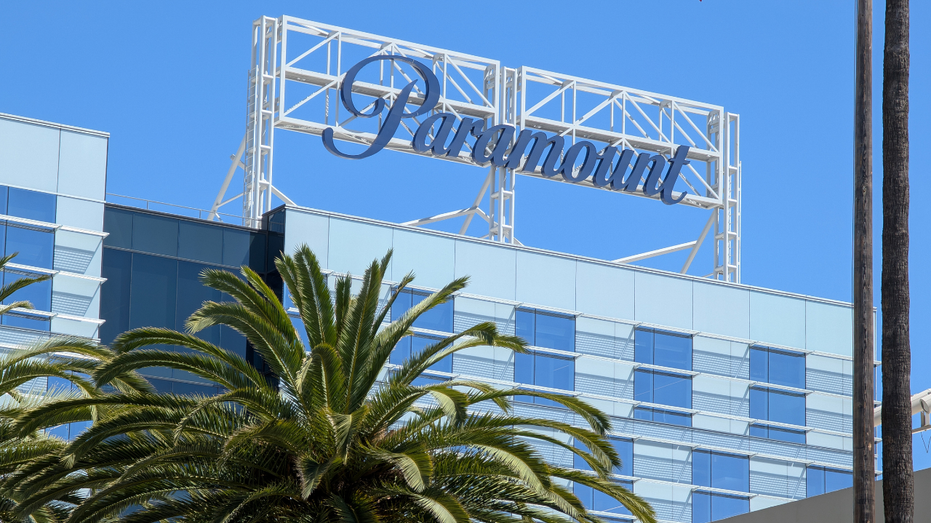
The Paramount Studios sign in Los Angeles April 23, 2026.(Noah Suave / Getty Images)
CHRISTIANE AMANPOUR POINTS TO ‘HEMORRHAGING’ AT CBS TO WARN OF DAVID ELLISON’S POTENTIAL TAKEOVER AT CNN
Senators Booker, Schiff, and Warren have imposed a firm deadline, requesting Carr to notify Paramount by July 1 that the deal cannot proceed until this critical foreign investment review is thoroughly completed. This tight timeline introduces further uncertainty for investors and could inject volatility into the shares of both Paramount (PARA) and Warner Bros. Discovery (WBD), as delays often lead to re-evaluations of deal terms and synergy prospects.
The FCC’s pending approval now stands as the most formidable regulatory hurdle. This comes after the Department of Justice (DOJ) signaled last week that it would not challenge Paramount’s bid, concluding an eight-month antitrust review. The DOJ’s antitrust division found “the transaction is not likely to result in harm to competition or American consumers” across key segments including on-demand streaming, linear television, and film production and distribution. This dichotomy—DOJ’s focus on competition versus FCC’s mandate on national security and foreign ownership—underscores the multi-faceted regulatory environment challenging large-scale media transactions today.
Senator Warren, however, has publicly criticized the DOJ’s decision, urging state attorneys general to maintain their opposition. California Attorney General Rob Bonta is already at the forefront of a coalition of states preparing a lawsuit to block the merger, emphasizing broader concerns about market concentration and consumer choice. This multi-jurisdictional resistance underscores the growing regulatory skepticism towards consolidation, particularly in sectors deemed critical for public discourse and economic competition.
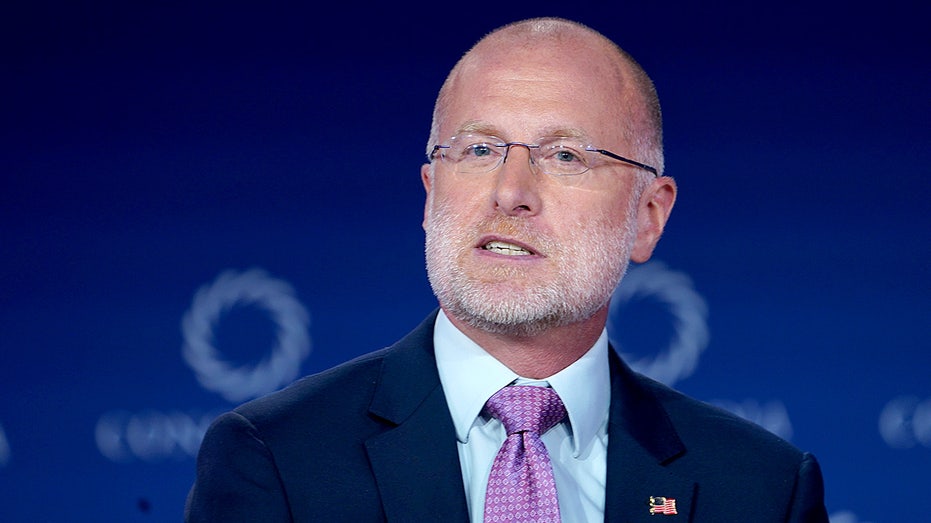
Federal Communications Commission Chairman Brendan Carr speaks onstage during the 2025 Concordia Annual Summit at the Sheraton New York Times Square in New York City on Sept. 22, 2025.(John Lamparski/Getty Images for Concordia Annual Summit / Getty Images)
GET FOX BUSINESS ON THE GO
Beyond governmental bodies, significant opposition has also emerged from within the creative community. Over 5,000 filmmakers and actors in Hollywood co-signed an open letter in April, vehemently demanding the merger be stopped. They argue such consolidation would stifle competition, reduce job opportunities, and exacerbate existing strains on the industry. “Our industry is already under severe strain, in large part due to prior waves of consolidation. We have witnessed a steep decline in the number of films produced and released,” the petition stated. This sentiment reflects a broader economic concern within the creative sector, where the drive for scale by large corporations is often perceived as detrimental to independent production and diverse storytelling.
The strategic rationale for such a merger in the current media landscape is clear: achieve greater scale, consolidate content libraries to compete in the intense streaming wars, and optimize advertising revenues in a declining linear TV market. However, the regulatory and political pushback against this specific deal suggests a growing inclination to scrutinize these strategic moves not just through an economic lens, but also through lenses of national interest, consumer welfare, and geopolitical influence.
Market Impact
The intensified regulatory scrutiny by the FCC, particularly on the foreign investment component, introduces significant uncertainty for investors in both Paramount (PARA) and Warner Bros. Discovery (WBD). A prolonged review or an outright rejection would undoubtedly trigger a sell-off in both stocks, as the anticipated synergies and strategic rationale underpinning the proposed $110 billion entity would evaporate. For the broader media M&A landscape, this situation sets a critical precedent, signaling that future large-scale transactions involving significant foreign capital, especially from geopolitically sensitive regions, will face heightened national security reviews. This could either slow down the pace of consolidation or force companies to devise more complex ownership structures to circumvent such regulatory hurdles. Moreover, the debate over media consolidation’s impact on content diversity, news independence, and job creation will likely continue to influence investor sentiment and regulatory policy, potentially shaping the competitive dynamics for streaming giants and traditional media companies alike in the years to come.