

Check out what’s clicking on FoxBusiness.com.
Key Takeaways:
- Quality Control Under Scrutiny:Dreyer’s Grand Ice Cream has initiated a voluntary nationwide recall for several Outshine fruit bar varieties due to consumer reports of glass contamination, placing critical emphasis on food manufacturing quality assurance and supply chain integrity.
- Brand Reputation and Financial Exposure:While no injuries have been reported, this incident presents substantial risks to Dreyer’s (and its parent company Froneri’s) brand equity, potentially leading to significant costs for product retrieval, disposal, comprehensive investigations, and marketing efforts aimed at restoring consumer trust and market share.
- Heightened CPG Industry Vigilance:The recall underscores the escalating financial and reputational implications of product contamination within the Consumer Packaged Goods (CPG) sector, prompting increased scrutiny from investors, regulators, and consumers on manufacturers’ adherence to robust safety protocols and transparency.
Consumers nationwide are being urged to inspect their freezers after Dreyer’s Grand Ice Cream, a prominent entity in the frozen dessert market and a key part of the global Froneri consortium, initiated a voluntary recall of several varieties of its popular Outshine fruit bars. This critical action comes amid alarming consumer reports of glass contamination within the products, immediately raising red flags concerning food safety standards and the robustness of the manufacturing supply chain that underpins consumer packaged goods.
The recall, officially announced by the Food and Drug Administration (FDA) on August 18th, specifically targets select batches of Outshine fruit bars distributed in six-count packages and larger 24-count Variety Packs. This proactive measure by Dreyer’s, which operates under Froneri (a global ice cream joint venture majority-owned by Nestlé and PAI Partners), signals a swift response to safeguard public health. However, from a market perspective, it simultaneously opens a crucial dialogue on the inherent financial and reputational risks that large-scale food production and intricate global supply chains face when quality control falters.
According to the company’s statement, “Dreyer’s is taking this action out of an abundance of caution following consumer reports of glass found in the product.” This phrasing, while emphasizing prudence, also highlights the reactive nature of the recall – triggered by external consumer reports rather than an immediate internal detection system. Such incidents can rapidly erode consumer confidence, which is arguably the most valuable, yet fragile, asset for any brand operating in the intensely competitive CPG sector. While the immediate financial costs associated with a product recall – encompassing logistics for retrieval, disposal, laboratory testing, and consumer refunds – are substantial, the potential long-term damage to brand loyalty, market share, and future revenue streams can be far more profound and challenging to quantify or mitigate.
FROZEN DOG FOOD RECALLED OVER SALMONELLA CONTAMINATION THAT LED TO MULTIPLE PET ILLNESSES
Outshine Strawberry Fruit Bars are among select products recalled by Dreyer’s Grand Ice Cream.(U.S. Food and Drug Administration)
Importantly, Dreyer’s has stated that no illnesses or injuries have been reported in connection with the contaminated products to date. This fortunate circumstance helps to mitigate some of the immediate public health and potential litigation concerns. Nevertheless, the incident still necessitates a thorough and costly investigation into the root cause of the contamination, which could originate from various points within the production cycle – ranging from raw material sourcing and handling, through the complexities of manufacturing equipment and processing lines, to final packaging. Each potential point of failure represents a significant cost center for remediation, re-engineering, and the implementation of enhanced preventative measures to restore operational integrity and regulatory compliance.
The affected products were distributed to retailers nationwide, a testament to the extensive reach of modern food supply chains and the magnified systemic impact when quality control issues emerge. Consumers are strongly advised to meticulously check the UPC, batch code, and best-before date on their Outshine fruit bar packaging against the comprehensive list provided on the FDA’s website to ascertain if their purchased products are included in this recall. This broad distribution network implies that the logistical challenge and the associated financial outlay for retrieving, segregating, and managing the recalled inventory will be considerable, undoubtedly impacting the profit margins and operational efficiency of Dreyer’s and its network of distributors.
WALMART TOMATO BISQUE SOUP RECALLED OVER POSSIBLE LISTERIA CONTAMINATION
Outshine Tangerine Fruit Bars are among the varieties affected by a voluntary recall over possible glass contamination.
The recalled products include certain batches of:
- Outshine Strawberry 6-count Fruit Bars
- Outshine Watermelon 6-count Fruit Bars
- Outshine Grape 6-count Fruit Bars
- Outshine Tangerine 6-count Fruit Bars
- Outshine Black Cherry 6-count Fruit Bars
- Outshine 24-count Variety Pack Fruit Bars
A complete list of affected batch codes, UPCs and best-before dates can be viewed on the FDA’s website.
POPULAR REESE’S, ALMOND JOY ICE CREAM BARS RECALLED OVER LABELING ERROR
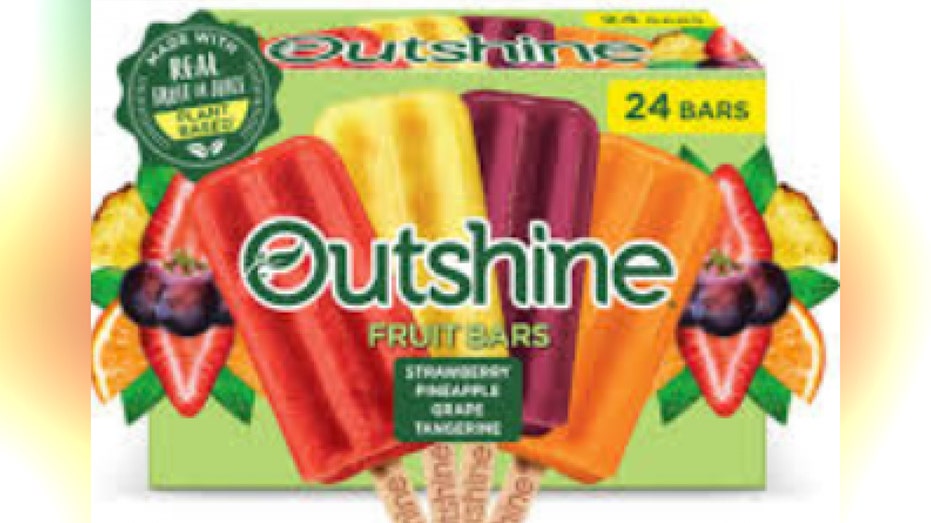
Select 24-count Outshine Fruit Bars Variety Packs are being recalled nationwide over possible glass contamination.(U.S. Food and Drug Administration)
Crucially, the company has clarified that no other Outshine products or varieties are affected by this specific recall. This precise delineation is vital for effective crisis management, aiming to limit collateral damage to other product lines and the broader portfolio under the Dreyer’s/Froneri umbrella. However, the wider implications for investor sentiment within the CPG sector are undeniable. Shareholders and financial analysts vigilantly monitor such events, evaluating not just the immediate financial hit but also the efficacy of a company’s crisis management response and its enduring commitment to product safety and brand integrity. A rapid, transparent, and decisive response can help to mitigate some of the negative market reactions, whereas a sluggish or opaque approach can amplify investor concerns, potentially leading to a downward revision of earnings forecasts or stock valuations for publicly traded parent entities.
Anyone who purchased an affected product is advised to dispose of it immediately or return it to the point of purchase for a full refund. This consumer-centric policy aims to minimize inconvenience and reinforce goodwill, yet each refund represents a direct financial loss that impacts the company’s profit margins. This incident also starkly illuminates the increasing complexity and inherent fragility of global food supply chains, where a single point of failure – whether a faulty piece of machinery, a contaminated ingredient input, or human error during processing – can trigger a cascade of events with far-reaching economic consequences. As regulatory bodies like the FDA intensify their scrutiny and consumer awareness around food safety continues to grow, the escalating cost of non-compliance and product recalls makes robust, technologically advanced quality control systems an increasingly non-negotiable strategic investment for all CPG firms.
FOX Business reached out to Dreyer’s for comment.
Market Impact:
The Outshine fruit bar recall is poised to have multi-faceted implications across the frozen dessert segment and the broader Consumer Packaged Goods (CPG) market. For Dreyer’s Grand Ice Cream and its parent company, Froneri, the immediate financial burden will include significant costs associated with product retrieval, destruction, customer refunds, and comprehensive investigations into the manufacturing process. Beyond these direct expenses, the longer-term market impact could manifest as a quantifiable erosion of brand equity and consumer trust, potentially leading to a sustained dip in sales and market share as consumers opt for competing brands perceived as safer. Investors in the CPG sector, already sensitive to supply chain vulnerabilities and rising compliance costs, will likely view this incident as a bellwether, potentially increasing scrutiny on the quality control protocols and crisis management capabilities of other food manufacturers. This could drive up operational expenditures across the industry as companies invest more heavily in advanced detection systems and more rigorous supplier vetting. Furthermore, if the incident prompts increased regulatory oversight or public pressure for stricter food safety standards, it could reshape the competitive landscape, favoring companies with robust, transparent quality assurance frameworks and penalizing those perceived as lagging.
CLICK HERE TO GET FOX BUSINESS ON THE GO