
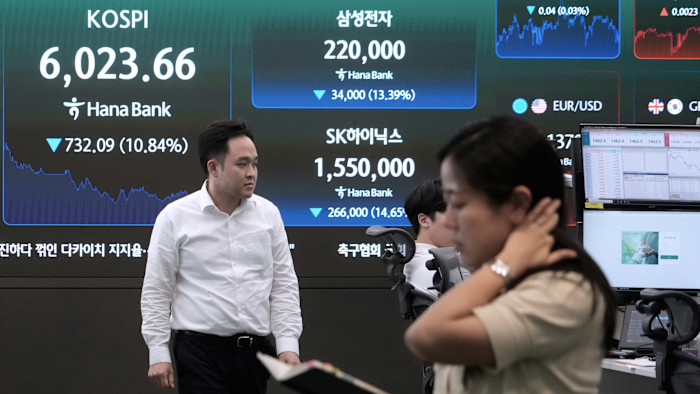
Semiconductor Slump Sends Shockwaves: Samsung and SK Hynix Plunge Amidst Global Tech Downturn
Key Takeaways:
- Memory Market Glut & Demand Weakness:The precipitous drop in Samsung and SK Hynix stock is primarily driven by a significant oversupply of memory chips (DRAM and NAND) coupled with a sharp deceleration in global demand for consumer electronics and enterprise IT, leading to steep price erosion.
- Cyclicality Meets Macroeconomic Headwinds:While the semiconductor industry is inherently cyclical, the current downturn is exacerbated by persistent macroeconomic pressures including high inflation, rising interest rates, and looming recession fears, which are dampening both consumer discretionary spending and corporate capital expenditure.
- Billions Wiped Out, Future Uncertain:The stock tumble has erased billions from market capitalization, impacting institutional investors, pension funds, and individual shareholders globally. The outlook remains challenging, with analysts predicting a prolonged period of inventory destocking and weak pricing before a potential recovery.
SEOUL – Millions of investors across the globe are reeling from what market observers are calling an “unprecedented” period of losses, as shares of South Korean tech giantsSamsung ElectronicsandSK Hynixhave tumbled dramatically. These bellwether companies, linchpins of the global semiconductor industry, have seen their valuations erode significantly, signaling a deep and painful correction in the memory chip market that is sending shockwaves through the broader technology sector and global economy.
The downturn, while perhaps not entirely unforeseen given the cyclical nature of semiconductors, has been particularly sharp and severe. Samsung, the world’s largest memory chip and smartphone maker, and SK Hynix, a dominant player in DRAM and NAND flash memory, have both reported dismal earnings, underscoring the severity of the market conditions. Their stock performance reflects a confluence of factors, from a post-pandemic demand normalization to aggressive inventory build-ups and a challenging macroeconomic landscape.
The Anatomy of the Plunge: Oversupply Meets Dwindling Demand
At the heart of the current crisis is a classic supply-demand imbalance, amplified by recent global events. During the pandemic-driven digital acceleration, demand for PCs, smartphones, and data center equipment surged, leading chipmakers to aggressively ramp up production and expand capacity. Manufacturers, fearing supply chain disruptions and eager to capitalize on the boom, accumulated significant inventories. However, this boom proved unsustainable.
As economies reopened, consumer spending shifted from goods to services. Simultaneously, soaring inflation and rapidly rising interest rates began to squeeze household budgets, dampening discretionary spending on electronics. The result: shelves are now overflowing with unsold devices, and the components that power them—particularly DRAM and NAND memory chips—are in vast oversupply. Contract prices for these critical components have plummeted, in some cases by more than 20-30% quarter-over-quarter, directly impacting the profitability of companies like Samsung and SK Hynix.
SK Hynix, being more singularly focused on memory, has felt the brunt of this downturn perhaps even more acutely than its diversified peer. Samsung’s vast portfolio, which includes smartphones, displays, and foundry services, offers some buffer, yet even its semiconductor division, historically a major profit driver, is bleeding red ink. This paints a grim picture for the entire memory ecosystem, from chip equipment manufacturers to downstream electronics assemblers.
Macroeconomic Headwinds and the Cyclical Nature of Chips
The semiconductor industry has always been characterized by boom-and-bust cycles, but the current downturn is exacerbated by a particularly challenging global economic environment. Central banks worldwide are aggressively hiking interest rates to combat persistent inflation, fueling fears of a global recession. In such an environment, businesses tend to cut capital expenditure on IT infrastructure, and consumers delay purchases of new electronics, directly impacting chip demand.
Geopolitical tensions, particularly between the U.S. and China, also add a layer of complexity. Export controls and trade restrictions impact supply chains and market access, forcing companies to re-evaluate their global strategies and potentially incur higher costs for localized production or alternative suppliers. While these factors may not be the direct cause of the current memory glut, they contribute significantly to market uncertainty and investor risk aversion.
Analysts from firms like Bernstein and Morgan Stanley have been vocal about the “painful correction” underway, warning that the inventory overhang could take several quarters to clear. Many predict that chipmakers will need to drastically cut capital expenditure and even reduce production to rebalance the market, a strategy that SK Hynix has already signaled it will undertake. Samsung, while historically more cautious about explicit production cuts, is also expected to adjust its output in response to market realities.
Investor Fallout and the Road Ahead
The losses sustained by Samsung and SK Hynix shareholders are not just statistical; they represent real financial pain for millions. Institutional investors, including large pension funds and mutual funds, hold significant stakes in these companies, meaning the downturn directly impacts retirement savings and investment portfolios globally. Individual retail investors, often attracted to the growth prospects of tech giants, have also seen substantial portions of their capital wiped out.
The ripple effect extends beyond direct equity holders. Exchange-Traded Funds (ETFs) focused on technology or emerging markets, which often have substantial allocations to these South Korean titans, have also suffered. The reduced profitability of chipmakers also affects their suppliers—companies that provide manufacturing equipment, materials, and services—creating a cascading economic slowdown within the tech supply chain.
Looking ahead, the recovery path for the memory market appears arduous. While the long-term drivers for semiconductors remain strong—driven by AI, IoT, and data center expansion—the immediate future is clouded by inventory destocking and price stabilization efforts. Industry experts anticipate that a rebound might not materialize until late next year or even 2025, contingent on a significant improvement in global economic conditions and a return to healthy demand growth.
Market Impact:
The significant stock tumbles of Samsung and SK Hynix underscore a crucial inflection point for the global technology market. This downturn will likely trigger a period of strategic re-evaluation across the semiconductor industry, potentially leading to accelerated consolidation, intensified focus on cost efficiencies, and a re-prioritization of R&D towards next-generation technologies. For investors, it reinforces the inherent cyclical risks within high-growth sectors and the importance of diversification, especially during periods of macroeconomic uncertainty. Furthermore, the performance of these key memory manufacturers serves as a barometer for global economic health, suggesting broader headwinds for discretionary consumer spending and corporate IT investment. A prolonged slump could also have geopolitical implications, influencing government support for domestic chip industries and accelerating efforts towards supply chain resilience and technological self-sufficiency.