
Rep. Kat Cammack, R-Fla., discusses President Donald Trump’s meeting with artificial intelligence leaders at the White House and the signing of the White House Accord on Superintelligence on ‘The Bottom Line.’
Key Takeaways:
- Semantic Shift, Strategic Implications:President Trump’s executive order rebranding AI as “Super Intelligence” (SI), coupled with Elon Musk’s swift adoption for SpaceXSI, signals a deliberate attempt to reshape public perception and potentially regulatory frameworks around advanced AI, influencing investment narratives and strategic positioning for tech giants.
- Musk’s Market Influence and Government Ties:Elon Musk’s immediate embrace of “SI” underscores his significant sway over technological discourse and his close alignment with the Trump administration, potentially granting his ventures (SpaceX, xAI) a first-mover advantage in navigating an evolving regulatory and contractual landscape, especially concerning government work.
- Future of AI Investment & Regulation:This rebranding may bifurcate the market, prompting investors and policymakers to differentiate between traditional AI and nascent “Super Intelligence” capabilities. It sets the stage for new standards, compliance requirements, and potentially a competitive scramble among tech firms to define and dominate the “SI” frontier.
SpaceX CEO Elon Musk is rebranding the company’s artificial intelligence (AI) arm following President Donald Trump’s executive order last week calling for AI to be referred to as “Super Intelligence” (SI). This move, while seemingly semantic, carries significant implications for the burgeoning AI market, investor sentiment, and the competitive landscape for frontier technology.
SpaceXAI will be renamed SpaceXSI, Musk confirmed in a post on X, while responding to an X user. “Yes, we will make that change,” he said, adding in another post, “No more AI. SI, it’s better.” This immediate compliance by one of the tech world’s most influential figures sets a powerful precedent, potentially compelling other major players to consider similar adjustments to their corporate branding and product nomenclature.
TRUMP SIGNS EXECUTIVE ORDER REBRANDING AI AS ‘SUPER INTELLIGENCE’ AS TECH TITANS INK SEPARATE SI ACCORD.
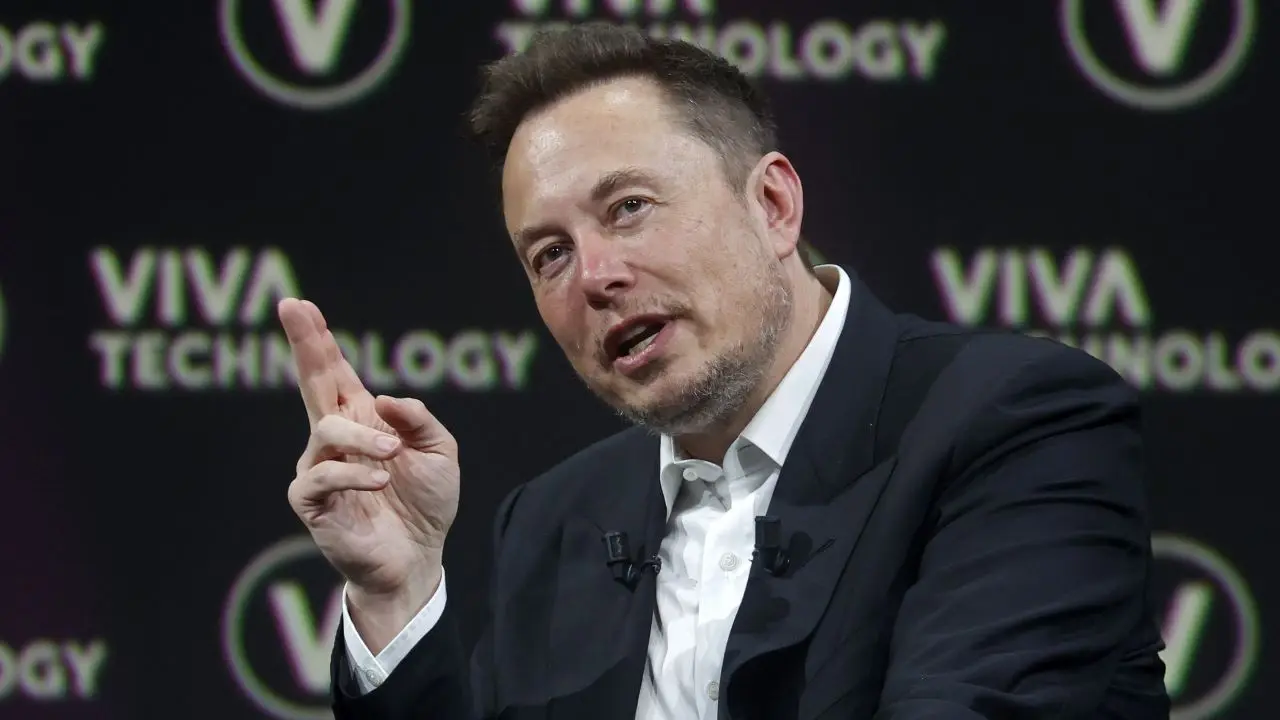
Elon Musk attends the Viva Technology conference in Paris on June 16, 2023. Musk has promoted the concept of “Super Intelligence” for more than a decade.(Chesnot/Getty Images)
The move follows Trump’s executive order, “Inaugurating the Era of Super Intelligence,” which argues that the new term better reflects the technology’s capabilities. Critically, the order applies to public communications, government websites, and reports, while congressional statutory references remain exempt until Congress passes conforming amendments. This executive mandate for federal communications creates a new standard, forcing companies interacting with or contracting for government agencies to align their terminology. For a sector like AI, heavily reliant on government research grants, defense contracts, and regulatory clarity, such a top-down semantic shift is more than just a linguistic preference; it’s a strategic imperative.
The rebranding also highlights Musk’s long-standing view that frontier technology has evolved well beyond basic AI, a position he has held long before AI chatbot tools became widely available to the public. Musk previously endorsed and contributed to Nick Bostrom’s influential 2014 book, “Superintelligence: Paths, Dangers, Strategies,” which warned of uncontrollable super intelligence that Musk himself has equated to a greater danger than nuclear weapons. His consistent advocacy for “Super Intelligence” positions him as an ideological leader in this space, a factor that resonates strongly with investors who follow his vision for technological advancement.
TRUMP REBRANDS AI, REJECTS ‘GLOBALIST SCHEME’ TO CONTROL TECH
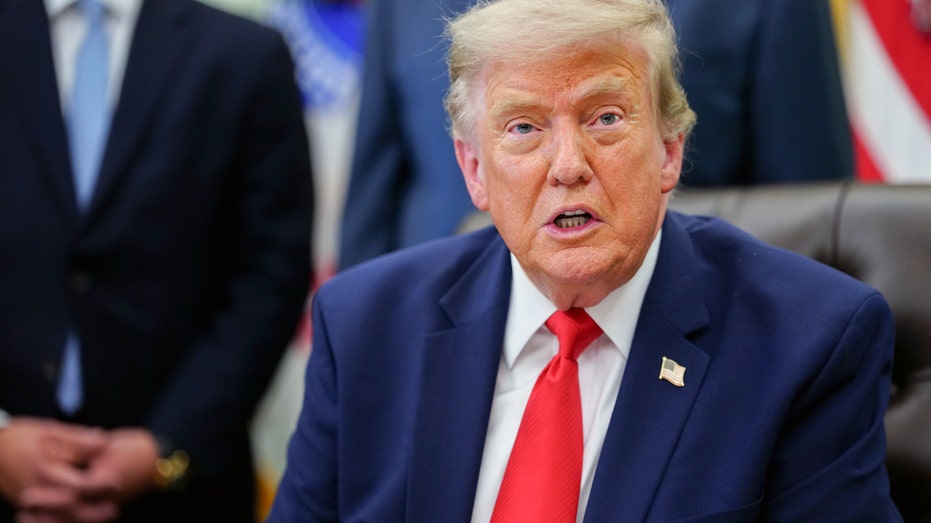
FILE – President Donald Trump’s executive order calls for federal communications to embrace “Super Intelligence” as a new term for the technology.(Aaron Schwartz/CNP/Bloomberg via Getty Images)
Sunday’s rebranding move further reinforces Musk’s close relationship with the Trump administration. This alignment is not merely rhetorical; it has tangible economic benefits. The article notes that xAI’s Grok was contracted to power certain government work while Musk served as a special adviser to Trump in 2025. Such deep integration into federal projects provides a significant competitive edge, signaling a preferred partner status that could translate into substantial government contracts and influence over future policy. This connection could prove invaluable as regulatory frameworks for advanced AI/SI begin to solidify, potentially shaping standards in a way that favors Musk’s ventures.
SpaceXAI itself was created only a few months ago in July, after SpaceX acquired xAI in a substantial $1.25 trillion deal that consolidated the two companies. Renaming the division SpaceXSI marks its second major identity change in a short period, highlighting the rapid pace of corporate strategy and market adaptation in this high-stakes sector. The colossal valuation of xAI reflects intense investor appetite for companies perceived to be at the forefront of AI innovation, and rebranding to “Super Intelligence” could further fuel this speculative fervor, potentially driving up valuations across the broader AI/SI landscape. This aggressive M&A and rebranding strategy suggests a concerted effort by Musk to consolidate market share and define the terminology for the next generation of intelligent systems.
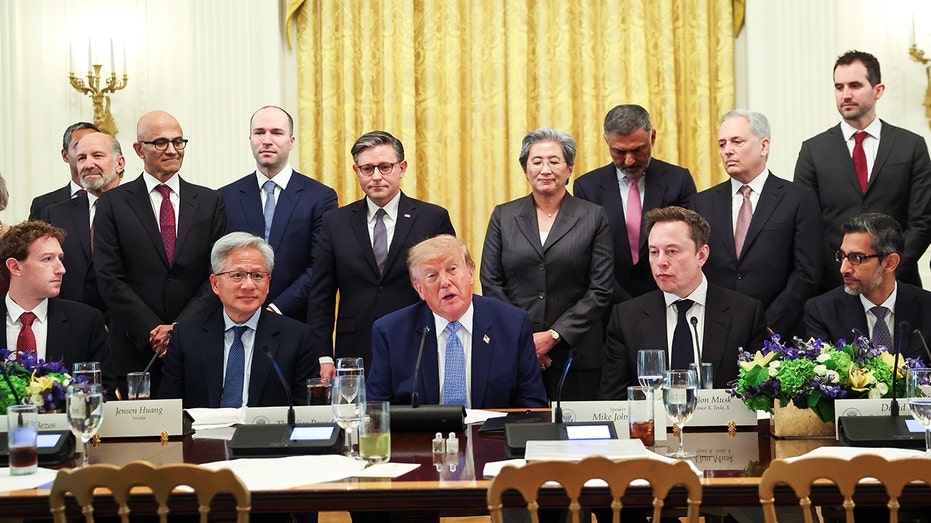
President Donald Trump meets at the White House in Washington, D.C., on Sept. 29, 2026, with AI executives, including SpaceX CEO Elon Musk.(Kevin Dietsch/Getty Images)
Before being acquired by SpaceX, xAI operated as an independent startup founded by Musk in 2023. The company later acquired X Corp., formerly known as Twitter, in March 2025. This history of strategic acquisitions and rapid consolidation underscores a deliberate strategy to build an integrated ecosystem centered around advanced AI. The reclassification of AI to SI could provide a fresh narrative for investors, distinguishing “true” frontier AI from more conventional applications, and potentially channeling capital towards projects that explicitly embrace the “Super Intelligence” moniker.
The potential ripple effects across the tech industry are significant. Other major players like Google, Microsoft, and OpenAI, heavily invested in AI research and development, will face pressure to either adopt the new “SI” terminology or explicitly define their stance. A divergence in nomenclature could lead to market fragmentation, confusion for both consumers and investors, and even international disagreements over standardization and regulation. The global AI governance landscape, already complex, could become even more fractured if major economic powers adopt different foundational definitions for the technology.
| Ticker | Security | Last | Change | Change % |
|---|---|---|---|---|
| SPCX | SPACE EXPLORATION TECHNOLOGIES CORP. | 158.96 | +10.89 | +7.35% |
GET FOX BUSINESS ON THE GO BY CLICKING HERE
Market Impact:
The rebranding of AI to “Super Intelligence” by executive order, and its rapid adoption by key industry players like Elon Musk’s SpaceX, carries substantial market implications. Investors will likely scrutinize companies’ alignment with this new terminology and its potential regulatory ramifications, influencing capital allocation towards firms perceived to be leading the “SI” frontier. This semantic shift could accelerate government contracting opportunities for “SI”-aligned entities, while potentially creating compliance challenges for those slow to adapt. Furthermore, it sets the stage for a fragmented global regulatory landscape, demanding strategic agility from multinational tech companies. Ultimately, the move could reshape industry benchmarks, valuations, and competitive dynamics, ushering in a new era where “Super Intelligence” becomes the definitive metric for frontier AI capabilities and investment.