
Stay informed with complimentary updates
Simply subscribe to the War in Ukraine myFT Digest — delivered straight to your inbox.
Kyiv is currently facing demands to permit the European Union to examine a compromised oil conduit transporting crude from Russia to Hungary and Slovakia. This comes as these two nations, aligned with the Kremlin, allege that Kyiv is exaggerating the consequences of a Moscow-led assault, even though Ukrainian authorities cite proof of widespread damage.
Kyiv states it requires a period for mending the Druzhba pipeline and has furnished proof of detriment from an aerial bombardment by Russia in January. However, Hungary and Slovakia assert that Kyiv purposely ceased its operation.
Hungary has postponed endorsement of an EU financial aid package for Ukraine, conditioning it on the pipeline’s recommencement. It has also suggested dispatching an investigatory delegation to Ukraine, in conjunction with Slovakia.
Currently, several EU administrations supportive of Ukraine, along with the European Commission, are likewise requesting Kyiv to grant access for an inspection to demonstrate its endeavor to re-establish petroleum movement, as per five diplomatic representatives and functionaries from the EU.
A pair of these sources indicated that European Commission president Ursula von der Leyen and António Costa, president of the European Council, had directly petitioned Ukraine’s government for entry to the Druzhba conduit to independently evaluate the harm, during a trip to Kyiv marking the fourth year since Russia’s comprehensive incursion, yet their request was refused. The Commission offered no prompt reply when solicited for a statement.
This disagreement has gained greater immediacy with the dramatic surge in energy costs, following US and Israeli military operations targeting Iran, which disturbed worldwide crude and natural gas provisions. Its intensity has heightened as Kyiv persists in denying entry to European examiners.
A high-ranking EU diplomatic source remarked that Kyiv had inadvertently hindered its own efforts by providing Hungary with a pretext to obstruct the financial aid.
“It is impossible for us to ascertain the presence or absence of damage. Simple methods exist to record this and demonstrate their diligent repair efforts. This has not been done by them,” they stated.
An influential Ukrainian functionary, closely associated with President Volodymyr Zelenskyy, countered assertions that Kyiv was delaying action, stating that specialists from Ukraine’s national energy firm, Naftogaz, had presented European colleagues with proof of significant harm to Druzhba.
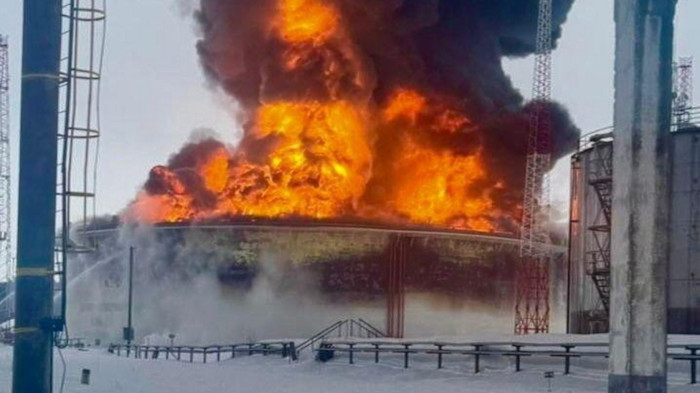
Sergii Koretskyi, Naftogaz’s CEO, informed the Financial Times that the Russian assault initiated a blaze in a repository containing 75,000 cubic meters of crude, “which required ten days to quell”.
“Many components, including electrical wiring, transformers, and the crucial leak detection apparatus for pipeline integrity, suffered impairment,” he stated. “The aerial assault ignited a conflagration in Europe’s most sizable oil storage facility, whose diameter rivaled that of a soccer pitch.”
Considering the extent of the devastation, he explained, “a thorough evaluation is time-consuming and anticipated shortly”.
UkrTransNafta, Ukraine’s state-owned enterprise, reported during the assault that “urgent rehabilitation efforts” were underway, yet Russia’s persistent aggressions impeded secure functioning.
The Ukrainian official commented that resuming the flow would necessitate deploying repair teams to hazardous zones and reallocating scarce assets.
“Why are we compelled to mend this conduit — amidst conflict and absent a truce — that delivers petroleum from Russia to its allies?” the official inquired.
Hungary’s Prime Minister, Viktor Orbán, has held up the endorsement of a €90bn EU assistance package for Kyiv due to this contention, while escalating his opposition to Ukraine prior to an election where surveys indicate a potential defeat for him.
Volodymyr Zelenskyy, Ukraine’s President, charged Orbán with leveraging the matter to fortify his bid for re-election and suggested during a Monday interview with the FT that he was disinclined to alleviate the circumstances for his Hungarian counterpart.
“Currently, you are impeding €90bn . . . funds essential for our armaments and continued existence,” Ukraine’s leader stated.
With mounting friction, Katarína Mathernová, the EU’s envoy to Ukraine, sought via Zelenskyy’s administration to examine the impaired conduit or dispatch additional EU diplomatic personnel, per two individuals informed on the subject. The plea was denied citing safety concerns, the sources affirmed.
Orbán asserted on Monday he possessed satellite imagery indicating Druzhba was not sufficiently harmed to disable it, and declared his intention to uphold ‘‘retaliatory actions’’ until Kyiv recommences petroleum deliveries.
Aerial imagery scrutinized by the FT distinctly revealed harm at the pipeline’s location stemming from the Russian aerial assault. Nonetheless, the full scope of devastation remained undeterminable solely from the pictures.
Slovakia’s Premier, Robert Fico, stated that their joint proposal with Orbán for a “truth-seeking delegation” to ascertain the damage’s magnitude had beenrejected.
The Ukrainian representative maintained that Zelenskyy had extended an invitation to Fico for a direct discussion on the matter in Kyiv, however, the overture was spurned.
Additional reporting by Henry Foy