
Gain complimentary entry to the Editor’s Brief
Roula Khalaf, Editor of the FT, curates her preferred narratives within this weekly periodical.
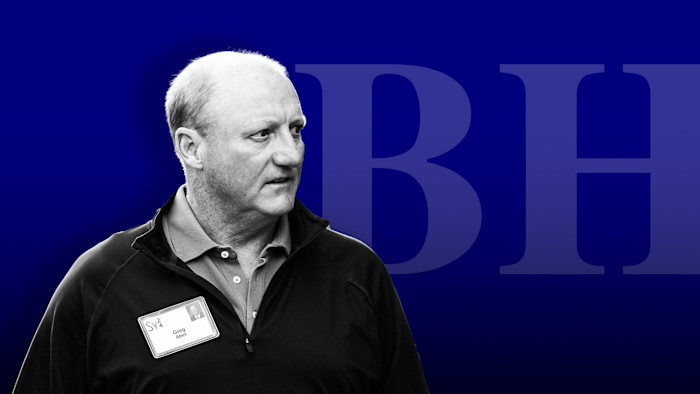
Berkshire Hathaway’s recently appointed chief executive, Greg Abel, on Saturday affirmed his dedication to preserving the $1.1tn conglomerate’s robust financial statement, stating that its vast monetary reserves did not indicate a withdrawal from transactional activities.
Abel utilized his inaugural communication to investors to emphasize his credibility as an investor and his allegiance to the tenets that his forerunner, Warren Buffett, had consistently praised.
Abel, who assumed leadership in January, portrayed himself as a guardian of Buffett’s legacy and conveyed that the corporation’s investment ideology was steadfast.
He informed stakeholders that Berkshire had actively assessed fresh investment prospects and would continue to be a primary destination for firms seeking to divest. The Omaha-headquartered business group would be “a benefit, not a hazard, to America and the global financial system”, he penned.
“Our fiscal position is a tactical resource to be utilized opportunely,” he wrote. “It allows us to operate resolutely, commit capital when others hesitate or are apprehensive, and endure steadfastly during fiscal tempests.”
The 63-year-old mentioned that stock buybacks would persist as a “significant capital deployment choice” and the corporation would forego distributing a dividend as long as he and the board were convinced Berkshire could generate investor worth using those funds.
Berkshire’s liquidity reserves reached $373bn by year-end, an unprecedented sum when not counting the Treasury bonds it had acquired earlier but not yet settled.
“On numerous occasions throughout Berkshire’s existence, certain commentators have posited that our significant cash reserves indicate a withdrawal from capital deployment,” Abel wrote. “It does not.”
He cited Berkshire’s $9.7bn acquisition of the chemical operations of Occidental Petroleum, finalized earlier this year, as well as its accord to acquire the pest management enterprise Bell Laboratories.
“There will unquestionably be additional prospects to deploy our stakeholders’ funds without jeopardizing Berkshire’s robustness,” Abel wrote. “My role is to guarantee our cash reserves and investment strategies continue to be purposeful and meticulous.”
He added: “We will always strive for proprietorship of profitable enterprises rather than US government bonds.”
Market participants and researchers customarily scrutinize Berkshire’s yearly correspondence, which historically abounded with Buffett’s individual stories, for perspectives on the worldview of the renowned “Oracle of Omaha”. Buffett earlier employed the communication to showcase essential Berkshire personnel, including Abel.
Abel has already commenced reorganizing Berkshire’s central offices. The company last year engaged its inaugural in-house legal advisor and revealed that a senior leader from Berkshire’s energy division, the department Abel advanced from, would assume the role of its subsequent chief financial officer later in the current year.
One of Buffett’s investment lieutenants, Todd Combs, moved to JPMorgan Chase as a component of the restructuring.
Berkshire’s stock has seen minimal alteration this year and has aligned with the returns produced by the S&P 500 benchmark of prominent stocks. The corporation has lagged behind the standard US equity index during the preceding year.