
Keep abreast with complimentary notifications
Merely register for the Global Economy myFT Digest — delivered straight to your email.
Twenty-five years prior, Eamonn Fingleton, an Irish author then residing in Tokyo, penned a fervent argument titledIn Praise of Hard Industries. This contended that Western administrations and financiers were unwise to concentrate excessively on non-physical offerings like technology and legal services — asserting that production was equally significant.
It was an unorthodox viewpoint at that time. But when the internet boom collapsed, the contention garnered somewhat more approval. And presently his maxim once again delivers a surprisingly potent impact. For as the Iranian dispute persists, a pair of insights have emerged — even amidst the confusion of battle and US President Donald Trump’s inconsistent pronouncements.
Firstly, the global linkages that intertwined nations over recent decades are no longer fostering harmony, contrary to previous assumptions. Instead, adversaries are leveraging weaknesses and reliance, or “bottlenecks”, a term famously coined by authorEdward Fishman.
China has employed this tactic with scarce earth elements, and America with currency-based financial mechanisms. And now Iran is militarizing the Strait of Hormuz, a conduit for one-fifth of all liquefied natural gas and one-third of worldwide maritime fertilizer transport. This inflicts damage.
The second insight reveals that we are in an era where “tangible sectors” hold significance. Indeed, major technology company shares have surged in recent times fueled by enthusiasm for artificial intelligence. But the Iran conflict demonstrates nations’ extreme susceptibility if they lack manufacturing capabilities, regardless of how traditional they may seem. “The traditional economic model starts to exact its retribution,” observed Jeff Currie, an analyst at the American private equity firm Carlyle,not long ago. “One cannotfabricate molecules,” even with the aid of artificial intelligence.
Tehran grasps this reality. In fact, Mohammad Bagher Ghalibaf, the speaker of the Iranian parliament, has even adopted Carlyle’s catchy phrase to mock Trump. “We shall see if they can transform [US rhetoric] into ‘actual gasoline’ at the station — or perhaps even generate gas molecules!” he remarked in a recent online update.
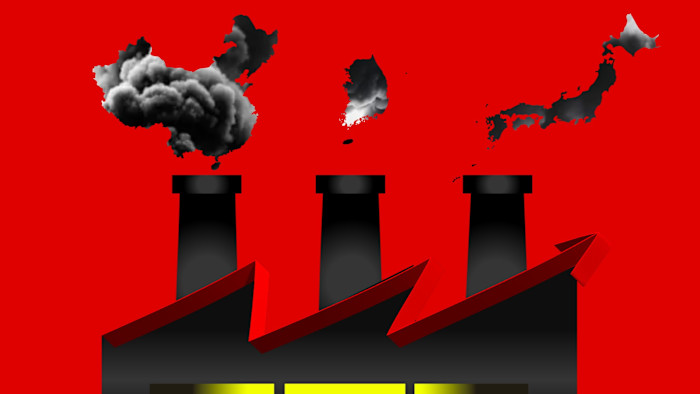
Nations like Japan and South Korea have historically cherished manufacturing. Likewise China, which has established an impressive manufacturing foundation with fiscal aid and an academic pathway generating 1.4 million engineering graduates annually. Numerous Chinese policymakers also possess scientific or engineering backgrounds.
Nevertheless, the Western world operates distinctively. Occasionally in recent decades, there were periods when investors preferred “traditional economy” or “asset-intensive” industries instead of capital-lean services. This occurred following the collapse of the dotcom bubble in 2000. Similarly, during the 1970s, when an energy crisis struck, and investors rejected well-known brands such as Coca-Cola or nascent technology firms (like IBM) for energy companies such as Exxon.
Yet predominantly, a delicate — and occasionally quite overt — societal prejudice has existed against “tangible” sectors. Legislators and financial experts have typically presumed that the service industry will fuel forthcoming expansion, particularly since in nations such as the UK, eighty percent of the populace is engaged within it.
The top university leavers in English-speaking nations have typically vied intensely for roles in finance, advisory services, and technology. Remarkably, the United States graduates merely 141,000 new engineers annually. Fifty percent of congressional representatives possess legal backgrounds, whereas engineers or scientists are comparatively scarce.
Unorthodox economists like Peter Navarro were frequently ridiculed formerly when they criticized how Western nations were offshoring inexpensive production to China. Metal fabrication appeared antiquated. As did national manufacturing independence. However, the societal mood is now shifting. Navarro serves as a principal consultant to Trump, who mirrors his fervent interest in production. Concurrently, Western university alumni are beginning to apprehend that artificial intelligence will eliminate numerous positions in the service industry.
Furthermore, the ongoing conflict with Iran has illustrated to political figures the importance of national manufacturing autonomy. In financial markets, what are termed Halo investments (enterprises with substantial assets and low depreciation, necessitating considerable physical capital outlay) are experiencing rapid growth. “The environment is recalibrating the equilibrium between tangible assets and human or digital capital frameworks,” states oneGoldman Sachs brief, highlighting that capital-heavy equities have generated 35 percent superior returns compared to capital-lean counterparts since 2025. “Operations reliant on physical assets have markedly excelled, whereas software and other capital-efficient models have underperformed.”
A vital qualification exists here, as Currie points out. The contemporary AI domain cannot operate without robust, capital-expenditure-intensive enterprises supporting it. Consider, for instance, those vast data facilities. This implies that “tangible” sectors are now converging with services to an extent less apparent when Fingleton penned his volume in 1999. Even those captivated by AI comprehend the significance of molecular structures.
Thus, the paramount inquiry now confronting the Western world is: will societal perspectives regarding “tangible” industries likewise evolve? Will top-tier scholars now contend for roles in production? Could industrial design attain greater prestige than financial services?
This is difficult to envision currently. However, should worldwide conflicts persist, dismiss nothing. Molecular structures — and engineers — are vital.
[email protected]