
Key Takeaways
- Energy Market Volatility at Core:The unprecedented US-Iran talks in Islamabad primarily revolve around securing the Strait of Hormuz, a critical global oil chokepoint. The outcome will directly dictate the trajectory of global energy prices, shipping costs, and the broader inflationary outlook for the coming months.
- Sanctions Relief and Financial Leverage:Discussions around unfreezing billions in Iranian oil funds signal a significant financial concession by Washington, offering potential liquidity for Tehran but also serving as a crucial bargaining chip in broader negotiations over its nuclear program and regional posture. Markets will interpret any agreement as a de-escalation signal.
- Persistent Geopolitical Risk Premium:Despite high-level engagement, the deeply entrenched hostilities and complex regional conflicts (Israel-Lebanon ceasefire, nuclear proliferation) mean that a substantial geopolitical risk premium will continue to weigh on investor sentiment across global equity, commodity, and currency markets until a comprehensive and verifiable agreement is reached.
Islamabad, Pakistan –The global financial community is watching with bated breath as the United States and Iran embark on their highest-level direct talks in nearly 50 years. This diplomatic overture, unfolding against the backdrop of a spiraling Middle East conflict and an intensifying global energy crisis, carries profound implications for commodity markets, international trade, and investor confidence worldwide.
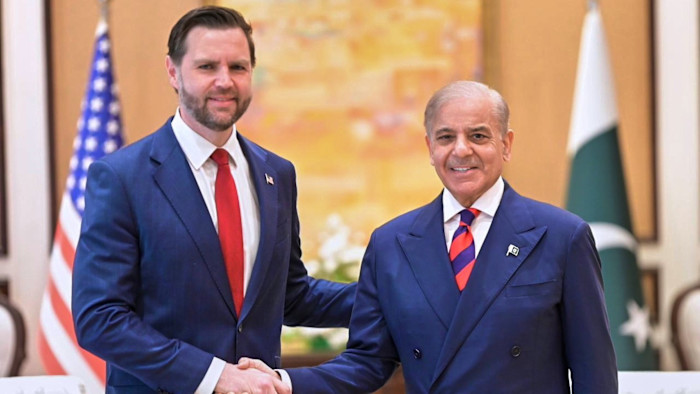
US Vice-President JD Vance leads the American delegation, which includes prominent figures like envoy Steve Witkoff and Jared Kushner. On the Iranian side, Mohammad Bagher Ghalibaf, a senior wartime leader, spearheads Tehran’s negotiating team. The presence of such high-ranking officials underscores the gravity of the situation, with both nations seemingly recognizing the immense economic and geopolitical costs of continued conflict. Pakistan’s powerful military chief, Asim Munir, leveraged his unique relationships with both Washington and Tehran to broker these historic face-to-face discussions.
These negotiations, the first of their kind since the 1979 Islamic Revolution, commenced in Islamabad following separate preparatory meetings with Pakistani leadership. The agenda is multifaceted, but market analysts are particularly focused on three critical pillars: the reopening of the Strait of Hormuz, progress on Iran’s nuclear program, and Tehran’s insistent demand for sanctions relief – each a potential earthquake for global markets.
A central sticking point remains control over the Strait of Hormuz, the vital maritime artery through which approximately one-fifth of the world’s oil and gas normally transits. Negotiators have reportedly hit a “stalemate” on this issue, with Iran insisting on retaining control and imposing tolls on passing vessels. This demand is a red line not only for the US but also for its Gulf allies, whose economies are inextricably linked to the free flow of energy exports through the chokepoint. The closure of the Strait has already sent oil and gas prices soaring to multiyear highs, fueling inflation and threatening global economic stability. The transit of two American warships through the Strait on Saturday, the first since the war began, sent a clear signal about the US’s commitment to freedom of navigation, a point watched closely by shipping and insurance markets.
Adding a layer of complexity, Iranian state television initially reported a significant concession from Washington: an agreement to release billions of dollars of Iran’s oil funds, frozen overseas due to American sanctions. While a US official swiftly denied this specific report, sources close to the talks confirmed that the unfreezing of Iran’s overseas assets, including a crucial $6 billion held in Qatar, has indeed been a key topic of discussion mediated by Pakistan. This potential influx of liquidity for Tehran would represent a significant economic lifeline and a powerful diplomatic leverage point, directly impacting Iran’s ability to fund its economy and potentially its regional activities. The $6 billion in question, originally transferred to Doha from South Korea after a prisoner swap deal in September 2023, has remained blocked due to escalating tensions following Hamas’s October 7, 2023, attack on Israel.
The talks aim to build on a fragile two-week ceasefire, but deep chasms of mistrust and hostility persist. The Trump administration and Tehran had been engaged in indirect nuclear talks before the US and Israel’s conflict erupted against the Islamic republic on February 28, further entrenching Iran’s distrust. The conflict has paradoxically bolstered Iran’s negotiating position, particularly after its closure of the Strait of Hormuz and attacks on Gulf energy facilities, which demonstrably pushed oil and gas prices to multiyear highs. This tactical leverage, however, comes at a devastating cost to Iran, which has endured thousands of US and Israeli air strikes, degrading its military capabilities and striking its industrial heartland.
Regional conflicts further complicate the landscape. Israel’s massive bombardment of Lebanon, which killed hundreds, threatened to derail the initial truce. Iran’s insistence on Lebanon’s inclusion in any ceasefire – a demand initially rejected by the US – highlights the interconnectedness of regional stability. However, US mediation led to an agreement for direct talks between Lebanese and Israeli ambassadors in Washington next week, an unprecedented diplomatic step in over four decades. Such progress, even if incremental, can help de-escalate regional tensions and reduce the geopolitical risk premium that currently burdens regional investments.
The nuclear program remains another formidable challenge. Washington insists Iran relinquish its capacity to enrich uranium, a demand Tehran has repeatedly rejected. Furthermore, a resolution is needed for Iran’s estimated 440kg stockpile of near-weapons-grade uranium, believed to be buried under three nuclear sites bombed during Israel’s offensive last June. Trump’s recent statement about discussing sanctions relief and working with Iran to remove the “deeply buried” nuclear “dust” indicates a potential path forward, but the technical and political hurdles are immense.
Despite the immense challenges, the sheer size and seniority of the delegations – Iran’s team includes some 70 officials, including its foreign minister, finance, and defense officials – signal a serious intent from both sides to find a resolution. Iran had specifically requested Vance lead the US delegation, perceiving him as less hawkish on the republic, having reportedly lost trust in Witkoff and Kushner from prior indirect talks. This strategic choice of negotiators reflects a nuanced understanding of internal political dynamics, a factor not lost on market observers analyzing the probability of a breakthrough.
Market Impact
The outcome of these pivotal Islamabad talks will be a decisive factor for global markets. A successful de-escalation, particularly the full and verifiable reopening of the Strait of Hormuz, could provide immediate and significant relief to energy prices, easing inflationary pressures and potentially driving a ‘risk-on’ sentiment across global equities. Enhanced stability in the Middle East would likely reduce the geopolitical risk premium, benefiting regional equity markets, foreign direct investment, and potentially leading to a strengthening of currencies tied to energy imports. Conversely, a breakdown in negotiations, especially over the Strait or Iran’s nuclear program, threatens to re-ignite the global energy crisis, push crude and natural gas prices to new multi-year highs, and exacerbate geopolitical risk, leading to increased demand for safe-haven assets and a significant sell-off in riskier assets, particularly those exposed to Middle Eastern political instability. Shipping, insurance, and aerospace industries would face continued headwinds, while regional economies reliant on oil exports or transit trade would experience heightened uncertainty and capital flight.