
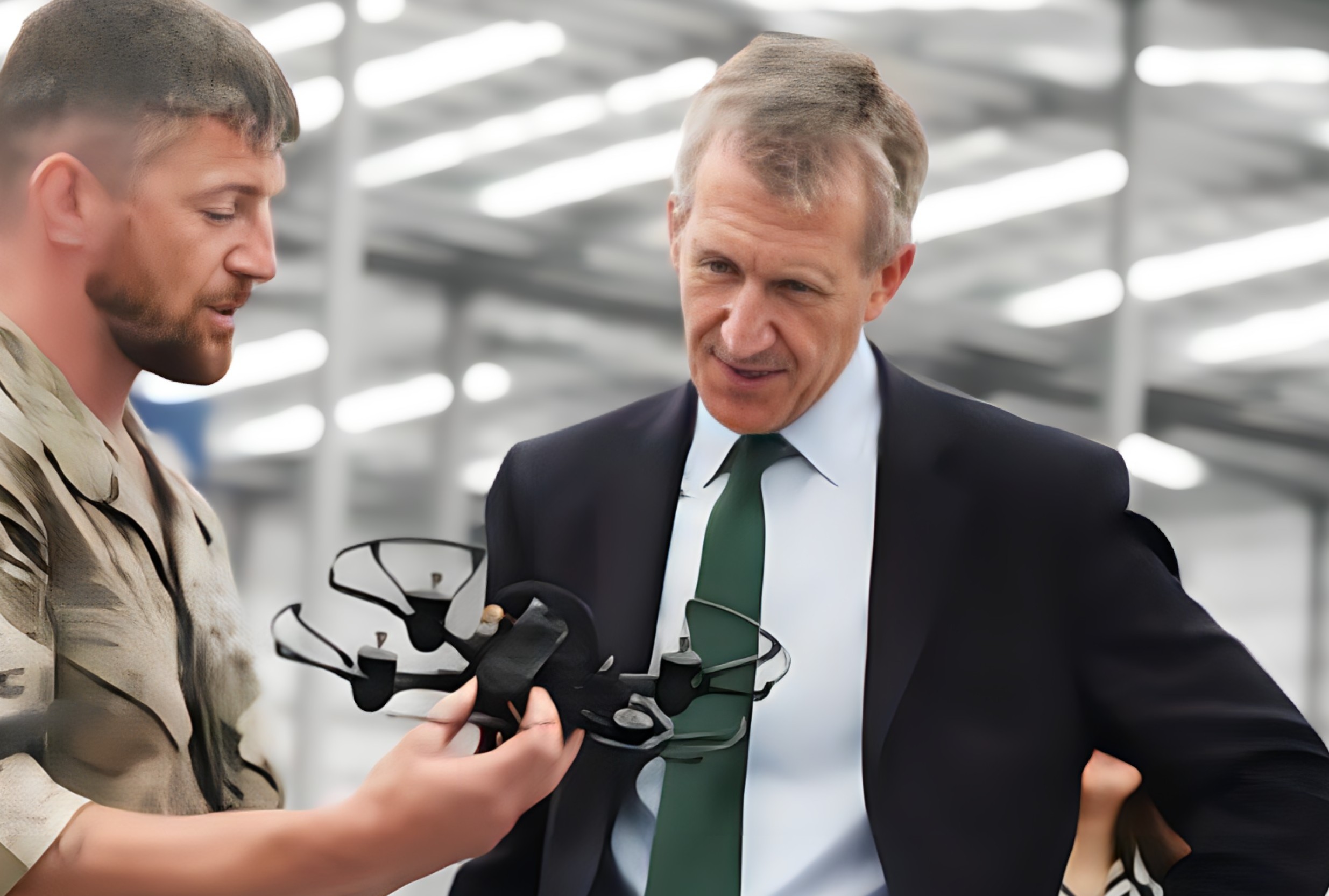
UK Inaugurates Europe’s Largest Drone Testing Centre Amidst Defence Funding Debate
Swindon, UK – The United Kingdom has officially opened Europe’s largest drone testing centre in Swindon, a strategic move aimed at rapidly accelerating the development and deployment of uncrewed military capabilities. Defence Secretary Dan Jarvis inaugurated the Uncrewed Systems Centre, located at the new DroneTEX facility, marking his first public engagement since his appointment following the recent resignation of his predecessor, John Healey.
The Ministry of Defence (MoD) has stated that the new facility is designed to dramatically reduce the timeframe for bringing advanced uncrewed technologies to the British armed forces, shifting from a process that historically took years to one that could be completed in mere weeks. Spanning an expansive 545,000 square feet – an area equivalent to more than ten standard football pitches – the centre is positioned as the UK’s primary hub for drone technology innovation, testing, and fostering collaboration with industry partners, international allies, and research institutions.
During his tour of the site, which included meetings with defence industry leaders, investors, and military specialists, Secretary Jarvis underscored the profound and swift changes occurring in modern warfare. “The character of warfare is changing, and it is changing fast,” Jarvis remarked. He specifically cited ongoing conflicts, particularly in Ukraine and across the Middle East, as compelling examples where uncrewed systems are “rapidly evolving and reshaping conflicts, on land, in the air and at sea.” Jarvis emphasized that the new centre is critical for ensuring the UK “embraces technologies that are redefining warfare,” enabling military technology to reach the armed forces “in a matter of weeks, because in this new era, those who innovate fastest will win.”
The establishment of the centre is largely driven by the strategic insights and urgent lessons gleaned from contemporary global conflicts. The MoD highlighted the operational impact observed in Ukraine, where an estimated 200,000 drones are reportedly utilized monthly. The department also pointed to certain regional conflicts in the Middle East, where, at peak intensity, up to 700 drones were reportedly launched per day. These examples, according to the MoD, vividly demonstrate the effectiveness of relatively inexpensive systems in targeting high-value assets and underscore the absolute necessity of dramatically shortened innovation cycles in military technology development.
Despite the strategic importance of the opening, the event was notably conducted without media presence. Initial invitations extended to journalists were later rescinded, a decision widely speculated to be an effort to pre-empt scrutiny and “awkward questions” concerning the controversial Defence Investment Plan and the circumstances surrounding recent high-profile departures. Both former Defence Secretary John Healey and Armed Forces Minister Al Carns resigned from the department just days prior to the opening, citing fundamental disagreements over the funding provisions outlined within the strategic plan. Consequently, information regarding the new Defence Secretary’s inaugural public engagement was disseminated exclusively through an official departmental press release.
Beyond its immediate military objectives, the Uncrewed Systems Centre is anticipated to serve as a significant catalyst for economic growth and advanced technological development within the United Kingdom. The MoD plans for the facility to foster close collaboration with British companies, providing support for Small and Medium-sized Enterprises (SMEs), stimulating exports, and creating high-skilled employment opportunities. A core focus will be on harnessing data and digital integration, aligning with the UK’s broader national strategy to embrace Artificial Intelligence (AI) and autonomy. This strategic direction includes initiatives such as Task Force RAID (Rapid AI Delivery), which was recently announced by the Prime Minister and the Chief of the Defence Staff.
The government’s deep commitment to autonomous systems is underscored by substantial financial allocations. The Strategic Defence Review previously announced a £2 billion increase in autonomy investment for the current parliamentary term, elevating the total defence investment in autonomous systems to £4 billion. Furthermore, the Ministry of Defence has allocated over £450 million to uncrewed systems since July 2024, with £300 million of that sum specifically earmarked for research and development. In the past year alone, UK Defence Innovation – the department’s dedicated innovation arm, backed by an annual ringfenced budget of at least £400 million – has injected more than £142 million in rapid investment towards scaling up the production of both drones and counter-drone systems.
The opening of the DroneTEX facility provides Defence Secretary Dan Jarvis with a visible platform at a particularly challenging juncture for the UK’s defence apparatus. He inherits a complex and politically charged situation, with the Defence Investment Plan – the very catalyst for his predecessor’s departure – still unpublished. The impending NATO summit in Ankara is mere weeks away, and there have been widespread warnings from influential industry bodies, the parliamentary Defence Committee, and even authors of the Strategic Defence Review itself, all contending that the current funding settlement falls significantly short of the nation’s defence requirements in the prevailing global climate.
Why This Matters
The inauguration of Europe’s largest drone testing facility in the UK represents a critical inflection point in the nation’s defence strategy and its proactive adaptation to the future of warfare. This development carries significant implications across several interconnected domains:
Firstly, **Geopolitical and Military Readiness:** The Uncrewed Systems Centre is a direct and tangible response to the urgent lessons learned from contemporary conflicts, particularly the pervasive and rapidly evolving role of uncrewed systems in Ukraine and other volatile regions. By aiming to drastically reduce development cycles from years to mere weeks, the UK seeks to gain a crucial competitive advantage in the global innovation race, ensuring its armed forces are equipped with cutting-edge technology faster than potential adversaries. This accelerated capability development is paramount for maintaining military relevance, projecting deterrence, and safeguarding national security in an era where technological superiority can be fleeting and decisive.
Secondly, **Economic and Industrial Impact:** This facility is not merely a military asset but is also projected to be a significant catalyst for economic growth and technological advancement. By fostering deep collaboration with British companies, particularly Small and Medium-sized Enterprises (SMEs), it aims to stimulate innovation within the domestic defence and technology industries, create high-skilled employment opportunities across various sectors, and boost technological exports. This substantial investment in autonomous systems, AI, and digital integration aligns with a broader national strategy to position the UK as a global leader in emerging technologies, thereby enhancing its industrial base and international competitiveness.
Thirdly, **Strategic Autonomy and Alliances:** As a central hub for cutting-edge drone technology, the centre will not only serve the immediate interests of the UK’s armed forces but also facilitate deeper collaboration with international allies and partners. This collaborative approach can lead to shared innovation, improved interoperability of defence systems, and the strengthening of collective defence capabilities, thereby reinforcing the UK’s pivotal role within NATO and other critical defence alliances. It underpins a strategy of leveraging technology to enhance both national security and international partnerships.
Finally, **Political Context and Funding Scrutiny:** The opening of such a significant defence asset occurs against a backdrop of considerable political turbulence within the Ministry of Defence, highlighted by high-profile resignations directly linked to defence funding. The controversy surrounding the unpublished Defence Investment Plan and widespread concerns about the adequacy of defence spending underscore ongoing tensions between ambitious strategic goals and the practicalities of financial realities. The ultimate success and long-term impact of the DroneTEX facility and the broader push for autonomous systems will depend not only on technological prowess but also on sustained political will, robust financial commitment, and a delicate balance between transparency and public accountability for defence spending.