

SlateStone Wealth Chief Market Strategist Kenny Polcari identifies tech stocks opportunities and the potential market reaction to the midterm elections on ‘Varney & Co.’
**Key Takeaways:**
1. **Structural Economic Resilience:** The U.S. economy’s unparalleled diversity, dynamic startup culture, and robust geographic advantages underpin its long-term growth potential, offering a broad spectrum of investment opportunities and mitigating concentrated sectoral risks.
2. **Global Capital Magnet:** America’s enduring leadership in technology, academic excellence, and military strength continues to attract massive foreign direct investment and top global talent, reinforcing its status as a premier destination for capital and innovation, driving asset demand and fostering a competitive market environment.
3. **Dollar Dominance and Geopolitical Stability:** The U.S. dollar’s role as the global reserve currency, coupled with the nation’s unmatched hard power, provides significant economic privileges and geopolitical stability, offering a crucial safe haven for investors amidst global uncertainties and supporting predictable market conditions.
This Fourth of July marks the 250th anniversary of the founding of the U.S., and while Americans around the country are celebrating the occasion, it also serves as an opportunity to reflect on what helped make the U.S. the world’s largest economy and the reasons it’s still a paramount destination for global capital and a compelling long-term investment.
Joseph P. Quinlan, head of CIO market strategy for Merrill and Bank of America Private Bank, authored a salient piece breaking down the 10 reasons the firm is bullish on the long-term prospects of investing in America. His analysis offers crucial insights for investors navigating a complex global landscape, highlighting foundational strengths that often transcend short-term market volatility.
Here’s a look at Quinlan’s 10 reasons to celebrate America on the nation’s 250th birthday, framed with relevant market context:
BANK OF AMERICA’S LEGACY OF BUILDING THE AMERICAN DREAM
The U.S. has the world’s largest economy and its deepest financial markets.(Michael Nagle/Bloomberg via Getty Images)
#1 Economic diversity and dynamism
“Think of our economy as a hydra-headed superpower, leading the world in such diverse activities as aerospace, agriculture, finance, energy, technology, healthcare, education and numerous other industries,” Quinlan said. This profound diversity translates directly into market resilience and a wealth of investment opportunities. For portfolio managers, it means less susceptibility to single-sector downturns and a broad base for growth across various economic cycles. The U.S. boasts nearly one-quarter of global gross domestic product (GDP) with just over 4% of the world’s population, indicating exceptional productivity and per capita wealth generation that significantly surpasses emerging market counterparts like China and India. This efficiency creates a robust corporate earnings environment, supporting higher valuations and consistent capital appreciation over the long term.
“Never have so few people produced so much output, creating so much wealth,” Quinlan added, underscoring the high return on labor and capital within the American economic framework, a key draw for global investors seeking efficiency and scale.

America’s geography and natural resources have given it a unique advantage in the world economy.(iStock)
#2 Geographic superpower
The U.S. stands in contrast to many of history’s leading world powers by virtue of having friendly neighbors and vast oceans on its flanks, Quinlan said. This geographic isolation and natural endowment represent a significant de-risking factor for investors. “One of the most favorable geographic positions on Earth,” as he described it, provides inherent stability, protecting critical infrastructure and trade routes. The vast Great Plains, Mississippi River system, and Great Lakes offer unmatched agricultural capacity, efficient inland commerce, and abundant freshwater reserves. In a world grappling with climate change, water scarcity, food security, and energy supply shocks, America’s geographic advantages translate into lower operational risks for businesses and greater stability for agricultural and commodity markets, enhancing its appeal as a safe haven for capital.
“At a time when water scarcity, food security, energy supplies and geopolitical tensions are increasingly important, America’s geographic advantages are becoming more valuable – not less,” he noted, implying a rising premium on these intrinsic assets for global capital allocators.
AMERICA 250: BLACKROCK’S LARRY FINK SAYS LONG-TERM INVESTING CAN PERFORM A KIND OF ‘CIVIC MIRACLE’
#3 Startup culture
“America’s economic metabolism is different from the rest of the world. No country creates and destroys as manically as America,” Quinlan wrote. This “creative destruction” is the engine of innovation, driving productivity gains and creating new market leaders. Since 2010, approximately 40% of the companies in the Fortune 500 list have either gone bankrupt, been acquired, or ceased operations, illustrating the dynamic churn that allows new, more efficient businesses to emerge. Census Bureau data showing nearly 6 million new businesses formed in the U.S. over the last 12 months — a record high — highlights a vibrant entrepreneurial ecosystem. This continuous renewal process fuels venture capital investment, generates robust IPO pipelines, and ensures a constant stream of disruptive technologies and business models, offering exciting growth opportunities for investors willing to embrace innovation.
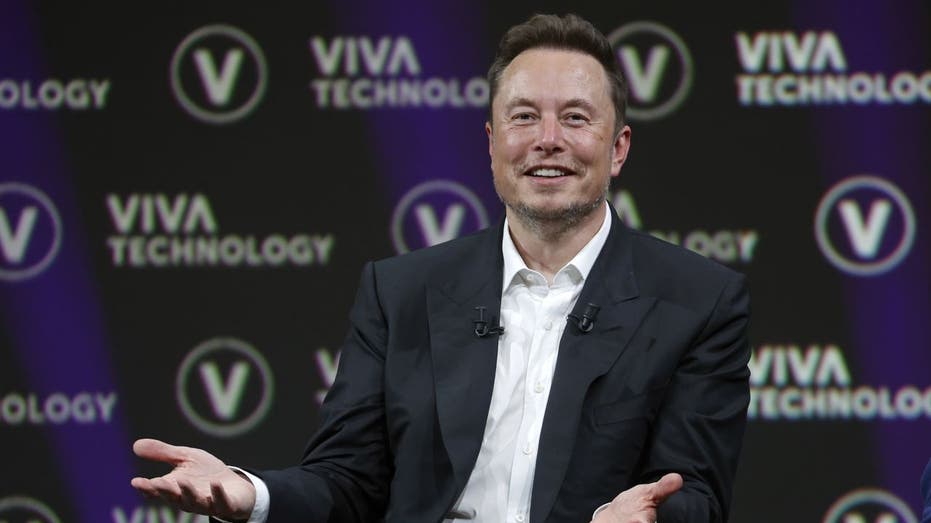
Entrepreneurs like Elon Musk, the world’s wealthiest person, help spur innovation and growth in the U.S. economy.(Chesnot/Getty Images)
#4 Magnet for foreign investment
Quinlan noted that investors move their capital to where it’s treated the best, and the sheer volume of foreign capital in the U.S. is a testament to this principle. “Global investors continue to favor the U.S.,” he stated. With around $50 trillion in foreign capital invested, according to the U.S. Department of Commerce, and a nearly five-fold increase since the turn of the century, the U.S. remains the world’s preeminent destination for international capital. This sustained influx of foreign direct investment (FDI) and portfolio investment underpins asset prices, enhances market liquidity, strengthens the dollar, and signals unwavering confidence in the long-term stability and growth prospects of the U.S. economy. It also facilitates capital formation, reducing the cost of capital for American businesses.
BELOVED PIZZA CHAIN TURNS AMERICA’S 250TH BIRTHDAY INTO SUMMER-LONG CELEBRATION
#5 Brand haven
The global economy is increasingly driven by intellectual property and brands, and Quinlan noted the U.S. is home to nine of the world’s top 10 global brands in 2026, according to BrandZ. These iconic brands are not just commercial successes; they represent vast intangible assets that provide competitive moats, drive consumer loyalty, and generate significant revenue streams globally. For investors, these brands translate into robust market capitalization, predictable earnings, and pricing power, making their parent companies attractive long-term holdings. They demonstrate how “American culture, technology and business extends far beyond its borders,” creating global demand and reinforcing the soft power that supports economic influence.

The U.S. has the world’s most capable military.(Mike Segar/Reuters)
#6 Unmatched hard power
The U.S. military is the most capable in the world, serving as a critical backstop to America’s economic strength through deterrence and the ability to respond to aggression. This security apparatus reduces geopolitical risk for investors by protecting global trade routes, ensuring energy supply security, and fostering a stable environment for international commerce. Moreover, “America’s defense leadership is not merely a strategic asset – it is also an important economic advantage, supporting innovation across aerospace, cybersecurity, AI and advanced manufacturing,” Quinlan wrote. This translates into significant R&D spending and technological advancements that often have dual-use applications, spilling over into the civilian economy and creating new market opportunities, particularly in a world increasingly challenged by state-sponsored threats and geopolitical fragmentation.
MCDONALD’S BRINGING BACK FRIED APPLE PIE TO CELEBRATE AMERICA’S 250TH BIRTHDAY
#7 Tech leadership
The entrepreneurial culture of risk-taking in the U.S. has helped the country maintain its edge in tech innovation despite China’s economic rise. Quinlan highlighted that the market cap of firms like Nvidia, Google parent Alphabet, and Apple are individually larger than many countries’ entire economic output. This dominance in high-growth sectors, particularly semiconductors and artificial intelligence, provides a powerful engine for market performance. “America is the largest market in the world for research and development spending and, in terms of AI, investment in AI in the U.S. is light years ahead of most of Europe and the rest of the world,” he said. This leadership translates into a continuous pipeline of transformative technologies and a significant concentration of global growth stocks, making U.S. equity markets a compulsory allocation for global growth-oriented portfolios.

Nvidia CEO Jensen Huang, co-founder of the world’s most valuable company, was born to Taiwanese immigrants who brought him to the U.S. at a young age.(Akio Kon/Bloomberg via Getty Images)
#8 Academic excellence
Quinlan wrote that U.S. colleges and universities are among its greatest assets, with 26 of the top 100 global universities, including four of the top five and eight of the top 20, according to Quacquarelli Symonds World University Rankings. This academic prowess is a direct driver of human capital development, attracting the brightest minds globally. “Many of the world’s most innovative companies were founded or co-founded by immigrants who first arrived in America as students,” he noted. This influx of talent fuels R&D, innovation, and entrepreneurship, providing a robust pipeline for future economic growth and technological leadership. For markets, it ensures a continuous supply of skilled labor and intellectual property, crucial for sustaining competitive advantage and driving corporate profitability.
BANK OF AMERICA CARDHOLDERS CAN VISIT 250 MUSEUMS FREE DURING JULY 4 WEEKEND
#9 Dollar dominance
“Predictions of the dollar’s demise have become a recurring feature of modern finance. Yet the greenback remains the world’s dominant reserve currency, the primary medium of global trade and finance, and the ultimate safe-haven during periods of crisis,” Quinlan wrote. This “exorbitant privilege” affords the U.S. unparalleled advantages, including lower borrowing costs for its government and corporations, deep and liquid financial markets, and insulation from external shocks. For investors, the dollar’s role provides a stable anchor for global portfolios, particularly during periods of market stress. Its pervasive use in commodity pricing also gives the U.S. significant influence over global trade dynamics. “There remains no credible global substitute to the buck,” for the foreseeable future, reinforcing its critical role in global financial architecture.
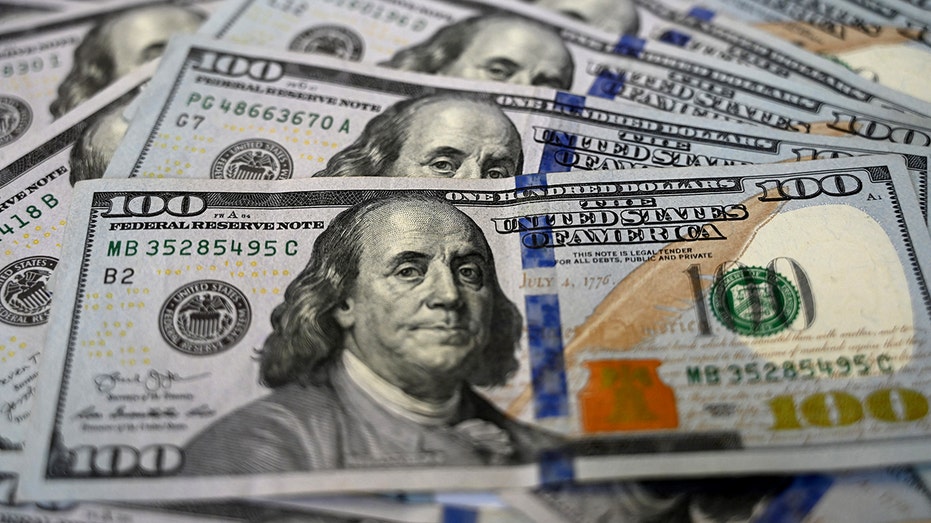
The dollar is the world’s reserve currency.(Ozan Kose/AFP via Getty Images)
#10 Competitive drive
Economic competitiveness allows countries to adapt, innovate, bring in talent, and drive growth — all categories that Quinlan said the U.S. is among the world leaders in. This intrinsic “competitive drive” fosters an environment where businesses are constantly striving for efficiency, innovation, and market share, leading to higher productivity and stronger corporate earnings. It ensures that the U.S. economy remains agile, capable of adapting to new global challenges and seizing emerging opportunities. “The U.S. is positioned to remain among the world’s most competitive economies,” he concluded. This sustained competitiveness is a foundational element for long-term investment success, signaling a dynamic and adaptive market landscape that rewards ingenuity and efficiency.
GET FOX BUSINESS ON THE GO BY CLICKING HERE
“Summing it all up: At 250 years old, America remains the world’s leading economic, financial, technological and military power,” Quinlan wrote. “The entrepreneurial DNA of 1776 continues to run strong through our nation – think the willingness to take risks, challenge conventions, attract talent, and reinvest itself. That’s worth celebrating.”
### Market Impact
The confluence of these ten robust factors paints a compelling long-term bullish picture for U.S. financial markets. Investors can expect continued outperformance from U.S. equities, particularly in technology and innovation-driven sectors, supported by deep capital markets, strong corporate governance, and a consistent influx of global capital. The dollar’s enduring dominance will likely maintain its safe-haven status, providing stability during periods of global uncertainty and influencing commodity prices. While short-term volatility stemming from monetary policy shifts, inflation concerns, or geopolitical events remains a factor, the fundamental strengths outlined by Quinlan suggest that U.S. assets will continue to be a cornerstone of diversified global portfolios. Strategic allocations to U.S. large-cap growth companies, innovative small-caps, and select value opportunities in resilient sectors are poised to benefit from America’s unique economic and geopolitical advantages for the foreseeable future, making the U.S. a continued magnet for both domestic and international investors.