
Treasury Secretary Scott Bessent appears on ‘Fox & Friends’ to address the phased resumption of operations in the Strait of Hormuz and introduces a new initiative to combat deceit, designed to uncover fraudulent schemes across healthcare and various other sectors.
JetBlue is implementing an increase of $4-$9 in charges for checked luggage for travelers in economy class. The airline attributes this adjustment to escalating aviation fuel costs, which stem from worldwide petroleum scarcity in the midst of the conflict with Iran.
“Given the escalating operational expenditures we encounter, we routinely assess methods to control these expenses while simultaneously maintaining attractive core ticket prices and persisting in enhancing the quality service our patrons appreciate,” JetBlue explained in a communication to FOX Business. “By modifying charges for additional amenities utilized by certain passengers, such as stowed luggage, we are enabled to keep providing more economical ticket prices while simultaneously providing the in-flight amenities our customers cherish, which encompass free snacks and drinks, boundless, rapid internet access, and in-seat display units for entertainment.”
The statement further added, “Although we acknowledge that hikes in charges are not preferable, we exercise diligence to guarantee these modifications are enacted solely out of necessity.”
Regarding internal flights and journeys to the Caribbean and Latin America, the initial piece of stowed luggage will now be priced at $39 during non-busy travel times, an increase from $35. During high-demand seasons, this cost will rise to $49, up from $40. Passengers who make payment within 24 hours of their flight’s scheduled takeoff will still incur a supplementary $10 fee.
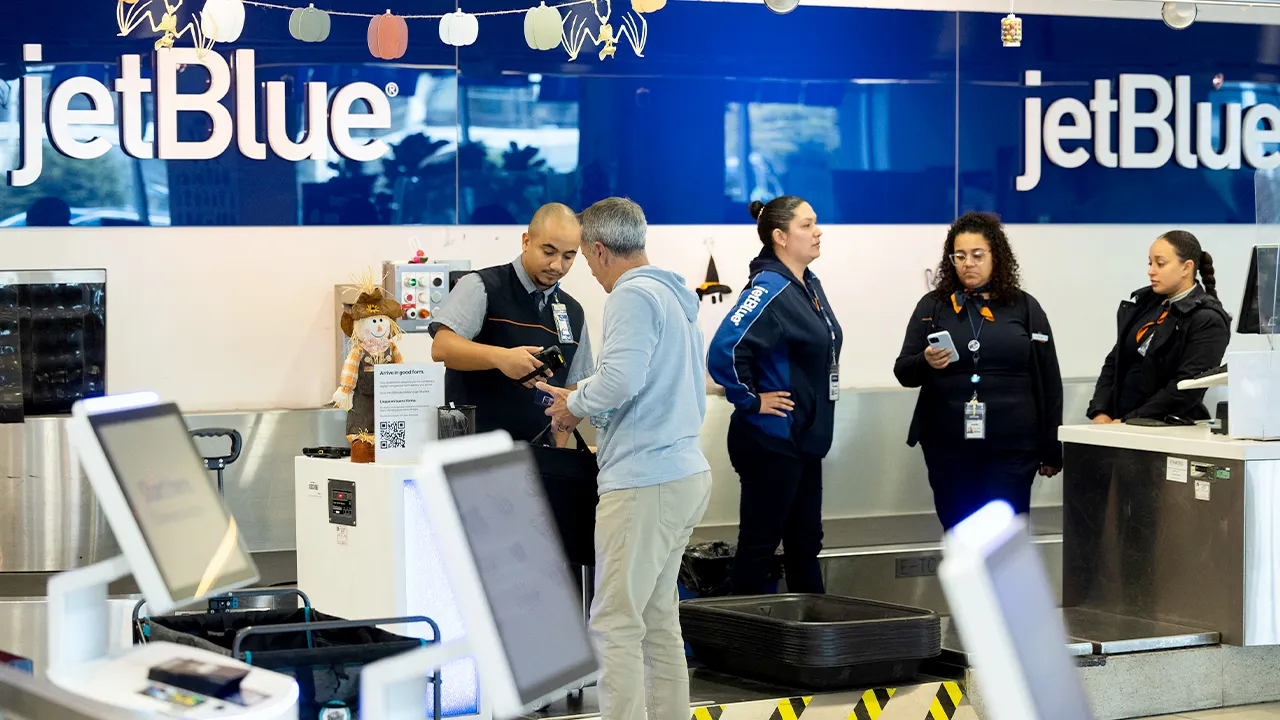
JetBlue has increased luggage charges by up to $9 for economy class reservations, against a backdrop of a transient surge in worldwide energy costs, attributed to deficiencies resulting from the closure of the Strait of Hormuz.(Ryan Collerd/Bloomberg via Getty Images / Getty Images)
DESTROY THE REGIME’S POWER WITHOUT OCCUPYING IRAN: A SMARTER WAR PLAN
Travelers possessing qualifying JetBlue jointly branded credit cards or premium loyalty program standing are still excused from the luggage charges.
Historically, when one airline implements price hikes, its rivals typically emulate the action. However, there are no signs to date from American Airlines, United Airlines, Delta Air Lines, Southwest Airlines, or Frontier Airlines.
A representative for Southwest informed the New York Post that the airline “does not harbor any current intentions to elevate charges attributable to broader economic influences.”
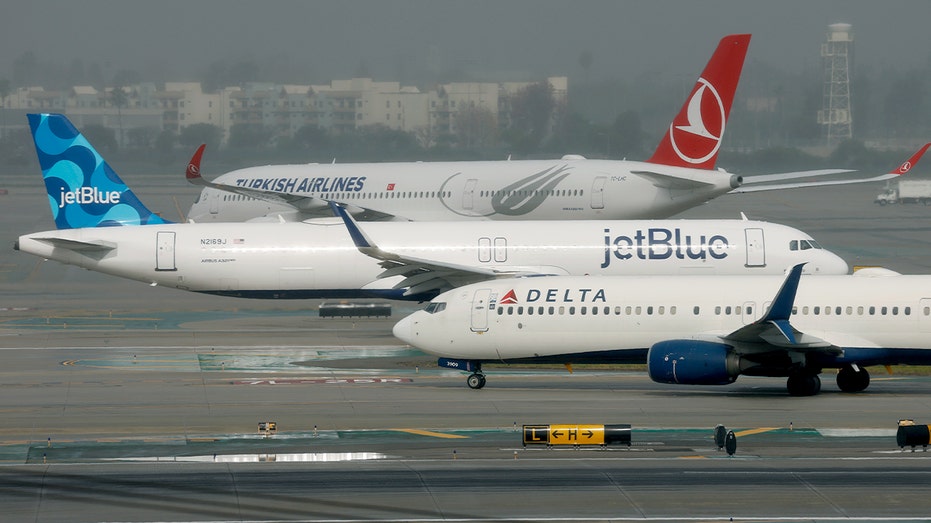
Conventionally, other airlines typically respond to escalating costs for luggage charges whenever a single carrier makes a move.(Kevin Carter/Getty / Getty Images)
WALTZ SAYS TRUMP IS USING IRAN’S OWN OIL STRATEGY AGAINST ITSELF TO DRIVE DOWN GLOBAL PRICES
This action indicates a wider strain on air carriers, as energy costs have escalated worldwide subsequent to the military actions against Iran by the U.S. and Israel, which commenced on Feb. 28. On Tuesday morning, aviation fuel in prominent U.S. markets reached an average of $4.62 per gallon, showing an increase exceeding 83% compared to the eve of the conflict’s commencement, as per Argus data disseminated by Airlines for America.
In an internal communication to staff earlier in March, United CEO Scott Kirby penned, “In truth, aviation fuel costs have exceeded a twofold increase over the past three weeks. Should costs persist at this magnitude, it would translate to an additional $11 billion in yearly expenditure solely for aviation fuel. To offer context, during United’s most successful year on record, we generated under $5 billion. While that may sound alarming, the initial positive development is that, at present, customer demand continues to be unprecedented. The past 10 weeks represent the top 10 weeks for revenue generation from bookings in our entire history.”
Treasury Secretary Scott Bessent appeared on ‘Mornings with Maria’ to address the conflict with Iran, escalating petroleum costs, fluctuations in the market, the Federal Reserve’s indecision, the outlook for Powell, and the American approach to steadying the worldwide financial system.
TRUMP SEEKS WARSHIPS FROM OTHER COUNTRIES TO HELP SECURE STRAIT OF HORMUZ
Kirby further noted, however, that “it might prove difficult to keep transferring a significant portion of the elevated energy cost if oil remains elevated for an extended duration.”
On Tuesday morning, PresidentDonald Trump, with his focus on economic accessibility during the conflict, posted on Truth Social, exhorting nations worldwide reliant on oil to take proactive steps to address their scarcity in provisions.
On Truth Social, Trump penned, “To all those nations unable to acquire aviation fuel due to the situation concerning the Strait of Hormuz – such as the United Kingdom, which declined to participate in the disabling of Iran’s regime – I offer a recommendation: Firstly, procure it from the U.S., as we possess an abundance. Secondly, muster some belated bravery, proceed to the Strait, and simply seize it. You will have to begin to advocate for your own interests; the U.S.A. will no longer offer assistance, mirroring your absence when we needed support. Iran has been, fundamentally, neutralized. The most challenging phase is complete. Acquire your own petroleum!”
US ‘LOCKED AND LOADED’ TO DESTROY IRAN’S ‘CROWN JEWEL’ ‘IF WE WANT,’ TRUMP WARNS
Despite this aviation fuel price marking the peak for the current year, exhibiting a consistent ascending trajectory since the commencement of hostilities, Treasury SecretaryScott Bessentinformed Fox News that these spikes in energy costs are transient, attributable to pressures affecting the worldwide fuel reserves.
This situation is linked to Iran’s retaliatory measures involving restricting passage through the Hormuz Strait, where the compulsory shutdown is driving up petroleum costs worldwide in expectation of scarcity in provisions.
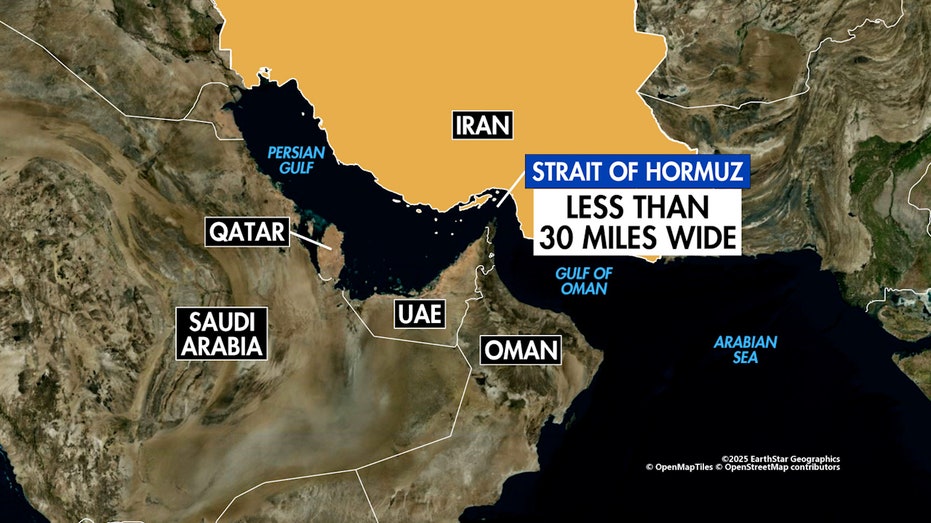
Approximately one-fifth of the global petroleum output transits the Strait of Hormuz near the Iranian shoreline. Tehran’s government is menacing to assail any ships that traverse the strait without authorization. (FOX / Fox News)
According to Bessent, providing the global market with additional petroleum from Iran will eventually reduce costs within the United States. He observed that while the U.S. is not dependent on petroleum from the Middle East, the constriction of the Strait of Hormuz has unnerved the markets for future crude oil contracts.
CLICK HERE TO DOWNLOAD THE FOX NEWS APP
Bessent stated that the U.S. has refrained from targeting Iran’s energy facilities even while intensifying armed actions, contending that the objective is to safeguard reserves while maintaining leverage over Tehran.
“We possess numerous instruments of influence,” Bessent declared. “There’s a considerable amount more that we are capable of undertaking.”