

Constellation Research founder R Ray Wang joins ‘Making Money’ to analyze the post-election market rally, potential policy implications for AI data centers and investment opportunities across tech stocks and hyperscalers.
Key Takeaways for Investors:
- **Regulatory Headwinds for AI Infrastructure:** The Democratic sweep in Congress and key state offices signals increased scrutiny on the AI sector, particularly regarding data center energy consumption and environmental impact. This introduces potential delays and higher compliance costs for the rapid AI buildout.
- **Bipartisan AI Priority vs. Policy Uncertainty:** Despite a shared strategic commitment to AI development across both parties, the shift in legislative control means companies will face an evolving, fragmented regulatory landscape. President Trump’s veto power at the federal level may curb radical legislative changes but will not prevent state-level actions or increased oversight pressure.
- **Market Impact on Semis and Hyperscalers:** Potential pauses or increased costs for data center construction, especially at the state level, directly threaten the growth projections for semiconductor manufacturers and cloud computing hyperscalers. While valuations in the semiconductor sector already reflect some risk, sustained policy uncertainty could trigger further volatility and necessitate a re-evaluation of long-term growth trajectories.
The recent midterm elections, which saw Democratic majorities established in both the House and Senate for the upcoming two years, have injected a new layer of complexity into the market outlook, particularly for the burgeoning artificial intelligence (AI) sector. Beyond the immediate post-election market rally, investors are now grappling with the potential policy implications for AI data centers, tech stocks, and the hyperscalers driving the current technological revolution.
The AI sector, a dominant investment theme in recent years, now faces heightened political scrutiny across several critical areas. These include the substantial electricity consumed by AI data centers and their broader impact on local communities and energy grids, as well as overarching concerns regarding cybersecurity, data privacy, and the disruptive effects on the labor force. While President Donald Trump has consistently championed AI development – going so far as to rebrand it “superintelligence” in official White House policies – and retains critical veto power over congressional legislation, the Democratic gains at both federal and state levels signal a shift toward more rigorous oversight.
As the AI buildout accelerates at an unprecedented pace, Democratic policymakers are poised to influence how companies approach these massive capital investments. This will necessitate a delicate balance for corporations navigating both innovation imperatives and mounting political and public pressure. The market’s initial reaction to the election results may have focused on broader political stability, but a deeper dive reveals sector-specific challenges that could impact valuations and investment strategies.
Analysts at State Street, including chief macro policy strategist Elliot Hentov and investment strategist Christine Norton, have highlighted these impending headwinds. They note that “Democratic gains could create additional headwinds for… and increase scrutiny of AI providers and data center development, particularly the impact of power demand on local communities.” This concern is amplified by several state gubernatorial results, where Democrats made significant inroads. However, they also provide a crucial market context: “Yet at a federal level, congressional control alone would not be enough to curtail AI-related data center construction in the face of a presidential veto.” This suggests that while federal legislative action might be limited by executive power, the tone and focus of regulatory agencies under White House control, coupled with heightened congressional inquiry, will undoubtedly shape the operating environment for AI firms.
Democratic candidates like Abdul El-Sayed, who won a U.S. Senate seat in Michigan, swept the midterms and have expressed skepticism toward data centers.(Sarah Rice/Bloomberg via Getty Images)
Critically, Hentov and Norton also underscore that “AI also remains a strategic priority for both parties, suggesting that greater policy scrutiny should not automatically be equated with an end to the AI capital spending cycle. AI investment will likely continue to be robust in 2027, albeit tempered by strains on the supply chain and tighter credit.” This nuanced view is vital for investors. It suggests that while the pace of growth might be adjusted, and certain projects potentially delayed or re-scoped, the fundamental long-term growth trajectory of AI adoption remains intact. The key will be understanding which companies are best positioned to navigate these new regulatory and economic complexities, particularly those with diversified supply chains and strong balance sheets in an environment of tighter credit conditions.
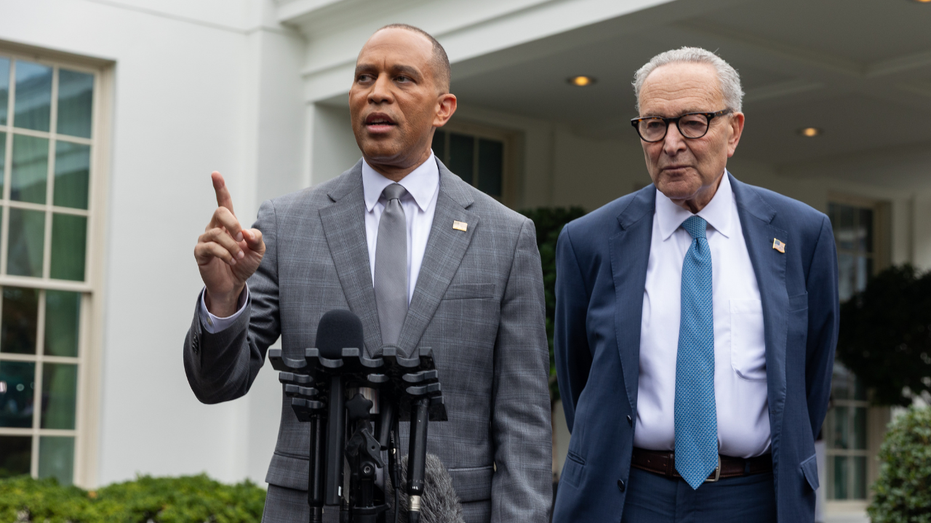
House Minority Leader Hakeem Jeffries, D-N.Y., and Senate Minority Leader Chuck Schumer, D-N.Y., will have their party in the majority during the next Congress. However, they’re limited by President Trump’s veto.(Nathan Posner/Anadolu/Getty Images)
Dallas Dolen, technology, media, and telecom lead at PwC, echoed these sentiments, telling FOX Business that with Democratic control of Congress, “we’re likely to see greater scrutiny around AI safety, bias, labor, copyright and transparency, but more oversight doesn’t necessarily mean more certainty.” This lack of certainty is a significant concern for the market. Companies thrive on predictable regulatory environments, and an “evolving patchwork of state requirements” alongside federal debates can complicate long-term strategic planning and capital allocation. Dolen’s advice to companies — “They need a strong governance baseline that allows them to keep investing, building and scaling AI responsibly” — highlights a growing demand for robust corporate governance and compliance frameworks in the tech sector, which could also spur investment in new enterprise software solutions.
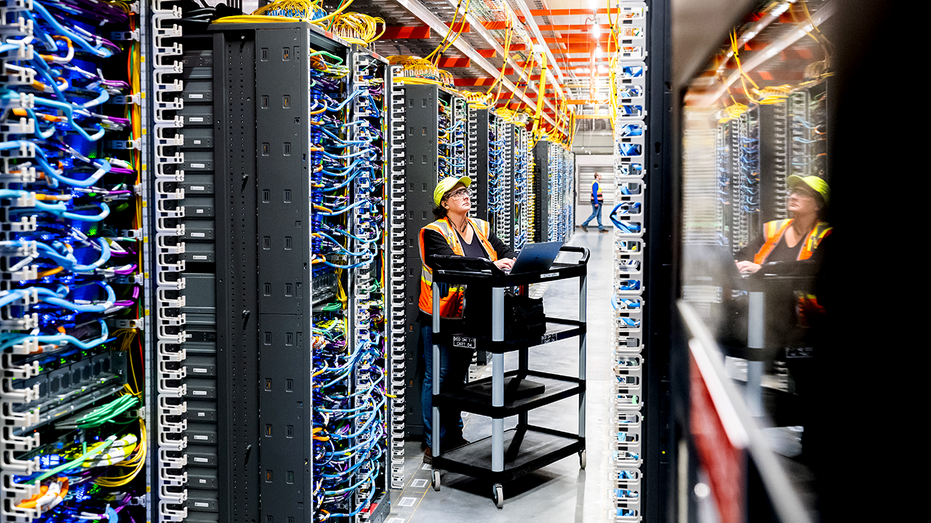
Investment in AI data centers and other infrastructure has ramped up dramatically in recent years.(Noah Berger)
Perhaps the most tangible market impact could stem from state-level policy shifts. Strategists at UBS have specifically pointed to the implications of potential pauses on data center construction in states like Texas, where Democrats flipped the governorship and gained control of the state House. Such developments could significantly alter the outlook for AI infrastructure and cloud computing companies. UBS strategists wrote that “Data center pauses will slow the pace of buildout into 2028 with ~30% of expected 2028 additions now at risk of being impacted, and Texas alone is 18 GW of that.” This is a stark quantification of the potential headwind. The imposition of requirements for data centers to pay for grid upgrades, as UBS suggests, would further raise costs, directly impacting the profitability and return on investment for hyperscalers and data center operators.
These state-level interventions have immediate consequences for the semiconductor industry. UBS notes that “The slowdown is a negative for Semis and AI infrastructure, but a lot is already priced into Semis with valuations nearing multi-year lows. Additionally, Semis positioning has been cut sharply.” This indicates that a significant portion of the downside risk related to a potential slowdown in AI infrastructure buildout may already be discounted in semiconductor valuations. For opportunistic investors, this could suggest that the market has oversold certain semiconductor stocks, creating potential entry points if the actual policy impact is less severe than feared, or if the long-term AI demand remains robust despite short-term delays. However, sustained uncertainty could lead to prolonged sideways trading or further multiple contraction.
Market Impact:
The Democratic midterm sweep, while not guaranteeing an immediate legislative overhaul of the AI sector due to presidential veto power, fundamentally alters the risk landscape for investors. Companies involved in AI infrastructure, particularly data center development (e.g., Digital Realty Trust, Equinix), and their primary suppliers (e.g., Nvidia, AMD, Broadcom for semiconductors; various power and cooling equipment manufacturers) will likely face increased scrutiny and potential project delays. This translates to a higher regulatory risk premium for these stocks. Cloud computing giants (e.g., Microsoft, Amazon, Google) will need to factor in potentially higher operational costs for their data center expansions, which could slightly erode future margins or necessitate price adjustments for their AI services. Conversely, companies specializing in AI governance, compliance software, and sustainable energy solutions for data centers might see increased demand. Overall, the market is shifting from a period of unbridled AI growth to one that requires a more nuanced assessment of policy risk, capital expenditure efficiency, and the ability of companies to adapt to a potentially more regulated, and therefore more expensive, operating environment. This period of policy uncertainty could lead to increased volatility in AI-related equities as investors parse legislative proposals and state-level regulatory actions.