
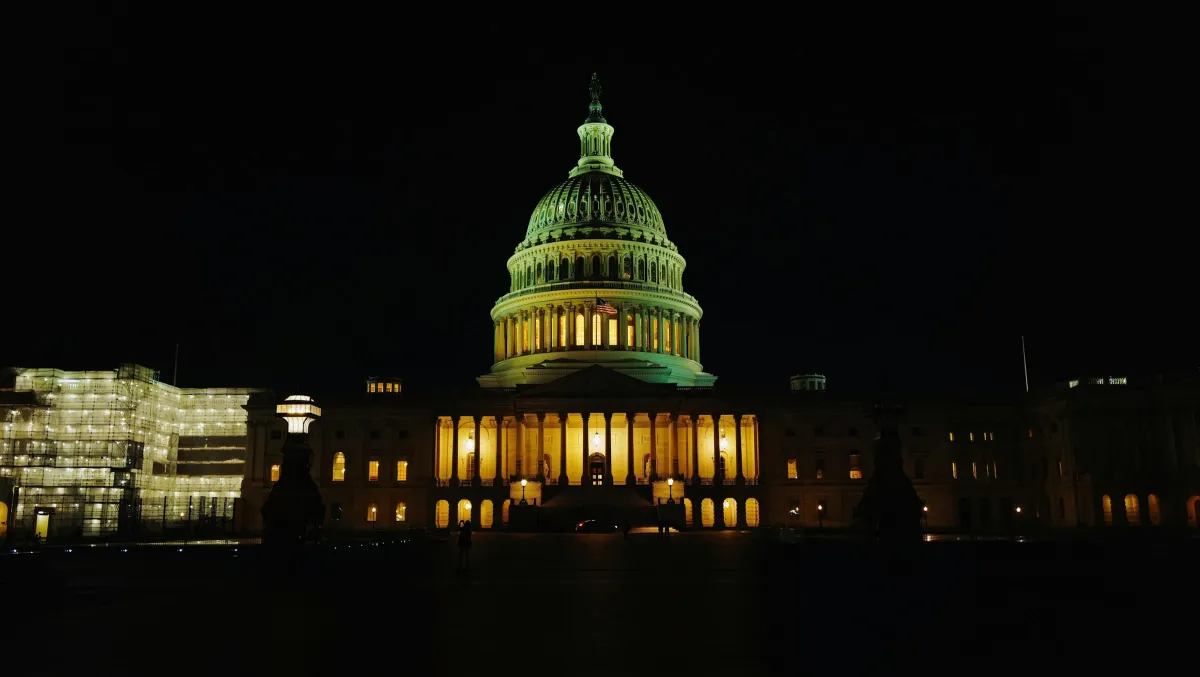
The recent midterm elections delivered a powerful message: the unchecked expansion of AI data centers is now a potent political issue, directly impacting electoral outcomes and reshaping the legislative agenda. With Democrats gaining full control of Congress, the stage is set for a monumental clash over the future of AI infrastructure in the U.S.
Key Takeaways
- **Voter Backlash Ignites Political Shift:** Anger over AI data center development became a decisive ballot-box issue in the midterms, with a majority of voters expressing concerns about AI’s harm and opposing local data center builds, directly influencing election results across multiple states.
- **Congressional Control Signals Regulatory Scrutiny:** Democratic control of Congress paves the way for potential nationwide moratoriums, stricter environmental regulations, and policies that would shift the financial burden of infrastructure upgrades from communities to AI developers.
- **Beyond the Buildings: A Referendum on Tech Power:** The public’s pushback against data centers is a proxy for deeper anxieties about AI’s societal impact, environmental footprint, and the erosion of local autonomy, signaling a broader bipartisan frustration with Big Tech.
The AI Infrastructure Reckoning: Midterms Unveil a New Political Battleground
The November 3 midterm results have reshaped the U.S. political landscape, handing Democrats full control of Congress amidst a Republican White House. But beyond the traditional partisan divides, these elections also illuminated a burgeoning and potent political force: widespread public anger over the rapid expansion of AI data centers. What was once a localized concern has escalated into a national issue, suggesting that the era of unchecked AI infrastructure buildout may be drawing to a close.
Tuesday’s election outcomes made it unequivocally clear: the colossal facilities housing the computers that power artificial intelligence are no longer just an industrial necessity but a significant political liability. With Democrats now wielding legislative power, the stage is set for potential new limits on where data centers can be built, how they operate, and critically, how much say local communities will have in their proliferation.
The Electorate’s Verdict: AI Data Centers at the Ballot Box
Data centers emerged as a surprising, yet decisive, ballot-box issue across various states. An NBC exit poll underscored the depth of public concern regarding AI, revealing that more than half of respondents believe AI will do more harm than good. Furthermore, a staggering almost 80% expressed opposition to the construction of data centers in their neighborhoods. Nearly 60% of voters, meanwhile, cited data centers as a crucial or major factor in their vote – a testament to the issue’s electoral potency. Nadine Smith, president and CEO of the racial justice organization Color of Change, eloquently framed Tuesday’s election as a referendum on “who this economy is built for.”
“National security matters,” Smith acknowledged, addressing a common argument from data center proponents who champion the infrastructure as essential for U.S. leadership in global competition and defense. “And so do the families in South Memphis breathing exhaust from the gas turbines powering an AI supercomputer.” Her reference to xAI’s data center in Memphis, Tennessee, which relies on gas turbines for power, highlighted the immediate, tangible impact on local communities.
Voters in several states actively pushed back against the aggressive AI buildout, often defying the millions spent by pro-AI super PACs hoping to sway them this midterm. The anti-data center sentiment was particularly strong in states like Ohio, a state OpenAI had eyed for a massive $500 billion data center, backed by over $100 billion in financing from Nvidia. In a telling sign, the Ohio county where Meta had planned a sprawling 700,000-square-foot facility just passed a ban on data centers, while local communities statewide overwhelmingly voted against new data center measures.
Analysts at Morgan Stanley now predict that Democratic governor-elect Amy Acton will pose a significant risk to Ohio’s data center buildout plans. Elsewhere, candidates in Texas, Maine, Michigan, Nevada, Georgia, and South Carolina all secured seats after campaigning robustly against the rapid expansion of data centers. “It is clear that money does not buy outcomes,” observed Anshi Bhatt, a tech and policy researcher, suggesting that in modern politics, creating a “local villain” can be a powerful way to build campaign momentum.
Congressional Crossroads: A New Regulatory Landscape?
The shift in congressional control is poised to usher in a new era of regulatory scrutiny for AI infrastructure. Likely next steps could include more construction moratoriums or new requirements for data centers to bear the full cost of their own power grid upgrades, rather than passing those expenses onto nearby communities. Goldman Sachs, for instance, has already predicted data center construction delays in states like Georgia and Texas due to Democratic gains.
Democratic control of Congress could also significantly improve the odds for bills like the one introduced earlier this year by Sen. Bernie Sanders and Rep. Alexandria Ocasio-Cortez. This landmark proposal advocates for a nationwide moratorium on new data centers until Congress can establish new guardrails, ensuring that the buildout does not escalate electricity costs, harm the environment, or proceed without explicit community approval. While such a bill would still face the hurdle of a potential presidential veto, its path through Congress is now considerably clearer.
Other legislative efforts, such as the GRID Savings Act, proposed by New Mexico Sen. Martin Heinrich, aim to prevent the costs of crucial grid infrastructure upgrades from being unfairly passed on to communities during large-scale AI data center expansions. These legislative initiatives reflect a growing consensus that the public should not subsidize the infrastructure needs of some of the world’s wealthiest corporations.
Environmental and Community Flashpoints
Environmental concerns are a major driver of the backlash, particularly in regions like Memphis, where xAI’s data center relies on gas turbines for power, and across Virginia, often dubbed the world capital of data centers, where similar energy practices are common. Maia Woluchem, program director at Data & Society, a nonprofit research group, anticipates that changes to energy regulations, land rights, and other environmental policies could significantly impact the data center buildout. This is especially true as congressional Democrats are reportedly looking into the Trump administration’s rollback of certain energy protections, as highlighted by the New York Times.
“Regardless of federal action, I could imagine that we will see additional movement at the state and local level, given the momentum that’s been building from the ground up,” Woluchem added, pointing to governor-elect Gina Hinojosa of Texas as a prime example. Hinojosa, who supports a statewide moratorium on data centers, notably centered much of her campaign on opposing these facilities – a significant choice in a state whose electrical grid has proven vulnerable over the past decade. Even Texas Governor Greg Abbott has called for some limits, indicating a bipartisan recognition of the issue.
The discontent, however, runs deeper than the physical buildings themselves. As one private equity executive recently observed, people don’t necessarily hate data centers, but rather AI itself, viewing the data centers as a tangible manifestation of their fears and anxieties about the technology. “It does look like the results are pointing to a real frustration with tech power at minimum,” Woluchem commented, underscoring the bipartisan nature of this growing discontent.
For months, citizens have voiced concerns about data centers’ environmental impact and their perceived lack of agency in whether these facilities are built. The case of Amazon’s data center in Gilroy, California, built without widespread community awareness by leveraging a 45-year-old zoning law, is a stark illustration. Vague or outdated zoning laws, coupled with requirements for local officials to sign non-disclosure agreements (NDAs) that bar them from discussing data center projects, have only intensified public outrage. Adding insult to injury, data centers have often received billions in tax breaks, and while many tech companies tout job creation and community programs, for many, these benefits simply aren’t enough to offset the perceived costs.
People demand to know they still have a say in what happens in their communities. Many also fear that the massive AI buildouts will primarily enrich a select few while their local communities bear the environmental burden, face rising utility costs, and witness an erosion of their quality of life.
“If AI infrastructure is truly a national priority, then the companies building it can afford to pay for their own power, meet clean air standards, disclose what they use, and build with the consent of the people who live next door,” Smith asserted. “Families should never be subsidizing the richest corporations in history through their utility bills.”
The Path Ahead: A Brewing Battle
Despite the electoral victories and shifting legislative tides, the hardest part is still to come. Smith anticipates a significant fight, potentially involving more executive orders designed to bypass what Congress is now likely to block. “Even among Democrats, a blanket freeze is contested,” she noted, acknowledging some Democrats’ concerns that a moratorium could impede AI progress and compromise national security.
Smith also fully expects AI lobbyists to intensify their efforts, inundating lawmakers with calls and arguments. “Democrats ran on making Big Tech pay,” Smith reminded. “Our job is to make sure they remember it once the cameras leave.” This underscores the ongoing tension and the significant advocacy required to translate public sentiment into enduring policy change.
The bottom line is that the public mood has decisively shifted. The anger over data centers is a symptom of a deeper, bipartisan frustration with tech power and a demand for greater accountability and community involvement in the deployment of transformative technologies like AI.
Bottom Line
The recent midterm elections mark a pivotal turning point for AI infrastructure, transforming the debate from a niche industry concern into a mainstream political flashpoint. With a Democrat-controlled Congress and a clear public mandate, the era of unbridled data center expansion is likely over, paving the way for stricter regulations, increased community oversight, and a re-evaluation of who truly benefits from the AI revolution. Tech giants and policymakers alike must now confront a populace demanding a more equitable, environmentally conscious, and locally accountable approach to the future of artificial intelligence.
When you purchase through links in our articles, we may earn a small commission. This doesn’t affect our editorial independence.
{content}
Source:{feed_title}