

The Big Money Program elucidates how friction in the Strait of Hormuz and Houthi incursions are propelling crude oil prices upwards and disquieting worldwide financial arenas.
According toJerome Powell, the leader of the Federal Reserve, the American economy is currently grappling with a supply disruption due to the interruption of petroleum provisions from the Middle East, following earlier upheavals such as the COVID-19 health crisis and trade levies that had already escalated costs.
During his address to an economics class at Harvard University on Monday, Powell conveyed that a succession of supply disturbances has sustainedheightened inflationbeyond the central bank’s enduring 2% objective. This persists even with significant headway made in decelerating the speed of price increases from their 9.1% zenith observed in 2022.
Powell remarked, “We had approached nearly 2% by the close of ’24. We were then primarily managing the impact of trade duties, which have mostly receded within the U.S. but not internationally. Their influence proved less than anticipated, partly because other nations refrained from retaliation, and also because the measures put into effect were less comprehensive than initially declared.”
“Inflation stood at approximately 3%, with roughly 0.5 to 0.8 percentage points of that figure originating from tariffs,” Powell stated. He continued, “We’ve consistently remained quite near 2% throughout this period. Now, however, an additional supply upheaval is on the horizon.”
CONFLICT IN IRAN MIGHT ELEVATE INFLATION THIS YEAR, GOLDMAN SACHS INDICATES
Jerome Powell, the head of the Federal Reserve, indicated that the intensity of the energy upheaval’s impact on the economy remains uncertain.(Kent Nishimura/Getty Images)
He remarked, “This represents one of those periods where we encounter a succession of supply disruptions: initially the pandemic, followed by the considerably lesser impact of tariffs, and now we are confronting an energy upheaval.”
Powell further noted that, “The true magnitude is unknown; it is far too premature to ascertain.”
IS THE FEDERAL RESERVE SET TO REDUCE BORROWING COSTS IN 2026?
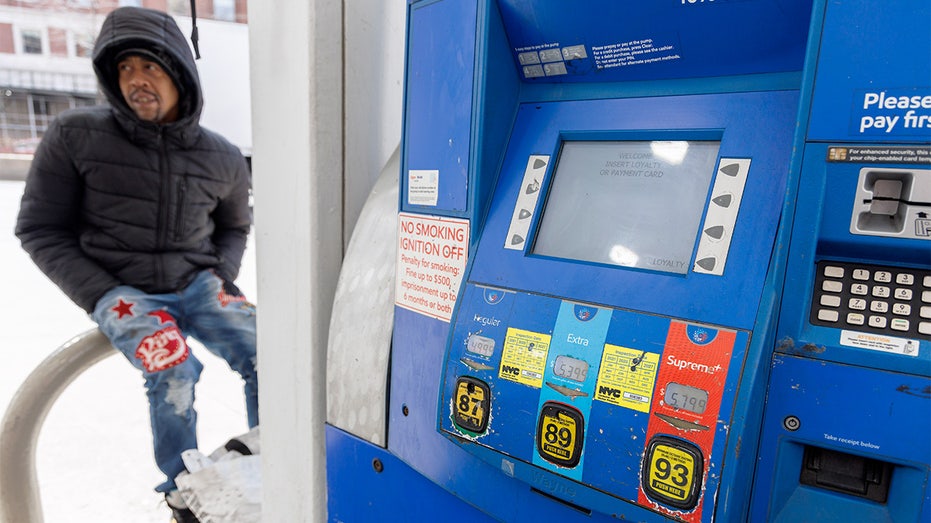
Petroleum and fuel costs have rocketed owing to the conflict in Iran.(Matthew Hoen/NurPhoto via Getty Images)
Petroleum costshave ascended past $100 per barrel. Specifically, West Texas Intermediate crude oil’s value soared beyond $102 a barrel on Tuesday, a stark contrast to its $60-$70 range just a month prior to the commencement of the conflict in Iran.
Brent crude oil is likewise valued at approximately $112 per barrel, having neared $120 a barrel since the conflict’s eruption. This is a significant climb from its comparable range of $65 to $75 a barrel before hostilities commenced.
BOWMAN OF THE FED DECLARES SHE’S ACCOUNTED FOR 3 RATE REDUCTIONS PRIOR TO YEAR-END
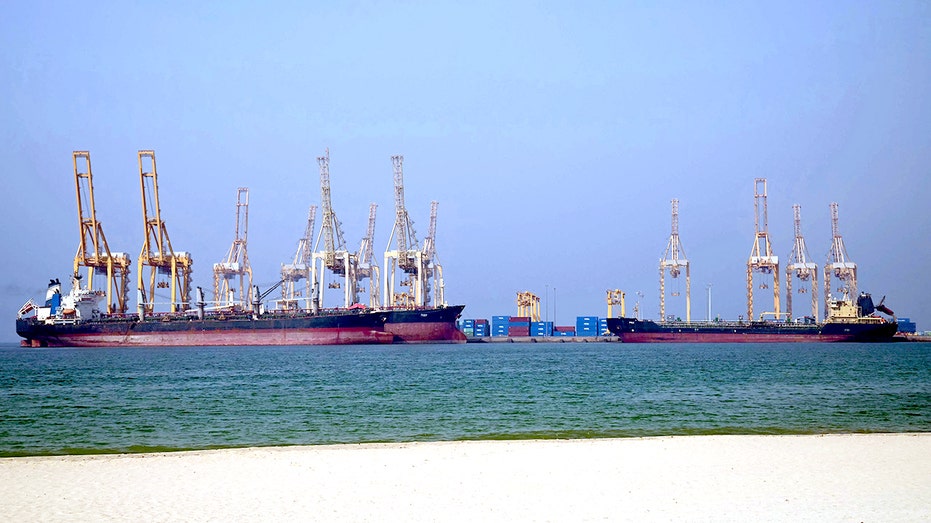
The hostilities in Iran have impeded the transit of petroleum via the Strait of Hormuz.(Giuseppe Cacace/AFP via Getty Images)
Fuel costshave soared in direct reaction to the escalation in petroleum prices. The countrywide average cost of standard gasoline has climbed by over $1 per gallon in the past month, leaping from a mean value of $2.98 last month to $3.99 as of Monday, based on AAA figures. This represents an approximate 34% surge within the previous month.
Powell declared that although the precise intensity of the price upheaval stemming from the energy supply interruption remains ambiguous, theFederal Reserve’sfinancial strategy is suitably arranged. This positioning enables a flexible response to circumstances, allowing policymakers either to reduce or elevate borrowing costs, thereby either bolstering the economy or containing inflation, as required.
“We firmly believe our policy is in an advantageous state, allowing us to observe and monitor developments,” Powell concluded.
ACCESS FOX BUSINESS ON THE MOVE BY SELECTING HERE
The financial sector presently anticipates an 80% likelihood that the Fed’s reference federal funds rate will persist within its prevailing span of 3.5% to 3.75% for the balance of this year.