
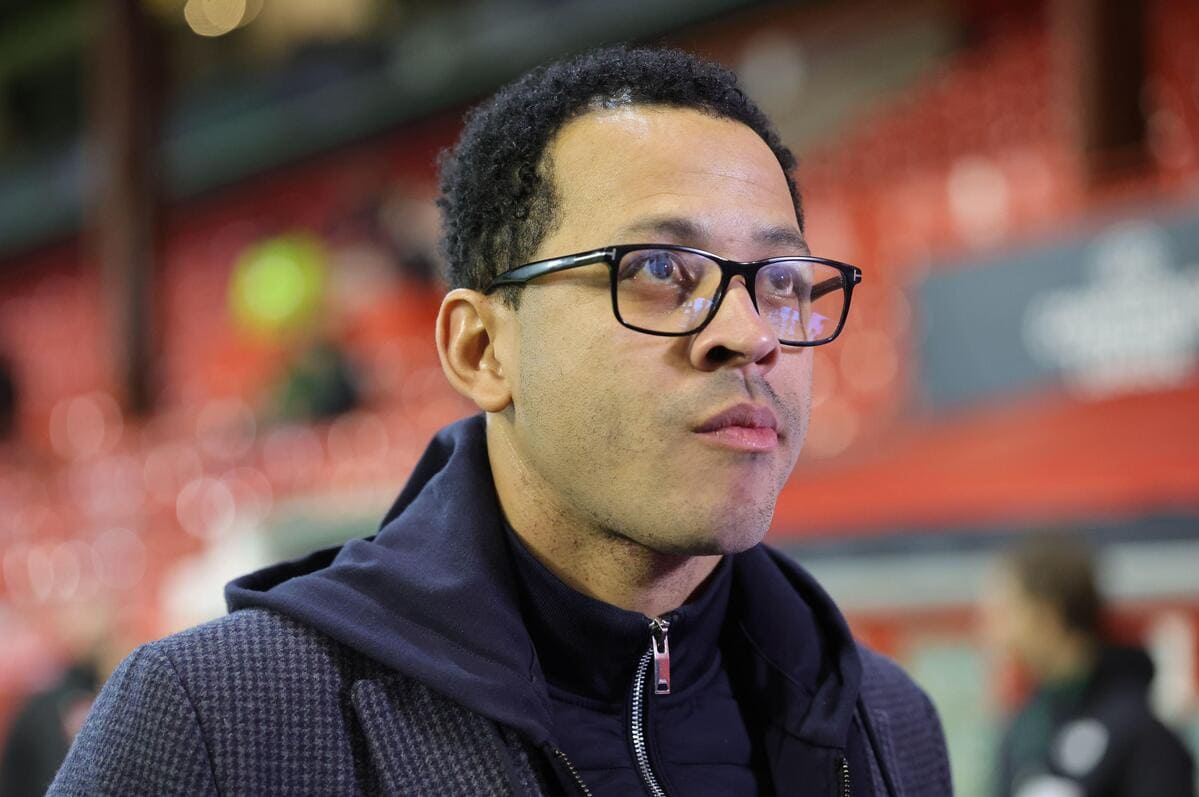
The blue half of London is once again in a state of flux, teetering on the precipice of another managerial merry-go-round. Paul Scholes, never one to mince words, has unleashed a scathing critique of Chelsea’s decision to appoint Liam Rosenior, branding the move as fundamentally flawed and destined for failure from the very outset. His words echo the sentiment of many bewildered fans and pundits, as Stamford Bridge grapples with the fallout of yet another high-profile coaching dismissal.
Rosenior’s tenure, a mere three-month experiment, ended in ignominy, punctuated by a soul-crushing run of five straight Premier League defeats where his side failed to register a single goal. The 41-year-old, brought in on a long-term deal in January from sister club Strasbourg by Chelsea’s ownership group BlueCo, was supposed to be a cornerstone of a new philosophy. Instead, he became another casualty in Chelsea’s post-Abramovich era of chaotic decision-making.
“I don’t see what the Chelsea owners are trying to do,” Scholes declared emphatically on The Overlap Fan Debate, his voice dripping with disbelief. “Develop young players, is that a way of doing it? I don’t know.” The former Manchester United midfielder’s rhetorical question cuts to the core of the widespread confusion surrounding BlueCo’s vision, or rather, the perceived lack thereof.
Scholes Unpacks Chelsea’s Strategic Abyss
Scholes’ analysis ripped through the thin veneer of Chelsea’s strategic planning, placing the responsibility squarely on the shoulders of the club’s hierarchy. He argued that Rosenior’s distinct lack of top-level experience made the appointment a colossal risk – a gamble that ultimately imploded with predictable ferocity.
“The owners will take blame for a lot of it, of course they will,” he continued, his tone unwavering. “Other than the owners, nobody else in and around football thought Liam Rosenior was the right person for Chelsea. It was just crazy for me.” This damning assessment highlights the insular nature of BlueCo’s recruitment process, seemingly ignoring the collective wisdom of the footballing world in favour of an internal, perhaps financially motivated, appointment.
While acknowledging Rosenior’s professional obligation – “Once you make that decision, what is Liam going to do? He is not going to say no to a Chelsea job from where he was” – Scholes quickly pivoted back to the owners’ culpability. “But once the owners make that decision, then they have to factor in that there’s going to be times when it’s not going that well. Now, losing five Premier League games and not scoring a goal is a big problem and you are not going to survive that and he hasn’t.” It’s a stark reminder that even the most ambitious ‘projects’ require a fundamental understanding of top-tier football realities, something Scholes implies BlueCo consistently fails to grasp.
The tenure was a statistical horror show. Five consecutive league defeats without scoring is not just a blip; it’s a systemic failure that speaks volumes about a squad seemingly devoid of confidence, tactical cohesion, and a cutting edge. Was Rosenior given the tools to succeed, or was he set up to fail, a sacrificial lamb on the altar of a misguided corporate strategy?
Game Highlights: A Nightmare Run & A Glimmer of Hope
Let’s revisit the tumultuous period that sealed Rosenior’s fate and the subsequent, albeit temporary, resurgence under interim management:
- Premier League Match 1: Chelsea 0-1 Burnley
The rot began with a frustrating home defeat. Despite dominating possession, Chelsea lacked penetration. A speculative long-range shot from Burnley deflected cruelly past the keeper in the 78th minute, leaving Stamford Bridge stunned. It was a sign of things to come – promising build-up, no end product. - Premier League Match 2: Fulham 2-0 Chelsea
A London derby disaster. Fulham exploited Chelsea’s porous midfield, scoring a goal in each half from swift counter-attacks. Chelsea’s attack looked isolated and impotent, managing only two shots on target throughout the entire match. The team’s body language began to betray growing frustration. - Premier League Match 3: Chelsea 0-1 Brighton & Hove Albion
Another home loss, another blank. Brighton, tactically astute, stifled Chelsea’s creative players and snatched a goal from a set-piece in the first half. A penalty shout controversially waved away in the dying minutes only added to the sense of injustice and despair, but the cold reality was another toothless display. - Premier League Match 4: West Ham United 3-0 Chelsea
The nadir of Rosenior’s spell. A complete capitulation at the London Stadium. West Ham ran riot, exposing defensive frailties and a complete lack of midfield control. Two goals in the first half killed the game, and a third after the break underlined Chelsea’s shattered confidence. The fans’ discontent became palpable. - Premier League Match 5: Wolverhampton Wanderers 1-0 Chelsea
The final straw. A desperate performance at Molineux where Chelsea once again failed to score. A moment of individual brilliance from a Wolves attacker in the 65th minute condemned Chelsea to their fifth straight defeat. The team looked utterly devoid of fight and ideas, sealing Rosenior’s fate shortly after the final whistle. - FA Cup Semi-Final: Chelsea 2-1 Leeds United (Under Interim Calum McFarlane)
A much-needed breath of fresh air. Under interim boss Calum McFarlane, Chelsea showed renewed vigour. After falling behind to an early Leeds goal, a spirited comeback saw them equalize through a thunderous strike from Enzo Fernández before Cole Palmer netted the winner with a clever finish midway through the second half. The energy returned, the belief flickered, and a vital victory secured their place in the FA Cup final, offering a temporary reprieve from the Premier League misery.
Chelsea Considers Its Next Move: A Pivotal Choice
With first-team coach Calum McFarlane stepping in on an interim basis and guiding the team to the FA Cup final, attention has swiftly shifted to the permanent successor. The shortlist, reportedly including highly sought-after names like Xabi Alonso, the pragmatic Andoni Iraola, and the experienced Marco Silva, suggests a potential shift towards managers with clear tactical identities and a track record of building competitive teams, albeit on different scales.
Alonso represents the aspirational choice, a rising star with a captivating style of play. Iraola offers a high-intensity, structured approach. Silva, meanwhile, provides a more grounded, Premier League-tested option. The club’s decision will speak volumes about their long-term intentions: are they chasing glamour, stability, or a complete philosophical overhaul? The stakes are incredibly high.
Chelsea’s immediate challenge is to salvage a profoundly disappointing Premier League campaign. Currently sitting eighth in the table, they remain tantalizingly within reach of European qualification places. The upcoming clash against Nottingham Forest is not just another game; it’s a test of resilience, a gauge of the team’s ability to respond to adversity under interim leadership.
Prediction: A Glimmer of Hope Sustained
The FA Cup win against Leeds provided a crucial psychological boost, momentarily easing the immense pressure. While Nottingham Forest will undoubtedly present a stern challenge, especially at home, I anticipate a renewed fight from Chelsea. The interim bounce often brings a temporary uplift in performance and spirit.
Prediction: Nottingham Forest 1-2 Chelsea.I believe Chelsea will edge this one, propelled by the desire to build on their FA Cup success and keep their European qualification hopes alive. Goals from a revitalized attack, perhaps with some individual brilliance from their key creative players, will prove decisive. A win here is non-negotiable for their ambitions, and I expect them to rise to the occasion, albeit with plenty of tense moments along the way. Securing a European spot, even a lower-tier one, would be a minor victory in an otherwise turbulent season, but the true healing will only begin with a wise and stable permanent managerial appointment.