

EveryLife Diaper Founder and CEO Sarah Gabel Seifert speaks out as Supreme Court weighs abortion pill access and company launches ‘Rethink Pregnancy’ campaign that pushes back on what she calls fear-based messaging.
Key Takeaways
- Niche Market Disruption:EveryLife is strategically leveraging a values-based pro-life stance to carve out a significant direct-to-consumer market share in the competitive baby products sector, appealing to a specific demographic of conscious consumers.
- Regulatory & Demographic Headwinds:The Supreme Court’s deliberations on mifepristone access introduce significant regulatory uncertainty for the pharmaceutical industry, while broader cultural messaging and declining birth rates present long-term demand challenges for the entire baby product market.
- Brand-as-Advocacy Model:Companies like EveryLife are increasingly integrating social and political advocacy into their core brand identity, demonstrating how mission-driven marketing can differentiate products and build customer loyalty in a fragmented marketplace.
EXCLUSIVE:As the Supreme Court weighs access to the abortion pill mifepristone, EveryLife founder and CEO Sarah Gabel Seifert contends that prevailing cultural narratives are distorting women’s perceptions of pregnancy and motherhood, with profound implications for consumer behavior, demographic trends, and the multi-billion dollar baby products market.
Seifert, whose pro-life diaper company launched a new “ReThink Pregnancy” campaign ahead of Mother’s Day, told FOX Business in an exclusive on-camera interview that the ongoing abortion pill debate is not merely a healthcare policy discussion, but a reflection of broader cultural messaging shaping how women view family planning, with direct economic repercussions.
“I would say one of the biggest lies that women are told is that they should completely fear pregnancy,” Seifert said. This sentiment, she argues, translates into reduced family formation, a critical concern for industries reliant on population growth, a stable future workforce, and expanding household consumption.
She emphasized that young women are increasingly being taught to see pregnancy as something to avoid rather than understand—a trend that directly impacts the addressable market for companies like EveryLife. “It’s so unfortunate that today culture is telling women that pregnancy and motherhood is something to run away from, to avoid,” she stated, highlighting a significant headwind for the baby care market, which relies heavily on sustained birth rates for demand.
COSTCO WILL NOT SELL ABORTION PILL AT US PHARMACIES; DECISION HAILED AS ‘SIGNIFICANT WIN’ BY ACTIVIST GROUPS
EveryLife founder and CEO Sarah Gabel Seifert holds her daughter in a promotional image provided by the company.(Courtesy of EveryLife / Unknown)
Her comments arrive as the high court considers whether to allow restrictions on mifepristone to remain in place after a lower court ruling reinstated an in-person dispensing requirement for the drug. This judicial intervention introduces considerable regulatory uncertainty for pharmaceutical manufacturers and distributors, potentially altering supply chains and access models for a wide range of medications. The debate underscores the volatile intersection of healthcare policy, legal precedent, and market access, with major retailers like Costco already making strategic decisions regarding product availability, as seen in their choice not to stock the abortion pill in U.S. pharmacies – a move with clear implications for their brand image and target customer segments, particularly in the realm of ethical consumerism.
Seifert criticized how abortion pills are being discussed and distributed, particularly when used without direct medical oversight. From a market perspective, increased regulation or restriction on telemedicine-based dispensing could significantly impact the operational models of online pharmacies and direct-to-consumer health providers, potentially shifting demand back towards traditional in-person medical consultations, which carry different cost structures, logistical challenges, and patient compliance issues. This could also affect investment in telehealth platforms and related pharmaceutical distribution technologies.
DEMOCRATS ARE TRYING TO DELEGITIMIZE THE SUPREME COURT: MARTHA MACCALLUM

Participants hold “Make More Babies” signs during a pro-life demonstration in Washington, D.C., with the U.S. Capitol in the background.(Courtesy of EveryLife / Unknown)
“It’s really unfortunate what’s happening with the abortion pill debate right now, because what’s happened for young people today is that they’re being told that this medication is acceptable to take in your home alone without seeking medical advice and going to see a doctor to confirm with an ultrasound that you do indeed have a viable pregnancy,” Seifert said. She added that such situations can leave women vulnerable, and from a business ethics and regulatory standpoint, these concerns often fuel calls for stricter oversight, impacting pharmaceutical companies’ liability and distribution strategies, as well as the practices of healthcare providers.
“If we actually cared about women and their health, then we would not be wanting to put them in such a vulnerable state,” she continued. “And so the more that we can be fighting against the abortion pill being distributed, especially via mail, the better off women are going to be and the better off our society is going to be.” This perspective aligns with arguments made by Republican lawmakers in an amicus brief before the Supreme Court, underscoring the political lobbying efforts influencing market access and product distribution channels. Any legal mandate to reinstate in-person dispensing requirements, if successful, would represent a significant shift in pharmaceutical retail strategy for many providers, affecting supply chain resilience and delivery mechanisms.
Recent filings before the Supreme Court have indeed raised similar concerns. Inan amicus brief led by Republican lawmakers, including Sen. Bill Cassidy and House Speaker Mike Johnson, more than 100 lawmakers argued that expanded access to mifepristone by mail has increased the risk of coercion and reduced medical oversight. This directly impacts pharmaceutical distribution models that rely on mail services, potentially leading to increased operational costs and reduced efficiency if in-person requirements are reinstated. Such a ruling would necessitate a re-evaluation of telehealth investments and pharmacy protocols across the nation.
WOMAN MISTAKENLY GIVEN ABORTION MEDICATION BY CVS INSTEAD OF IVF HORMONES: ‘THEY JUST KILLED MY BABY’
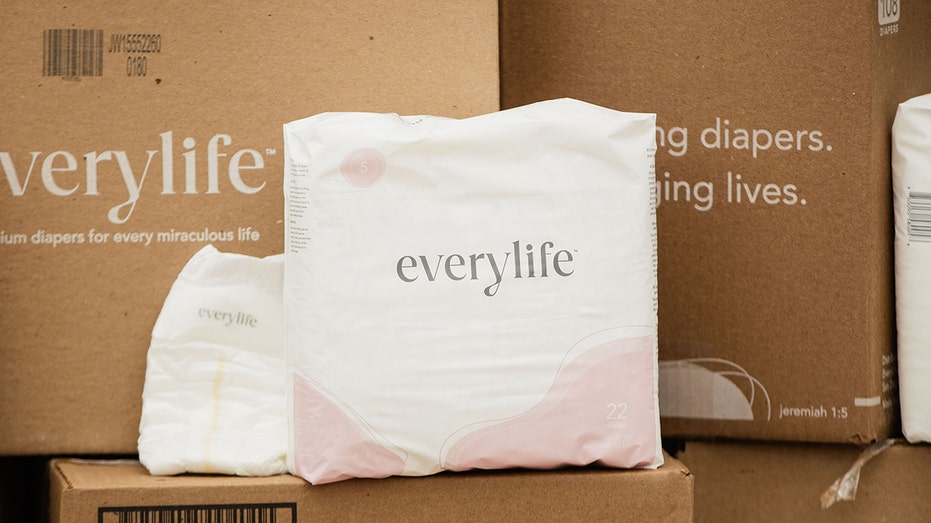
EveryLife diapers are shown packaged for distribution. The company says it provides baby products to families and supports pregnancy resource centers nationwide.(Courtesy of EveryLife / Unknown)
Seifert framed her argument as part of a larger cultural shift, saying messaging around pregnancy, marriage, and family has long-term economic consequences. “When we have fear, that is the leading message to young women today around getting married, around having children, it’s going to cause a culture to not prioritize the things that actually leave a legacy here in this world,” she said. From an economic perspective, this fear translates into declining birth rates, which are a serious concern for long-term economic growth, workforce development, the sustainability of social safety nets like Social Security, and consumer demand in sectors from real estate to education.
EveryLife, which Seifert founded in 2023, operates on a direct-to-consumer (DTC) model, selling diapers and baby products. This strategy allows the company to control its brand narrative and customer experience more closely while circumventing traditional retail channels. Crucially, its business model is deeply intertwined with its mission: the company supports pregnancy resource centers nationwide by providing essential supplies to families in need, having donated millions of diapers. This “brand-as-advocacy” approach resonates with a growing segment of “conscious consumers” who seek to align their purchasing power with their values, creating a distinct competitive advantage in a crowded market dominated by established players like Procter & Gamble and Kimberly-Clark.
TRUMP ADMIN TO BEGIN REFUNDING $166B TO BUSINESSES IN WAKE OF SUPREME COURT DECISION

EveryLife diapers and wipes are displayed as part of the company’s direct-to-consumer product line.(Courtesy of EveryLife / Unknown)
Seifert said her campaign aims to counter that narrative by encouraging women to see pregnancy differently. “For so long, culture has said that pregnancy is something to fear. It’s something to avoid. It’s something that will cause a setback in your life,” she said. “And what we’re saying at EveryLife and AAPLOG is quite the opposite. That pregnancy is a blessing, that it is a benefit to your body, and that it’s something to embrace and something to get excited for.” This marketing strategy directly addresses a perceived market gap, aiming to shift consumer perception and, in turn, drive demand for products that support larger families, thereby growing its potential customer base.
She described motherhood as a uniquely important role, framing it in terms of societal contribution that extends beyond mere economic output. “The reality is I can be replaced, you could be replaced. Women can be replaced in the workforce at any moment in time,” Seifert said. “But the one role that is irreplaceable is being a mother.” While this statement may spark debate on female labor force participation and economic value, from a demographic standpoint, the role of mothers is indeed critical for population replacement rates, which have significant long-term implications for everything from housing demand and pension systems to the overall size and productivity of the future labor force.
Seifert also characterized pregnancy as an empowering experience, a narrative designed to foster positive consumer attitudes. “What we’re saying at EveryLife is that we should embrace that reality because I believe that pregnancy and being a mother is our superpower,” she said. “Women and mothers are superheroes.” This powerful emotional branding seeks to create a strong affinity with its target demographic, building a community around shared values that goes beyond transactional purchases.
The ReThink Pregnancy campaign, launched in partnership with the American Association of Pro-Life Obstetricians and Gynecologists (AAPLOG), highlights scientific and personal perspectives about pregnancy that organizers say are often missing from mainstream discussions. This strategic partnership lends credibility and a medical veneer to EveryLife’s marketing efforts, further distinguishing its brand in the marketplace and potentially influencing consumer trust.
Seifert said the campaign also seeks to reframe common perceptions about pregnancy-related changes. “If we actually realize that what’s happening is our brain is rewiring, that our brain is actually enlarging in a lot of ways to be able to take on more empathy, to be able to take more responsibilities for this new child that is growing in our womb, we begin to see it as a blessing,” she said. This positive framing serves to counteract negative public discourse and create a more favorable environment for family growth, directly supporting the core business of baby product companies.
Seifert said she believes declining birthrates are another reason the conversation matters. “We need to see more children in the United States of America,” she said. “I know we’re about to celebrate 250 years as a country and I want to see another 250 years.” This explicit link to demographic sustainability underscores the long-term economic vision behind EveryLife’s mission, positioning the company as more than just a product provider but a stakeholder in future societal prosperity and a potential solution to a national economic challenge.
Asked what she would say to a woman afraid of becoming a mother, Seifert said she would encourage her to examine that fear. “When you really start to think about fear and you assess where it’s coming from, you start to realize that when you’re in fear, it’s hard to see right from wrong,” she said. This psychological appeal aims to shift deeply ingrained societal views that, from a market perspective, suppress demand for family-related goods and services, ultimately impacting numerous consumer sectors.
She closed with a message to mothers, reinforcing EveryLife’s core values: “Life is a gift. Being a mother is one of the greatest roles in the entire world,” Seifert said. “A lot of times, it goes unseen. But I do hope today that every mother out there listening feels loved, feels seen, and knows that the work that they’re doing is so vital.” This emotional connection is key to building a loyal customer base in the values-driven consumer market EveryLife targets, creating brand stickiness in a highly competitive industry.
Market Impact
The ongoing Supreme Court deliberation on mifepristone access introduces significant regulatory risk and potential market fragmentation within the pharmaceutical and retail pharmacy sectors. A ruling to reinstate in-person dispensing requirements could lead to increased operational costs for manufacturers and a substantial shift in distribution strategies, potentially favoring traditional brick-and-mortar pharmacies over online providers. This could impact investment in telehealth infrastructure and disrupt existing supply chains. For companies like EveryLife, the broader cultural debate and the “ReThink Pregnancy” campaign represent a strategic play to address declining U.S. birth rates, which pose a significant long-term challenge to the entire baby products market. By aligning its brand with a pro-life stance and actively promoting larger families, EveryLife aims to cultivate a loyal customer base among values-aligned consumers, demonstrating the growing influence of ethical consumerism and mission-driven branding. This strategy could inspire similar niche market plays across various industries as companies seek to differentiate themselves beyond product features. Ultimately, the interplay of judicial decisions, demographic trends, and brand advocacy will shape investment opportunities, consumer spending patterns, and competitive landscapes in both the healthcare and consumer goods sectors for years to come, forcing businesses to adapt to evolving societal values and regulatory environments.