
Stay informed with free updates – Simply sign up to the Airlines myFT Digest — delivered directly to your inbox.
Key Takeaways: Ryanair Navigates Turbulence Amidst Soaring Costs and Geopolitical Unrest
- Escalating Cost Headwinds:Ryanair’s warning of rising fuel, environmental levies, and wage bills highlights a sector-wide challenge, directly impacting airline operating margins and potentially slowing the post-pandemic recovery trajectory across European carriers.
- Uncertainty Prompts Guidance Suspension:The decision to suspend annual profit guidance, largely due to unpredictable jet fuel prices exacerbated by geopolitical tensions, signals a significant reduction in market visibility and an increase in risk perception for the airline industry.
- Softening Pricing Power Amidst Resilient Demand:While underlying travel demand remains robust, Ryanair’s observation of easing pricing power suggests consumers are becoming more sensitive to ticket costs, forcing airlines to carefully balance passenger volumes with profitable yields in an inflationary environment.
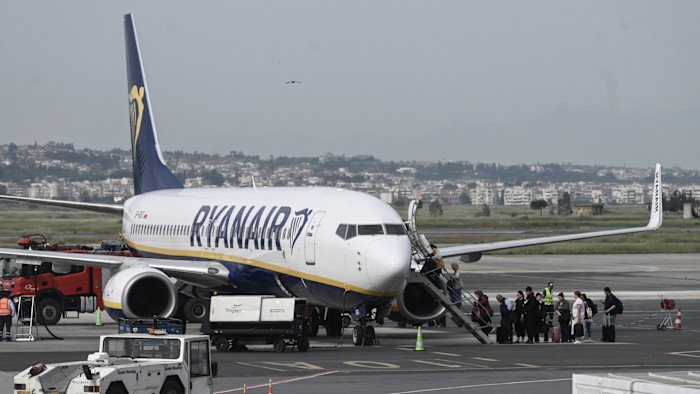
Ryanair, Europe’s largest budget carrier and often seen as a bellwether for the continent’s aviation market, has sounded a cautious note on its future profitability, warning of significant cost escalations that will likely temper its financial performance. The airline announced a suspension of its annual guidance, citing pervasive uncertainty surrounding jet fuel prices—a direct ripple effect of escalating geopolitical tensions, particularly the Iran conflict.
The budget carrier, renowned for its aggressive cost management, revealed that despite having prudently hedged 80 per cent of its jet fuel requirements, the cost of securing the remaining 20 per cent has surged dramatically. This exposure to the spot market, magnified by the Iran conflict which commenced in late February and has since contributed to broader instability in global energy markets, poses a material threat to its operational expenditure. “If unhedged fuel prices remain at current elevated levels then [annual] unit costs could rise by a mid-single digit percentage,” the airline stated on Monday, a forecast that immediately sent jitters through the market.
The market’s reaction was swift and negative, with Ryanair’s shares falling almost 3 per cent in morning trading in Dublin. This latest decline contributes to a more substantial year-to-date drop of approximately 27 per cent, reflecting investor anxiety over the airline’s forward-looking profitability and the broader economic headwinds facing the aviation sector. Investors are particularly sensitive to any indications of rising costs, as these directly erode the already tight margins characteristic of the budget airline model. The previously announced profit growth of 36 per cent to €2.4bn on revenues up 11 per cent to €15.5bn for the 12 months to the end of March, while impressive, largely predates the full impact of these new cost pressures and the market’s current cautious outlook.
Beyond fuel, Ryanair also highlighted other significant inflationary pressures. Wage bills are on the rise, a trend seen across many industries post-pandemic as labour markets remain tight and employees demand compensation increases to offset the pervasive cost-of-living crisis. Furthermore, new environmental levies are adding another layer of expense. The airline flagged an additional €300mn in new environmental costs, primarily stemming from the European Union’s Emission Trading Scheme (ETS), pushing its total environmental bill to an hefty €1.4bn. This significant expenditure, Ryanair argues, makes EU air travel “even less competitive,” underscoring the growing financial burden placed on airlines by escalating climate change regulations.
Despite these mounting cost pressures, the underlying demand for air travel remains “robust,” according to Ryanair. However, a critical observation from the airline was that “pricing in recent weeks has eased somewhat in response to economic uncertainty caused by higher oil prices, the fear of fuel shortages and the risk of inflation adversely impacting consumer spending.” This suggests a delicate balance: while consumers are keen to travel, their willingness to pay premium fares might be diminishing as discretionary incomes are squeezed by broader inflationary pressures and rising interest rates. This dynamic creates a challenging environment for airlines trying to pass on increased costs to passengers without dampening demand.
Ryanair attempted to allay fears regarding jet fuel supply, noting that Europe remained “relatively well supplied with jet fuel” due to significant volumes being sourced from Africa, the Americas, and Norway. This geographical diversification helps mitigate some immediate supply chain risks but does not necessarily insulate the airline from global price volatility. The airline had “originally expected” fares over the crucial summer season “to rise modestly (low single digits) ahead of last year.” However, current projections indicate prices between July and September are “broadly flat,” with the “final outcome totally dependent” on last-minute bookings. This downward revision in pricing expectations signals a potential softening in yield management, a key metric for airline profitability.
The decision by Ryanair to suspend profit guidance for the coming financial year mirrors actions taken by other major carriers in the face of unprecedented market volatility. This lack of clear forward guidance is particularly unsettling for investors, as it removes a crucial benchmark for evaluating performance and increases the perceived risk associated with airline stocks. It reflects a genuine difficulty in forecasting future revenue and expenditure streams when geopolitical events can trigger sudden and significant shifts in commodity prices.
Amidst these financial challenges, the group also disclosed it has initiated negotiations with its long-serving chief executive, Michael O’Leary, regarding a new contract extending from 2028-32. As part of this proposed deal, O’Leary would be granted the option to purchase 10mn shares at the market price prior to the Iran conflict – a package potentially worth around €700mn. Crucially, this lucrative incentive is contingent upon the achievement of “very ambitious [profit after tax] or share price growth targets.” While the exact thresholds remain to be laid out, such performance-linked incentives aim to align executive interests with long-term shareholder value. However, the timing of such a substantial potential payout, particularly when the company is warning of significant cost pressures and facing a volatile market, will undoubtedly be under close scrutiny from corporate governance advocates and shareholders alike.
Market Impact
Ryanair’s latest warnings and guidance suspension send a clear signal of growing turbulence across the broader airline sector and related markets. The immediate implication is increased scrutiny on operating margins for all carriers, particularly those with less extensive hedging strategies or higher exposure to European environmental levies. Investors will likely re-evaluate airline valuations, potentially shifting capital towards companies demonstrating superior cost control, stronger balance sheets, or more diversified revenue streams. The softening pricing power, even amidst robust demand, suggests a challenging environment for revenue growth, indicating that the post-pandemic “travel boom” might be facing structural headwinds from inflation and reduced consumer discretionary spending. Furthermore, the elevated cost base could accelerate industry consolidation, as smaller or less efficient airlines struggle to absorb the combined pressures of fuel, wages, and environmental compliance. The renewed focus on executive compensation tied to ambitious targets, even in uncertain times, will also shape broader discussions on corporate governance and shareholder value creation within the industry.