
**Key Takeaways:**
1. **Craft Beer Consolidation Continues:** Sapporo USA’s divestment of the Stone Brewing brand and subsequent facility closure underscore the ongoing M&A and consolidation trends within the mature craft beer market, as larger entities seek efficiency and core brand focus.
2. **Strategic Realignment & Supply Chain Optimization:** The shift of Stone’s production to Firestone Walker and Duvel USA facilities signifies a broader industry movement towards supply chain rationalization, aiming for cost efficiencies and optimized distribution networks, even at the cost of localized employment.
3. **Employment Impact of Industry Shifts:** The significant layoffs at Stone Brewing’s Escondido location highlight the human capital implications of corporate restructuring and strategic divestments, a recurring theme as companies adapt to evolving market dynamics and competitive pressures.
***
Check out what’s clicking on FoxBusiness.com.
Escondido, CA –In a significant corporate maneuver reflecting the ongoing consolidation and strategic recalibration within the fiercely competitive craft beer sector, Sapporo USA is reportedly preparing to lay off 220 workers at three Stone Brewing locations in Escondido, California. This substantial workforce reduction follows Sapporo’s recent divestment of the iconic Stone Brewing brand and signals a definitive shift in production strategy, relocating operations to facilities elsewhere in California and Missouri. The initial phase of these layoffs is slated to commence on October 19, affecting 58 employees, according to Worker Adjustment and Retraining Notification (WARN) letters filed with the state, as the industry continues to navigate a landscape defined by efficiency, market share, and brand focus.
FOX Business has reached out to Sapporo USA for official comment and confirmation regarding the precise total number of employees impacted by this strategic realignment, which is poised to send ripples through the Southern California craft beer community and beyond.
This workforce retrenchment is a direct consequence of a pivotal transaction announced in April and finalized on May 15: Sapporo’s sale of the Stone Brewing brand, along with select hospitality locations, to a consortium comprising Firestone Walker Brewing Company and Duvel Moortgat USA. The deal, while providing a new strategic direction for the Stone brand, has left Sapporo to contend with the operational aftermath of its 2022 acquisition. This includes the integration challenges inherent in absorbing a unique craft culture into a larger corporate structure, and the ultimate decision to shutter the Escondido production facility, a significant asset just two years prior.
STARBUCKS LAYS OFF OVER 200 CORPORATE WORKERS AS TURNAROUND STRATEGY MOVES FORWARD
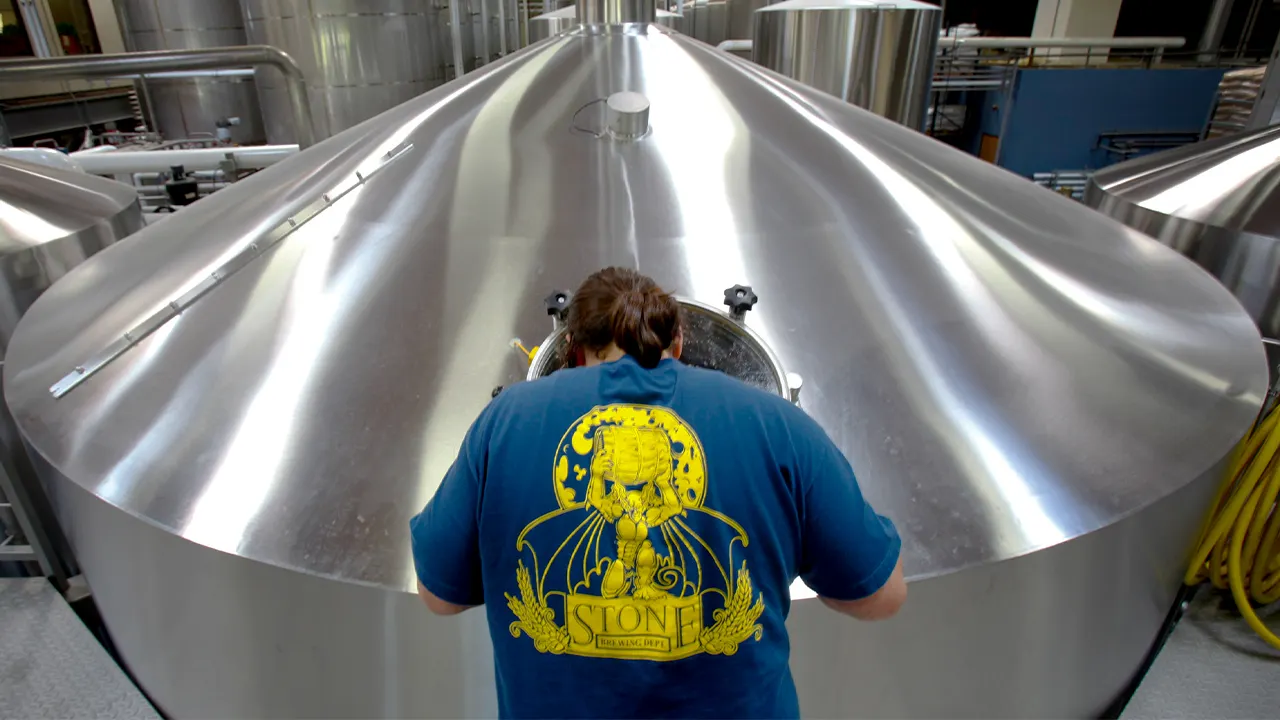
Brewmasters at the Stone Brewing Company in Escondido keep an eye on the process in the giant stainless steel vats.(Mark Boster/Los Angeles Times via Getty Images)
Under the terms of the acquisition, the brewing of Stone beer is in the process of transitioning from its historical home in Escondido to Firestone Walker’s state-of-the-art brewery in Paso Robles, California, and Duvel USA’s Boulevard brewery in Kansas City, Missouri. This strategic distribution of production is indicative of a broader industry trend towards optimizing supply chains and leveraging existing infrastructure to achieve economies of scale and improve distribution efficiencies. Such moves, while financially prudent for the acquiring entities aiming for profitability and market reach, often lead to localized closures and significant employment shifts, as sadly witnessed in Escondido.
It is noteworthy that the acquisition deal included several prominent Stone Brewing hospitality venues, such as the Stone Brewing World Bistro & Gardens at Liberty Station in San Diego, along with taprooms situated in Little Italy, Oceanside, and Pasadena. However, the original Stone Escondido brewery and its accompanying bistro were explicitly not part of the transaction. This carve-out immediately raised questions within the industry about the long-term viability and strategic plan for the Escondido site under Sapporo’s continued, albeit now focused, ownership.
COCA-COLA SHUTTING DOWN CALIFORNIA FACILITY AFTER MORE THAN A CENTURY
When the initial divestment was announced, Sapporo had indicated its intention to maintain Stone beer production at both its Escondido and Richmond, Virginia, breweries during a transitional period. Furthermore, the company stated it would continue to operate the Escondido bistro while undertaking an evaluation of “long-term strategic options” for the site. This evaluation period, however, appears to have concluded with the challenging and difficult decision to cease operations, underscoring the complexities and inherent difficulties large brewing conglomerates face in integrating and sustaining formerly independent craft breweries without sacrificing critical operational efficiency and financial viability.
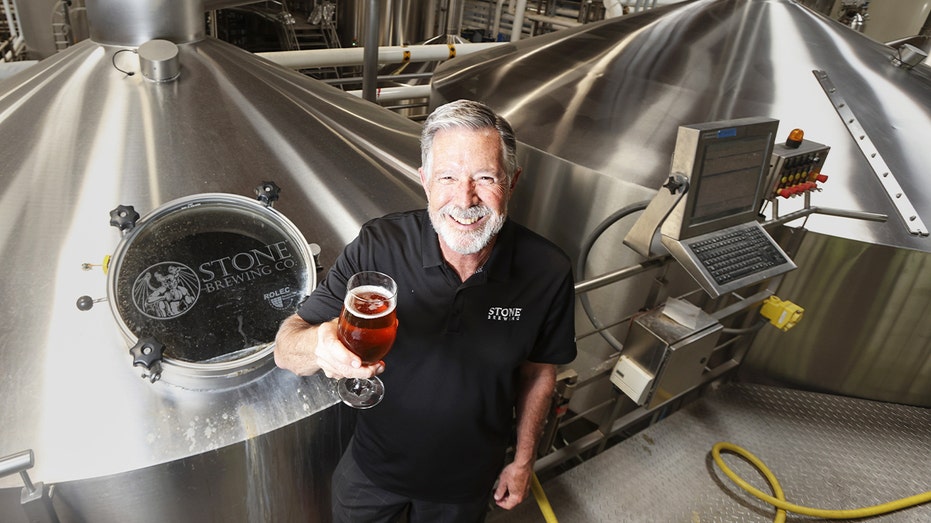
Stone Brewery co-founder Steve Wagner poses for photos at Stone Brewing on Aug. 5, 2021 in Escondido, California. (Eduardo Contreras / The San Diego Union-Tribune via Getty Images)
Zach Keeling, CEO of Sapporo USA, confirmed to the Los Angeles Times that the company is now orchestrating a phased wind-down of the Escondido brewery, citing an inability to secure a “viable long-term solution” for the property. Keeling’s statement, “This is an understandably difficult time for our Escondido employees and community, and we’re committed to supporting them through this transition,” reflects the significant human and economic impact these corporate decisions have on local workforces and economies. The closure of such an iconic facility represents not just a loss of jobs but also a blow to the local identity and tourism associated with a once-thriving craft beer destination.
THE SOBER SHIFT: GEN Z TURNING AWAY FROM ALCOHOL
In April, both Firestone Walker and Duvel had expressed intentions to extend job offers to a substantial number of Stone employees, particularly those in hospitality, sales, and marketing roles. However, positions directly involved in production were subject to further evaluation as brewing operations transitioned to the new owners’ existing facilities. This differentiation highlights the strategic importance placed on customer-facing and brand-building roles versus the often cost-driven decisions made regarding manufacturing, where consolidation and optimization frequently lead to redundancies in production staff.
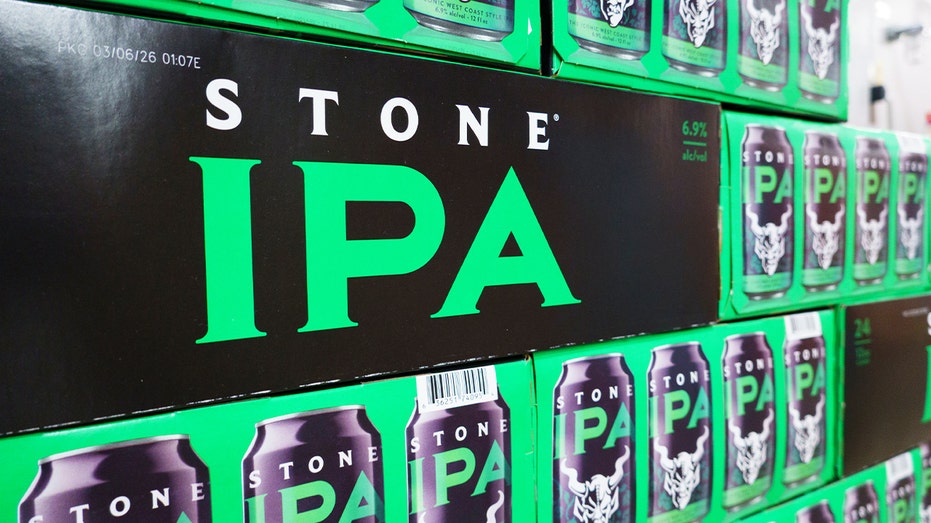
Cases of Stone IPA are displayed at a Costco Wholesale store on May 15, 2026, in San Diego, California. (Kevin Carter/Getty Images)
Stone Brewing, established in Southern California in 1996, quickly ascended to prominence, becoming one of the most recognizable and influential brands synonymous with the groundbreaking West Coast craft beer movement. Its acquisition by Sapporo in 2022 was viewed by some industry analysts as a capitulation of craft independence to corporate scale, while others saw it as a necessary step for Stone’s long-term sustainability in a maturing market facing intense competition. Now, barely two years later, Sapporo’s decision to sell the Stone brand — while retaining its own Richmond, VA facility for its namesake production — underscores a clear strategic pivot: to concentrate its U.S. resources and capital on expanding the Sapporo brand itself. This swift divestment trajectory provides a stark case study in the complexities and financial challenges of integrating acquired craft brands into a larger multinational portfolio, often finding that the unique operational ethos of a craft brewer clashes with the efficiency demands of a global corporation, leading to strategic re-evaluation.
Despite the operational shifts, the Stone brand itself is set to persist and evolve under the stewardship of Firestone Walker and Duvel USA. The Liberty Station location, specifically, is slated to maintain its dual function as both a vibrant hospitality venue and an active brewery, preserving a physical touchpoint for the brand’s legacy in Southern California. This ensures that while production is rationalized, brand presence and consumer engagement remain key priorities for the new ownership, aiming to capitalize on Stone’s established market recognition and loyal customer base even as its operational footprint changes dramatically. The move highlights the ongoing tension between maintaining brand authenticity and achieving corporate efficiencies in a dynamic market.
Market Impact:
The strategic maneuvers by Sapporo USA, culminating in the significant layoffs at Stone Brewing’s Escondido facility, reverberate across several segments of the beverage and labor markets. For the craft beer industry, this event underscores the continued trend of consolidation, where iconic independent brands are either acquired by larger players seeking growth or, as in this case, restructured and divested for efficiency. This dynamic puts pressure on smaller, independent brewers while offering scale advantages to larger entities like Firestone Walker and Duvel. From a corporate strategy perspective, Sapporo’s pivot back to its core brand highlights the challenges of integrating diverse portfolios and the potential for M&A activity to lead to swift divestitures when synergies fail to materialize or strategic priorities shift. Investors will keenly observe how such restructuring impacts Sapporo’s profitability and market positioning in the competitive U.S. beer market. Furthermore, the substantial layoffs in Escondido serve as a stark reminder of the human capital implications of corporate restructuring, impacting local economies and potentially increasing competition in the regional labor market for specialized brewing and hospitality roles. This event signals a maturation of the craft beer market, where operational efficiency and streamlined supply chains are increasingly prioritized over localized, smaller-scale production, setting a precedent for future strategic decisions across the industry.