
Empower’s Head Investment Strategist Marta Norton examines the SCOTUS’s verdict to invalidate President Donald Trump’s levies during ‘The Claman Countdown.’
The High Court’s judgment that nullified the Trump administration’s duties, imposed under an economic crisis proclamation, might pave the way for billions of dollars in duty reimbursementsfor companies; however, the decision failed to outline a procedure for managing such refunds.
The highest court determined that President Donald Trump’slevies, implemented via the International Economic Emergency Powers Act (IEEPA), were unlawful since the fundamental statute does not grant the president the authority to impose such duties.
Overturning the levies remits the matter to subordinate tribunals, who may deliberate on the reimbursement process. Nonetheless, enterprises are presently permitted to submit “amended declarations” to the Customs and Border Protection agency (CBP), an entity that gathers duties for the Department of Homeland Security, subsequently transferring them to the Treasury Department; concurrently, the U.S. Court of International Trade (CIT) possesses jurisdiction over challenges.
Speaking to FOX Business, Mike Snarr, a partner at BakerHostetler and co-head of the firm’s International Trade group, stated, “While the High Court’s decision today did not directly tackle the reimbursement matter, in the majority of instances, firms ought to seek reimbursements via the U.S. Customs and Border Protection’s bureaucratic channels.
ARE REIMBURSEMENTS EXPECTED FOLLOWING THE HIGH COURT’S DECISION ON TRUMP’S DUTIES?
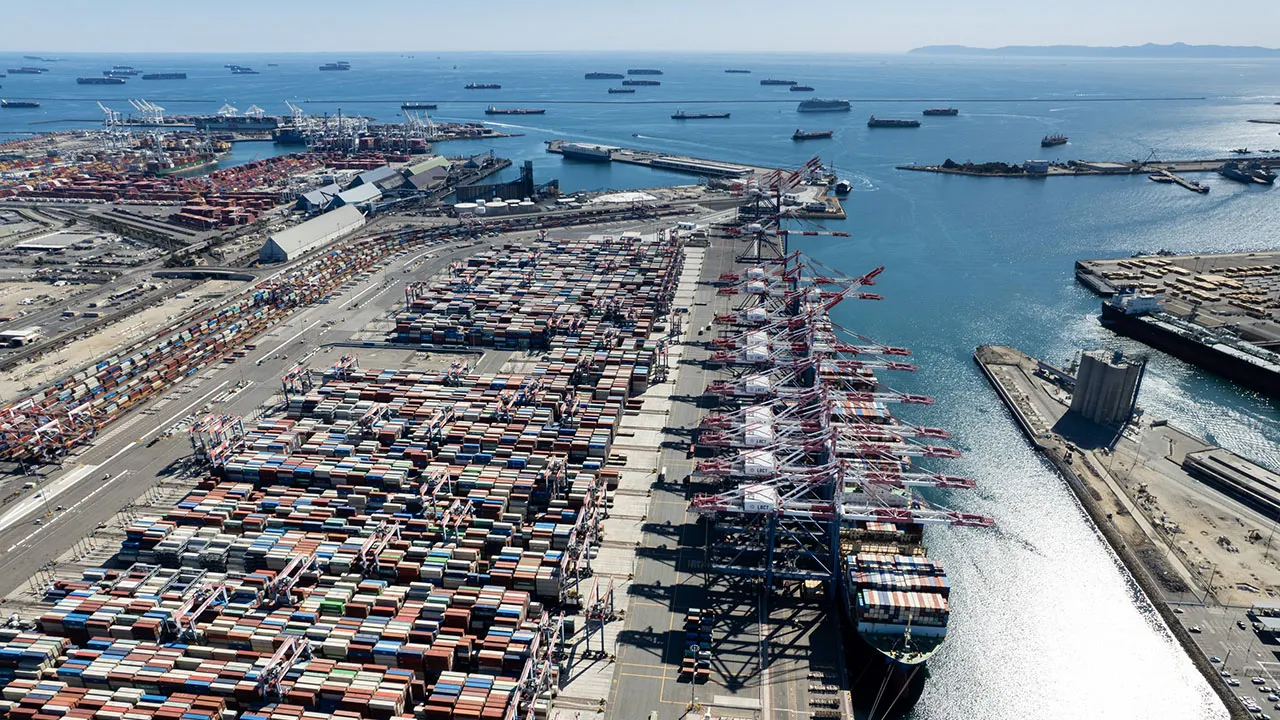
The Supreme Court’s verdict failed to detail a duty reimbursement procedure, though present avenues exist for companies that bore the levies.(Qian Weizhong/VCG via Getty Images)
“Regarding imports processed in the past ten months, importers can request customs agents to amend the customs filings for reimbursements of recently settled IEEPA duties. Concerning older importations, importers must submit challenges within the legally stipulated timeframes,” Snarr further explained.
“Should objections be rejected, importers ought to pursue legal scrutiny in the U.S. Court of International Trade, aiming for reappraisal. The CIT has explicitly verified its power to settle accounts under such conditions.”
The procedure for presenting and assessing challenges for duty reimbursements might be arduous for enterprises, and for the bodies managing the demands and objections, owing to the immense quantity of IEEPA duties garnered from numerous companies since their implementation last year.
Projections for the total duties amassedthrough IEEPA, which are eligible for potential reimbursements, exceed $150 billion. The unbiased Tax Foundation calculated the sum at roughly $150 billion, whereas the Penn-Wharton Budget Model’s appraisal reached $175 billion. JPMorgan’s assessment indicated a span of $150 billion to $200 billion.
HIGH COURT IMPEDES TRUMP’S COMMERCIAL STRATEGY IN SIGNIFICANT DUTY LITIGATION

Last month, Treasury Secretary Scott Bessent indicated that the Treasury possesses the means to disburse duty reimbursements should they become necessary, though this could turn out to be a protracted endeavor.(Fabrice Coffrini/AFP via Getty Images)
Chris Desmond, a partner within PwC’s Customs and International Trade division, commented, “Aside from the legal ramifications, the genuine difficulty currently lies in execution,” and further explained that firms will have to “swiftly ascertain which IEEPA duties are eligible for reimbursement and assess their potential, as any refund procedure is expected to be severely overloaded.”
“Customs agents will experience considerable pressure, due to restricted capability to handle a sudden influx of amended declarations and objections from countless importers,” he clarified. “Even when duty reimbursements might be accessible, numerous firms will encounter internal resource limitations. Customs and trade adherence departments are already overextended in handling routine submissions, regulatory actions, and continuous duty adjustments.”
Desmond stated that, considering the requirements for conducting thorough import assessments, collaboration with agents and strict procedural cutoffs, firms that “downplay this volume of work risk financial reporting delays while simultaneously generating possible adherence problemsif they seek reimbursements for incorrect duty categories.”
Tim Brightbill, co-head of Wiley’s International Trade Practice Group, pointed out that “over one thousand legal actionshave already been initiated at the U.S. Court of International Trade in an attempt to procure duty reimbursements should the Supreme Court rule unfavorably on the IEEPA duties.”
KEVIN HASSETT SUGGESTS FEDERAL ECONOMISTS OUGHT TO BE ‘SANCTIONED’ REGARDING DUTY RESEARCH
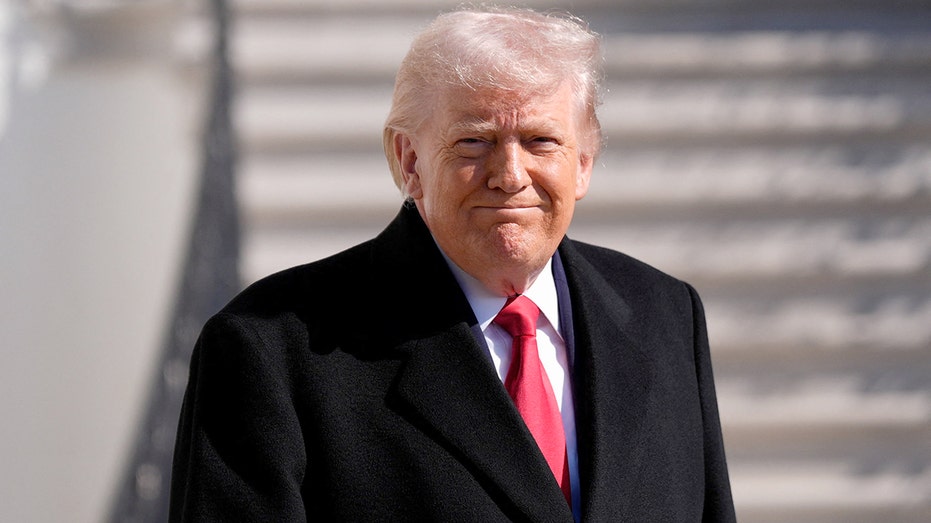
President Donald Trump criticized the High Court and indicated that the matter of reimbursements might be contested for a prolonged period.(Kent Nishimura/Reuters)
During a Friday press conference, Trump stated that the High Court’sverdict was “profoundly disheartening” and faulted the top tribunal for failing to discuss duty reimbursements within its judgment.
“I presume this will require litigation for the coming two years. Thus, they produce this appalling, flawed judgment, utterly imperfect. It appears as though it wasn’t penned by intelligent individuals. And what is their action? They don’t even mention it,” Trump remarked.
Treasury Secretary Scott Bessentdeliberated on possible duty reimbursements during a Reuters interview last month.
“It will not pose an issue if we are compelled to proceed, but I can assure you that should it transpire — which I doubt it will — it merely represents a corporate waste,” Bessent remarked. “Costco, currently litigating against the U.S. government, will they return the funds to their patrons?”
GET FOX BUSINESS ON THE GO BY CLICKING HERE
Bessent further mentioned that the procedure for distributing duty reimbursements might consume a considerable duration, stating, “We are not discussing the funds being disbursed in a single day. Likely spanning weeks, months, potentially exceeding a year, correct?”