
Unlock the Editor’s Digest for free
Roula Khalaf, Editor of the FT, selects her favourite stories in this weekly newsletter.
**Key Takeaways**
1. **Banks De-Risking AI Debt:** Wall Street lenders are actively offloading massive AI infrastructure debt, like the $15bn package for a Google-backed data centre, to manage balance sheet exposure, reduce capital requirements, and free up capacity for future lending amidst an unprecedented surge in demand.
2. **Bond Market as AI Financing Hub:** The capital markets, particularly the bond market, are emerging as the primary conduit for financing colossal AI build-outs, offering the scale, speed, and cost efficiency that traditional bank-led infrastructure financing can no longer accommodate, albeit often with speculative-grade ratings and higher investor risk.
3. **Complexity and Risk Premiums:** Integrating critical infrastructure like dedicated natural gas power plants into data centre projects introduces significant financing complexity, requiring investors to underwrite dual operational and construction risks, leading to demands for additional yield premiums and increased scrutiny on project execution and resource availability.
***
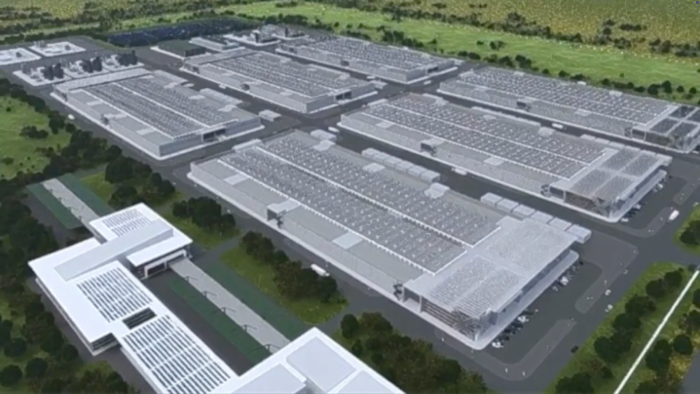
In a significant move reflecting the evolving landscape of AI infrastructure financing, major Wall Street banks are planning to divest a substantial $15bn debt package tied to a cutting-edge, Google-backed data centre in Texas. The facility, leased to AI powerhouse Anthropic, represents a growing trend where traditional lenders are demonstrating increasing wariness about retaining vast amounts of AI-related construction debt on their balance sheets. This strategic shift underscores the unprecedented capital demands of the artificial intelligence boom and its profound impact on global financial markets.
A consortium of banks, with Morgan Stanley at the helm, is reportedly preparing to tap the robust bond market to refinance the debt committed to the colossal 2,000-acre data centre campus currently under construction in Hubbard, Texas. This move is anticipated to occur as soon as the initial loans are drawn, signaling a proactive approach to de-risking and capital management. The decision to pivot towards the bond market for such a significant refinancing is indicative of a broader market recalibration.
The bond market, with its immense depth and diverse investor base, has rapidly emerged as the preferred avenue for financing the truly colossal AI initiatives that demand long-term capital at scale. For project developers and their financial sponsors, this route offers the distinct advantage of raising funds more swiftly and potentially at a lower cost compared to traditional, syndicate-limited bank loans. The ability of the capital markets to absorb multi-billion-dollar tranches of debt far exceeds the capacity and risk appetite of individual bank balance sheets.
For the banks themselves, jettisoning this debt serves multiple critical purposes. Foremost, it significantly reduces their overall AI risk exposure, preventing an undue concentration of large, long-dated construction loans. Furthermore, offloading these commitments frees up valuable balance sheet capacity, allowing banks to deploy capital into other lending opportunities, manage regulatory capital requirements more efficiently under frameworks like Basel III/IV, and ultimately improve their return on equity. This de-risking strategy is becoming a core component of how financial institutions navigate the explosive growth in AI infrastructure.
Indeed, the traditional bank-focused market for infrastructure financing, historically adept at funding projects such as gas pipelines, toll roads, and airports with more predictable cash flows and often government backing, has found itself increasingly overwhelmed by the sheer scale and speed of capital needs emanating from the AI build-out. The demand for hyperscale data centres, often requiring multi-billion-dollar financing packages, has pushed the limits of conventional project finance models. This pressure is not new; big Wall Street banks have reportedly spent months seeking buyers for more than $50bn of construction debt for several data centre projects leased to Oracle earlier this year, with some lenders already exploring sophisticated risk-transfer deals to manage their exposures.
The $15bn debt package for the Texas facility, expected to be meticulously split into multiple bond sales, is structured with a “delay-draw” feature. This allows Nexus Data Centers, the project developer, to progressively withdraw the debt over an extended period, contingent upon hitting specific construction milestones. This phased drawdown mitigates immediate capital deployment risks and aligns financing with project progress. While the primary target is the bond market, a portion of the debt could also find a home in the leveraged loan market, appealing to institutional investors seeking floating-rate exposure.
Despite Google’s significant financial support for the project, the impending bond issuance is anticipated to carry a speculative-grade rating. This is a crucial detail for investors. Google’s backstop, while substantial, typically becomes fully effective only after the data centre is completely built and operational. This means that bond investors will have to shoulder significant risks inherent in the construction phase, including potential delays, unforeseen cost overruns, and the technical complexities of bringing such a massive facility online. These risks demand a higher yield premium from investors, compensating them for the uncertainty during the build-out phase.
A notable feature of the new Texas campus is its planned self-sufficiency in power, featuring its own natural gas power plant. This strategic integration is designed to circumvent potential delays and surging costs associated with reliance on an external, potentially strained, grid. However, merging data centre and power generation assets introduces its own set of complex financing challenges. Lenders and investors must simultaneously underwrite two distinct sets of risks: the operational and construction risks of a data centre, and the regulatory, environmental, commodity price, and operational risks associated with a power plant. This dual-risk profile inevitably leads to higher perceived risk and, consequently, a demand for additional yield. Project Walleye, a similar Meta-led data centre initiative that also incorporated behind-the-meter power generation, famously had to offer investors a more attractive yield to compensate for these compounded risks.
The concentration of numerous data centre projects slated for development in the Lone Star State has ignited growing concerns regarding strained power and water supplies, alongside the potential for rising utility prices. These factors represent significant long-term operational and environmental risks that must be meticulously factored into financial models and investor due diligence.
Google’s financial backing for the project was initially reported by the Financial Times in March, with further aspects of the financing subsequently detailed by The Wall Street Journal last week. Nexus and Morgan Stanley declined to comment for this report, while Anthropic and Google did not respond to requests for comment.
**Market Impact**
This trend of banks offloading AI infrastructure debt to the bond market carries profound implications across the financial ecosystem. For **investment banks**, it signifies a shift from being primary balance sheet lenders to becoming expert arrangers and facilitators, leveraging their capital markets expertise to syndicate these massive transactions and generate advisory fees. For **institutional investors** in the bond market – including pension funds, asset managers, and hedge funds – it presents a burgeoning new asset class. While offering potentially attractive yields, these bonds come with complex, multi-faceted risks spanning construction, technology, energy infrastructure, and environmental factors, demanding a sophisticated understanding of project finance and a keen eye on execution. The burgeoning demand for AI infrastructure is driving innovation in project financing, forcing financial models to adapt at an unprecedented pace. However, it also raises questions about the long-term sustainability of such high-yield, speculative-grade debt and the potential for increased borrowing costs or slower build-outs if market appetite for these complex risks were to wane. Regionally, areas like Texas will experience an economic boom, but face mounting pressure on critical resources and existing infrastructure.