

Financial influencer Taylor Price joins ‘Varney & Co.’ to break down how shifting your mindset can help Americans grow wealth and achieve the American Dream.
**Key Takeaways**
* **Tax Efficiency as Capital Optimization:** Proactive tax planning is not merely about compliance but a critical component of wealth accumulation and efficient capital allocation, directly impacting an individual’s investable capital and overall financial health.
* **Opportunity Cost of Errors:** Common tax mistakes, especially those related to investment income reporting and overlooked deductions, represent significant opportunity costs, diverting funds from market participation and potentially eroding long-term portfolio growth.
* **Strategic Financial Management:** Year-round tax planning and meticulous record-keeping are essential strategies for mitigating financial risk, optimizing cash flow, and ensuring that individual capital contributes effectively to broader economic efficiency rather than being lost to preventable errors or penalties.
Tax seasonis closing in on the April 15 deadline to file your return or request an extension, and a new report details some common mistakes that Americans are making throughout the year that are costing them money. As the tax deadline rapidly approaches, millions of Americans are scrambling to finalize their returns, often overlooking critical errors that silently erode their financial well-being. Areport by GOBankingRateshighlights several pervasive tax mistakes that collectively cost taxpayers thousands annually, diverting capital from potential market investments and hindering wealth generation. For financial journalists, these seemingly individual blunders represent a systemic issue with broader market implications. Each dollar mismanaged or overpaid in taxes is a dollar not invested, not spent in the economy, or not contributing to personal capital formation. In an environment where every basis point of return matters, understanding and rectifying these common pitfalls is not merely about compliance; it’s about optimizing financial strategy and contributing to more efficient capital markets.
Those common mistakes range from not claiming deductions that were available to the taxpayer or failing to track deductible expenses to misreporting income. Here’s a look at the five tax mistakes outlined in the report, reframed with critical market context.
RETIRED? HERE’S WHEN THE IRS MIGHT TAKE A CLOSER LOOK AT YOUR FINANCES
Taxpayers may cost themselves money through smaller refunds or penalties by making mistakes in filing their taxes.(Michael Bocchieri/Getty Images)
The Opportunity Cost of Annual Neglect
Approaching taxes as a once-a-year event, rather than an ongoing financial planning component, is a fundamental error highlighted by Christina Taylor, vice president of tax development and delivery attax technologyplatform April. Taylor told GOBankingRates that taxpayers who only think about their returns during the filing season “miss credits and optimizations they’re actually eligible for, which is how you end up giving part of your refund back to the IRS.” She added that last year “Americans overpaid their federal taxes by about $3,200 on average, and spent billions of dollars and 6.5 billion hours on tax prep.” From a market perspective, this average overpayment represents a staggering aggregate sum—billions of dollars annually—that could otherwise be fueling economic growth. This capital, effectively an interest-free loan to the government, could have been invested in equities, bonds, real estate, or used to pay down high-interest debt, all of which offer tangible returns or financial benefits. The opportunity cost is immense: imagine the compounding growth lost over decades when such sums are consistently surrendered. For individual investors, integrating tax considerations into their year-round financial strategy, perhaps through regular consultations with a financial advisor, becomes a crucial step in maximizing portfolio efficiency and long-term wealth accumulation. It’s about viewing the tax code not as a burden, but as a set of rules within which to optimize capital allocation.
AVERAGE TAX REFUND UP NEARLY 11% FROM A YEAR AGO, IRS DATA SHOWS
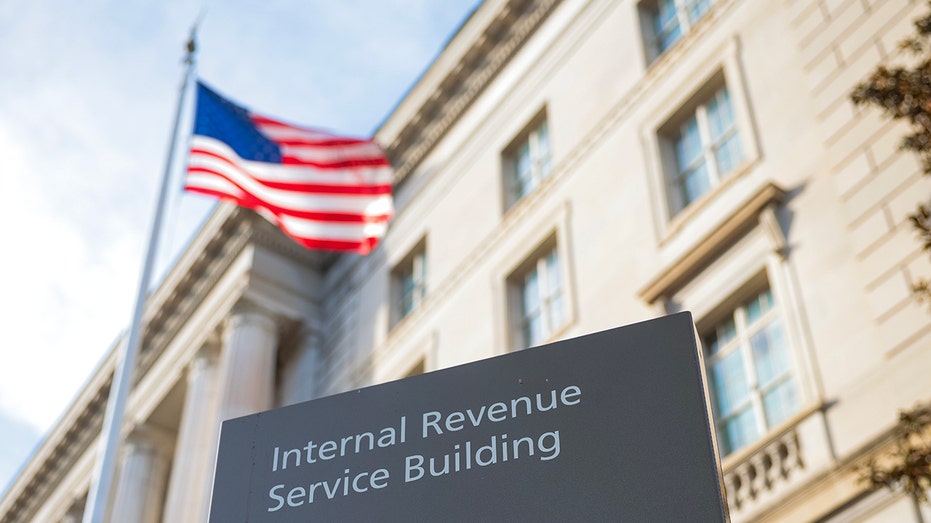
The deadline for taxpayers to file their 2025 return or request a refund is April 15.(Kayla Bartkowski/Getty Images)
Maximizing Deductions: A Wealth-Building Imperative
Taxpayers also tend to fail to keep track of their deductible expenses over the course of the year, which happens more frequently when filers are operating under the assumption that they will claim the standard deduction rather than itemizing their return. Those situations can be avoided if taxpayers keep track of theircharitable contributions, whether made with cash or through non-cash donations, along with medical expenses and any interest expenses that they may be able to deduct from their state tax bill. From a market standpoint, maximizing deductions directly impacts an individual’s disposable income and, consequently, their capacity for savings and investment. For charitable organizations, the tax deductibility of donations is a significant incentive, influencing fundraising success and the allocation of capital to social causes. Neglecting to track these can reduce the incentive for philanthropic giving, indirectly affecting sectors reliant on non-profit funding. Furthermore, for homeowners, deducting mortgage interest can free up substantial capital. In essence, every unclaimed deduction is a missed opportunity to retain capital that could be reinvested, thereby hindering personal balance sheet optimization and broader capital market activity.
IRS REFUND TRACKER EXPLAINED: WHAT YOU NEED TO KNOW BEFORE THIS YEAR’S TAX FILING DEADLINE
Navigating Investment Income: Basis, Gains, and Market Efficiency
Incorrectly reporting investment income or stock compensation is an error that carries significant weight in a market context, directly impacting investors and employees of growth companies. Taxpayers may overpay taxes on income from their investments or fromstock compensationin the form of restricted stock options or nonqualified stock options that are sold. Jennifer Kohlbacher, a CPA and director of wealth strategy at Mariner Wealth Advisors, told GOBankingRates that taxpayers often fail to calculate or report their tax basis correctly, which can increase the amount of capital gains taxes they owe. For instance, if an investor fails to accurately track the adjusted cost basis of shares acquired through multiple purchases or dividend reinvestment plans, they may report a higher capital gain than actual, thereby inflating their tax liability. This directly erodes investment returns, reducing the net profit available for reinvestment and slowing wealth accumulation. For employees compensated with stock options, understanding the nuances of vesting schedules, exercise prices, and the difference between ordinary income and capital gains treatment is paramount. Errors here can lead to unexpected tax bills or missed opportunities for tax-loss harvesting strategies. In a dynamic market, where investment decisions are often made based on after-tax returns, such reporting inaccuracies can significantly skew an individual’s perception of their portfolio performance and overall financial health. It underscores the critical need for robust record-keeping and potentially professional guidance in managing complex investment portfolios.

The IRS may delay refunds for returns with errors or flag them for audits.(Jordan Vonderhaar/Bloomberg via Getty Images)
Cash Flow Management and Estimated Taxes: The Self-Employed Imperative
Missing estimated tax payments or not updating withholding is particularly critical for the burgeoning segment of the workforce operating as small business owners, freelancers, or self-employed individuals. These taxpayers are required to make estimated tax payments to the IRS each quarter throughout the year, and failing to pay the appropriate amount can cause the taxpayer to face penalties for the amount underpaid as well as any related interest. From a market perspective, these penalties represent a direct loss of capital that could have been reinvested in their businesses, driving growth, innovation, and job creation. Similarly, for W-2 employees, neglecting to update W-4 withholding information following significant life changes – such as marriage, divorce, or the birth of a child – can lead to either an unnecessarily large refund (an interest-free loan to the government) or a substantial tax bill due at year-end. While a large refund might feel like a windfall, it signifies poor cash flow management. That capital, if properly withheld, could have been earning returns in a savings account, investment portfolio, or used to pay down debt throughout the year. In an era of inflation and rising interest rates, optimizing withholding is a simple yet powerful strategy to enhance personal liquidity and maximize the time value of money, ensuring capital works for the individual rather than being passively surrendered.
GET FOX BUSINESS ON THE GO BY CLICKING HERE
Precision and Record-Keeping: Mitigating Financial Risk
Filing errors and poor recordkeeping, ranging from simple mathematical errors to typos and inadequate documentation, often lead to IRS scrutiny, delayed refunds, or even full-blown audits. Taxpayers may make mathematical errors when filing or make typos in their tax return that could cause the IRS to flag a tax return for review or even an audit. Reviews by the IRS can also cause taxpayers’ tax refunds to be delayed. While seemingly minor, these errors introduce significant financial and psychological friction. For the individual, a delayed refund can disrupt financial planning, potentially postponing investment opportunities or the ability to meet other financial obligations. An audit, regardless of outcome, is a time-consuming and often stressful process that diverts valuable resources – time, energy, and potentially professional fees – away from more productive economic activities. From a broader market perspective, systemic errors and poor recordkeeping increase the administrative burden on the IRS, potentially slowing down government operations and resource allocation. For businesses, accurate financial records are the bedrock of operational efficiency and investor confidence. On an individual level, meticulous record-keeping acts as a form of personal financial risk management, safeguarding against penalties and ensuring the smooth, efficient flow of capital within one’s personal economy. It reinforces the principle that diligence in financial administration is as crucial as strategic investment decisions.
Market Impact
The aggregation of these individual tax missteps has a palpable impact on broader market dynamics and economic efficiency. When taxpayers overpay, miss deductions, or incur penalties, it collectively reduces the pool of investable capital, potentially dampening consumer spending, hindering capital formation, and slowing economic growth. Billions of dollars are effectively siphoned away from productive uses – be it personal investment, entrepreneurial ventures, or charitable giving – that could otherwise fuel market expansion and innovation. Furthermore, widespread errors increase the administrative overhead for tax authorities, which can indirectly affect public services and fiscal policy. For investors, these errors represent tangible opportunity costs, eroding potential returns and distorting true portfolio performance. In an increasingly complex global economy, where capital allocation dictates growth, individual tax efficiency isn’t just a personal concern; it’s a macroeconomic imperative that directly influences market liquidity, investment confidence, and the overall health of the financial ecosystem.