
Unlock the White House Watch newsletter for free
Your guide to what Trump’s second term means for Washington, business and the world
Key Takeaways:
- The Trump administration’s nearly $800 million payment to Invenergy for offshore wind lease withdrawals signals a profound, policy-driven shift in US energy investment away from specific renewable sectors towards fossil fuels and favored clean technologies like geothermal.
- Invenergy’s strategic capital reallocation from “dormant” offshore wind assets to active natural gas and geothermal projects highlights evolving risk-reward profiles in the US energy market, prioritizing immediate returns and policy alignment over long-term renewable commitments in certain contexts.
- The escalating legal challenges, state-level investigations, and congressional scrutiny surrounding these payments introduce significant regulatory uncertainty and ESG risks, potentially dampening investor confidence in the stability of US energy policy across administrations.
The energy landscape in the United States is undergoing a seismic, policy-driven realignment as the Trump administration executes a strategic pivot away from offshore wind development, channeling capital instead into traditional fossil fuels and select clean energy alternatives. In a move reverberating across capital markets and the renewable energy sector, the Department of the Interior will pay power producer Invenergy almost $800 million to withdraw from its four offshore wind leases, redirecting the company’s investment focus towards natural gas and geothermal projects.
This substantial payment, specifically $765 million, represents a partial refund for Invenergy’s offshore wind holdings off the coasts of New York, Maine, and California. For a company like Invenergy, a major player in the North American power generation market, this financial injection is not merely a refund but a strategic capital event. “At a time of unprecedented energy demand, Invenergy is focused on delivering reliable, affordable energy for our customers and supporting disciplined investment at scale,” stated Daniel Runyan, Invenergy’s senior vice-president for development. This statement underscores a prioritization of energy security and immediate project viability, a narrative frequently echoed by the administration.
The decision by Invenergy to redeploy this capital is particularly telling. The company will funnel the refunded funds into natural gas projects across the Midwestern states of Indiana, Wisconsin, Iowa, Kansas, and Missouri. This move into natural gas, a relatively mature and reliable baseload power source, signifies a return to assets with established market mechanisms and less exposure to the policy headwinds currently facing offshore wind. For investors, this signals a potential shift in the attractiveness of mid-continent natural gas assets, potentially boosting valuations and development prospects in these regions, especially as global energy security concerns continue to spotlight the reliability of domestic fossil fuel supplies.
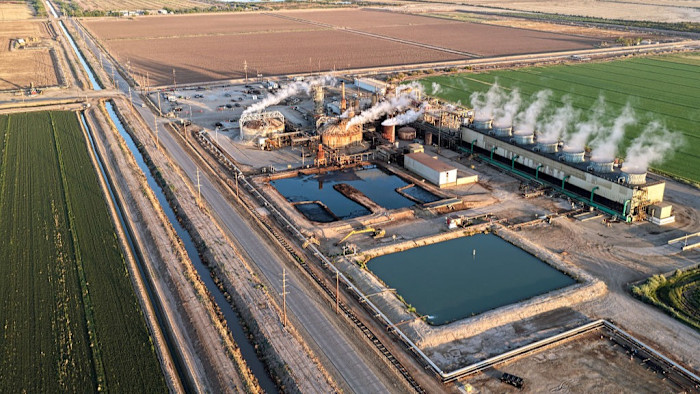
Concurrently, Invenergy is also committing to the development of geothermal power in the western US. Geothermal, which harnesses heat from underground rock formations to produce uninterrupted clean energy, has emerged as a favored alternative for the Trump administration. Its “baseload” characteristic – the ability to provide continuous power – aligns with the administration’s emphasis on energy reliability. This preference was concretely codified in the “One Big Beautiful Bill,” where geothermal companies retained crucial tax credits that were notably stripped from solar and wind project developers. This legislative favoritism offers a clear signal to investors about where the administration intends to direct capital and incentivize growth within the clean energy spectrum. Furthermore, the personal involvement of Energy Secretary Chris Wright, who directed a $10 million investment into geothermal company Fervo Energy during his tenure as chief executive of oilfield services company Liberty Energy, highlights the strategic importance placed on this technology. Invenergy’s proactive acquisition of 5,000 acres in New Mexico, adding to its existing 45 geothermal leases from the Bureau of Land Management, demonstrates a direct response to these policy signals.
This high-profile agreement with Invenergy is not an isolated incident but rather a cornerstone of a broader administrative strategy. It follows similar arrangements structured with other major entities holding US offshore wind leases, including French oil giant Total and Golden State Wind, a consortium backed by the Canada Pension Funds Investment Board, Engie, and EDP Renewables. These repeated transactions establish a pattern of government-initiated buyouts designed to curtail offshore wind development, a sector President Donald Trump has vociferously described as “the worst” form of energy.
The administration’s justification for these withdrawals has often included concerns about wind turbines interfering with military radars. However, these claims have largely been dismissed by federal courts, which have allowed several projects close to completion to proceed, highlighting a tension between executive policy and judicial oversight. This legal pushback adds another layer of complexity for investors, who must weigh policy risk against judicial interpretations.
From Invenergy’s perspective, while not entirely ruling out future offshore wind investments, the agreement presents a pragmatic opportunity to reallocate capital from “dormant” projects. A person familiar with the matter noted that these projects were generating no returns and faced commercially unreasonable timelines for development. For a private power producer, efficient capital allocation and timely returns are paramount. Diverting capital from stalled projects to those with clearer development paths and stronger policy support can be seen as a financially prudent decision, enhancing shareholder value and operational efficiency in the short to medium term.
However, these large-scale government payments and strategic shifts are not without significant controversy and legal scrutiny. In early June, a coalition of seven states, led by New York, initiated legal action against the Trump administration over its payment to Total, arguing potential impropriety and adverse impacts on state-level renewable energy goals. Simultaneously, in early May, the New York State Common Retirement Fund, a prominent institutional investor, announced it was re-evaluating its stake in Total following the agreement, signaling a growing concern among ESG (Environmental, Social, and Governance) focused investors. The California Energy Commission has issued a subpoena to Golden State Wind, demanding detailed information about its $120 million agreement. Furthermore, Democratic Senator Sheldon Whitehouse has launched an investigation into the legality and transparency of these payments in April. This multi-front legal and political challenge creates a substantial cloud of regulatory uncertainty, increasing the risk premium for future energy investments in the US, particularly in sectors subject to rapid policy shifts.
Market Impact:
The Trump administration’s aggressive policy intervention to dismantle offshore wind projects and redirect capital has profound implications for US energy markets and investor sentiment. Firstly, it significantly elevates policy risk for renewable energy developers, particularly those in the nascent offshore wind sector, creating a chilling effect on long-term investment and potentially slowing the US’s broader energy transition goals. Investors will now factor in a higher probability of abrupt policy reversals and government-mandated project cancellations, demanding greater risk premiums. Secondly, the strategic reallocation of nearly $800 million by Invenergy into natural gas and geothermal signals a short-to-medium-term boon for these sectors. This could lead to increased capital expenditure, job creation, and potentially lower electricity prices in the regions targeted for natural gas development, while also validating the specialized market for geothermal technology. Lastly, the wave of lawsuits, subpoenas, and investigations by states and federal lawmakers introduces unprecedented regulatory uncertainty. This ongoing legal battle could tie up capital, delay projects, and deter both domestic and foreign direct investment in the US energy sector, particularly impacting ESG-conscious funds which may view these actions as contrary to sustainable investment principles, leading to portfolio re-evaluations and shifts in asset allocation strategies.