
Gain access to the White House Monitor publication without cost
An overview of the implications of Trump’s subsequent administration for the capital, commerce, and the globe
The author holds the position of head of regional security at the Global Institute for Tactical Research
Thus commences the newest audacious and entirely foreseeable endeavor by the United States and Israel, aiming to mold the Middle East according to their preferences.
A significant number of individuals have erroneously presumed, or opted to believe, that President Donald Trump harbors an aversion to armed conflict, or was employing understated forceful negotiation to secure minor agreements from Tehran. Should Trump possess profound concern for certain matters (consider import duties, Greenland, constructing the barrier), regarding the majority of other topics, he functions as an instrument for others to guide with assurances of rapid triumph and prestige. Iran stands as one such concern. His aggressive counselors and Israel’s premier, Benjamin Netanyahu, have adeptly orchestrated events to lead him to a situation where combat was unavoidable.
Soon after munitions began to fall, Trump unequivocally advocated for a change in governance. He suggested that once the regime is dismantled, it would be up to the Iranian populace to embrace the opportunity. He additionally asserted, lacking corroborating evidence, that the campaign would “safeguard the American populace by neutralizing immediate dangers posed by the Iranian government.” Israel’s foreign minister mirrored this rationale, labeling the assaults “preventive.” Not many credit these assertions, yet this holds little consequence.
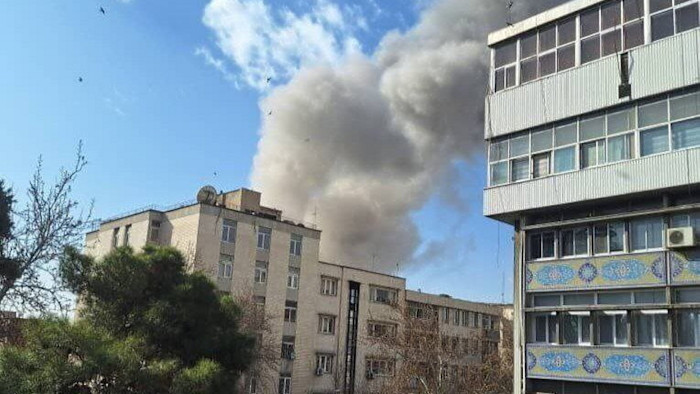
Trump and Netanyahu are now aiming for a critical blow. US and Israeli aircraft, along with cruise missiles, have targeted Iran’s leadership locations, command structures, and missile installations. Iran’s supreme leader, its president, and its senior security commanders currently remain out of sight. The damage inflicted upon Iran’s decision-making and military frameworks is likely to be extensive. Iranian officials have urged residents to evacuate the capital city.
However, the government was prepared to retaliate and is endeavoring to strike forcefully and swiftly. Breaking from Iran’s previous restraint, a high-ranking Revolutionary Guards officer has declared that all boundaries have been removed. The logic follows that since Iran cannot defend itself, it must quickly impose a substantial cost on adversaries so they, in turn, press for a cessation of hostilities.
Iran’s missile crews responded mere hours after the assaults, indicating a decentralized reaction designed for continuous launches irrespective of whether the leadership in Tehran is alive and operational. Iran utilized its vast array of precise short-range ballistic missiles, which endured last summer’s 12-day confrontation, against targets nearest its coastline. As of this writing, multiple waves of Iranian attacks ostensibly aimed at US military posts have been reported in Bahrain, the UAE, and Kuwait, while missiles were reportedly intercepted over Qatar, Iraq, Jordan, and Syria.
The current query is whether Iran can maintain this pace. Each time its military deploys a missile, it leaves a track that superior US and Israeli aerial and intelligence systems can exploit to demolish the launchers, whose numbers are finite. Furthermore, units dispersed throughout the nation will struggle to sustain operational readiness and secure resupply without centralized command.
Iran’s escalating options encompass disrupting maritime passage in the Strait of Hormuz to drive up crude oil prices and compel the US Navy, which prefers to operate from a distance, to expose itself in the Gulf’s waters. Yet, this also carries peril as Iran’s coastal energy-exporting infrastructure is susceptible to US reprisal, which would sever its trade connections. Moreover, many of Iran’s allies in the region are now likely to mobilize.
Iran is calculating that distress in the Gulf, the depletion of defensive armaments in the US and Israel, and global concern will necessitate a shorter campaign. The exact opposite may unfold. Official declarations from Saudi Arabia and other nations, alongside private comments, convey considerable indignation towards Iran. They anticipated their diplomatic efforts would shield them from Iran’s wrath, but videos showcasing a substantial explosion at the US base in Manama and missile interceptions in the UAE demonstrate precisely the inverse of what Gulf governments, their protected citizens, and affluent expatriates anticipate life there to be.
Should hostilities intensify, Gulf states might well ease their opposition to the US utilizing their military infrastructure and airspace. Western nations too are confronting quandaries. With Ukraine and Greenland on their minds, many are preparing to back a conflict they do not necessarily endorse. If requested by their Gulf partners to fulfill their defensive pledges, they might even need to participate in the campaign. Even among those who denounce the assault, there is limited patience or empathy for Iran. The brutal suppression of the protest movement in January and Iran’s backing for Russia in its war against Ukraine remain vivid in everyone’s memory.
One should not be mesmerized by the military advantage America and Israel have demonstrated in the initial stages of this conflict. What truly matters is how the war concludes — and Trump’s America is improbable to effectively manage the protracted regional chaos it is generating.