
Alex Jones, CEO and co-founder of Hallow, appeared on ‘Varney & Co.’ to address the app’s Lenten prayer initiative, the importance of the liturgical period, and its significant expansion.
From a theoretical standpoint, Catholicism seems to be undergoing a period of revitalization.
The worldwide Catholic community now exceeds 1.4 billion individuals. Eucharistic processions are attracting unprecedented attendance, and last summer, over 50,000 attendees filled Indianapolis for the National Eucharistic Congress – an event not seen in 83 years.
However, the actual situation presents a starkly different image.
Throughout the United States, ecclesiastical districts are consolidating congregations, shuttering places of worship, and relying on a diminishing number of clergy to minister to an increasing number of communities.
CATHOLIC CONFERENCE OBLITERATES ATTENDANCE RECORDS AS 26,000 YOUTHS CONVERGE ON FAITH GATHERING
Despite a rekindled interest —especially among younger demographics— the Church continually faces a fundamental constraint:
It requires priests. And the supply is insufficient.
Addressing the scarcity of clergy, Dan Monastra, a seminarian with the Archdiocese of Philadelphia, remarked, “A contributing factor is our society’s general disinclination towards enduring commitments, particularly within younger cohorts. This trend is evident in both the priesthood and matrimony. Furthermore, the priestly vocation stands in stark contrast to the convenience and ease promoted by contemporary culture.”
This represents the current dilemma: a resurgent interest in Catholicism clashing with an acute deficit of priests, complicating the management, funding, and maintenance of congregational life. The Catholic faithful are expanding, yet fewer spiritual leaders are available for their pastoral guidance.
Benjamin Hall, a senior correspondent for Fox News, joins the panel on ‘The Big Money Show’ to examine the increasing number of Americans embracing faith, the surge in Catholic converts, and to promote his new Fox Nation documentary, ‘America’s Churches with Benjamin Hall.’
Statistical Evidence
The scarcity of clergy is not merely an impression; it manifests unequivocally in statistical evidence.
As per theChurch’s statistical almanac, the global number of clergy diminished to 406,996 in 2023 — a decrease from the previous year, extending a multiyear downward trend.
The recruitment channel is also contracting.
Worldwide, the count of seminarians decreased from 108,481 in 2022 to 106,495 in 2023 — a component of a consistent reduction that has persisted for over ten years.
This poses a persistent challenge: a reduced number of priests today portends an even smaller clerical body in the future.
“Given the reduced number of priests available to appoint to congregations, numerous dioceses nationwide have undertaken efforts to reorganize or amalgamate parishes to address this predicament,” Rev. John Donia, the pastor at St. Elizabeth Parish in Chester Springs, Pennsylvania, communicated to Fox News Digital.
The consequence is a widening disparity between the need for and the availability of clergy.
Elder clergy members are ceding their roles or passing away, frequently in groups. Concurrently, the demand for Mass, confession, hospital visits, and pastoral guidance remains enduring.
Within the United States, this disparity is particularly pronounced.
The Church continues to maintain an infrastructure designed for a bygone era — one that benefited from a significantly larger clerical force. Consequently, many dioceses are now compelled to re-evaluate all aspects, from congregational territories to personnel approaches.
The Cathedral Basilica of Saints Peter and Paul, principal church of the Roman Catholic Archdiocese of Philadelphia.(Getty Images)
This trend is unfolding across the entire nation.
When queried about persistent parish closures despite an increase in Catholic interest, Monastra responded, “We are encountering a novel era with distinct challenges. The world is in perpetual flux, and it falls upon the Church to discover fresh avenues to proclaim the message of Christ amidst these transformations, all while preserving its venerable doctrines. This has been consistently true throughout history, and it remains so presently. My hope is that, instead of viewing congregational dissolutions pessimistically, we recognize them for their true nature: opportunities to innovate in introducing Christ to broader audiences.”
Even in areas where younger adults are more apparent, the underlying economics remain challenging. A congregation might be experiencing spiritual renewal yet concurrently be financially precarious or difficult to adequately staff.
Jonathan Morris, a Fox News contributor and theologian, offers insights on potential candidates for the pontificate and the spike in yearning for spiritual belief.
Clerical Sustenance: Training Pathways, Personnel Frameworks, and Expenditures
The Catholic priesthood in the United States stands at a pivotal moment.
Training is costly. The Center for Applied Research in the Apostolate(CARA) indicatedthat 2,920 seminarians were engaged in post-baccalaureate formation (pre-theology and theology) during 2023–2024.
The direct educational expenditures are substantial.CARA’s findingsshow an average yearly tuition of approximately $24,763 and lodging and sustenance costs of about $15,254 for those enrolled in theology programs.
These figures do not encompass the wider expenses such as counseling, healthcare services, and administrative costs.
Consequently, dioceses are confronted with difficult financial choices: operating with reduced funding, fewer aspirants, and elevated standards for training excellence.
Nevertheless, why is there a diminished number of aspirants if religious faith is experiencing a revival?
Rev. Donia identified several contributing elements during his discussion.
He elucidated, “Several elements merit consideration: a decline in large families, which historically provided an inherent pathway to the priesthood; clerical misconduct controversies; and the fact that priesthood is contrary to prevailing cultural norms, particularly in our era of immediate gratification.”
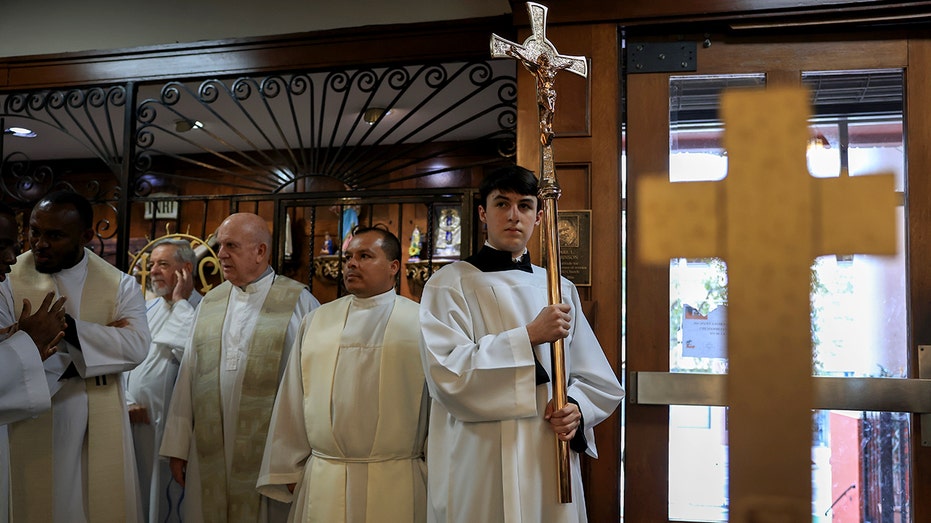
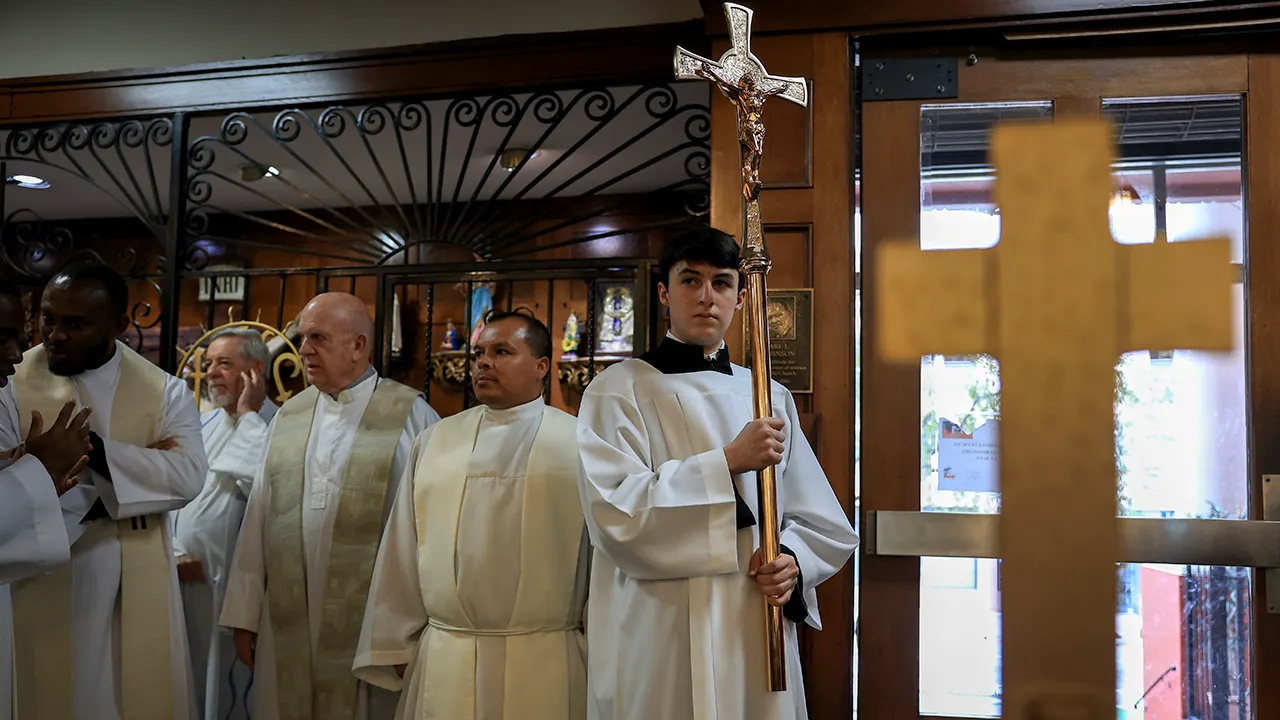
Catholic faith leaders convene for a service at the Gesu Catholic Church before commencing a procession.(Getty Images)
Consequently, the recruitment channel increasingly depends on overseas callings.
CARA revealedthat, in 2024-2025, 17% of graduate-level seminarians were born beyond U.S. borders.
‘ROSARY’ SURPASSES ROGAN: IS BELIEF-FOCUSED MEDIA GAINING PROMINENCE?
Nevertheless, a reliance on foreign clergy introduces dangers—such as immigration complications, cultural obstacles, and evolving global requirements as numerous “sending” nations encounter their own expansion and spiritual obligations—necessitating that staffing models be re-envisioned continuously.
As priests undertake responsibilities for an increased number of parishes, dioceses are broadening the roles of deacons and lay leaders for management, religious instruction, and spiritual support, all while facing an undeniable restriction: only priests possess the authority to conduct Mass and grant forgiveness for sins in confession.
This extends beyond being merely a personnel challenge.
It represents a sacred one.
When a single priest serves multiple communities, it translates to fewer Masses, less frequent confessions, reduced time for hospital visits—and a diminished overall presence.
Why do congregations still close even as engagement increases?
If a greater number of young individuals are appearing, why are places of worship still ceasing operations?
Because the cessation of parishes isn’t determined by one successful Sunday.
It pertains to a parish’s capability for enduring viability.
Several pressures are converging simultaneously:
- Structures:Aging ecclesiastical buildings, escalating insurance expenses, and postponed upkeep can overwhelm even thriving congregations.
- Location:Catholic adherents are relocating—flourishing in the Southern and Western regions, yet diminishing in some established urban zones—leaving behind infrastructure that no longer aligns with where residents reside.
- Clergy:A scarcity of priests means fewer spiritual leaders, which compels amalgamations even when individual communities remain vibrant.
- Financials:Contributions often correlate with consistent attendance. An expanding young-adult cohort is frequently insufficient to offset decades of decline and fixed expenditures.
Combine these elements, and a paradox emerges:
More spiritual vigor—but less physical framework.
Parishes can feel vibrant on Sunday yet appear financially unsustainable on paper.
‘The Big Weekend Show’ examines public sentiment in New York City regarding a proposal to designate Easter Monday as a federal observance.
The Reawakening
As the Church grapples with these difficulties, there is a perceptible surge in invigorated Catholic passion, particularly among dedicated younger adults.
There is a return to fundamental practices such as Eucharistic adoration, confession, a structured spiritual regimen, and a longing for reverent worship.
The U.S. bishops emphasized a renewal of the Eucharist through the National Eucharistic Revival (2022–2025), culminating in the 2024 Congress. Their conclusion? If Catholicism is to experience regeneration, it will do so because of its defining characteristic—especially belief in the authentic presence of Jesus Christ in the Eucharist.
Furthermore, a proposed link exists to vocations: a culture that regards the Eucharist as central—rather than merely symbolic—is more inclined to cultivate priestly vocations.
“Traditional expressions, including sacred liturgy and unequivocal instruction, deeply resonate with younger Catholics,” Reverend Donia conveyed to Fox News Digital.
What is fueling spirituality in Generation Z and millennials?
Here’s the pivotal transformation: younger generations are less attached to formal organizations—yet still pursuing profound meaning.
Springtide Research, conducting surveys among individuals aged 13–25, consistently ascertains that the prevailing narrative (“young people are indifferent to faith”) is incomplete; many still assert their belief—even if their attendance is irregular.
‘The Big Money Show’ panel discusses a recent study indicating a rise in Christmas church attendance across the United Kingdom, with Generation Z contributing the most significant increase.
Pew Research Centerdemonstrates a comparable pattern: younger adults are less prone to identify as Christian than older age groups, and shifts in religious affiliation are common—yet many continue to voice some form of spiritual conviction.
Pope Leo XIV has repeatedly acknowledged what he identifies as a “crisis” regarding priestly vocations, cautioning about strain within the priesthood while urging young individuals to contemplate religious life.
Monastra, a Generation Z seminarian, stated that his calling to the priesthood was propelled by a yearning for something “genuine and authentic.”
“I have discovered that ‘something,’ because there is nothing more truthful, more virtuous, and more exquisite than Christ Jesus,” he articulated. “I have experienced profound affection from Him, and my aspiration to one day become a priest is simply a response to that love.”
Several elements are fueling the recent upsurge in spirituality, including:
1) A crisis of mental well-being and purpose:
Anxiety, solitude, and “purpose fatigue” are broadly reported across Gen Z. Barna’s Gen Z research highlights necessities related to meaningful connections, hope, wholesome digital routines, and purpose—all of which faith communities can address when they are robust and credible.
In such an environment, religion can reemerge as an answer to a fundamental query: What is my purpose? Catholicism, when presented in a serious and coherent manner, provides identity, moral development, fellowship, and a transcendent framework.
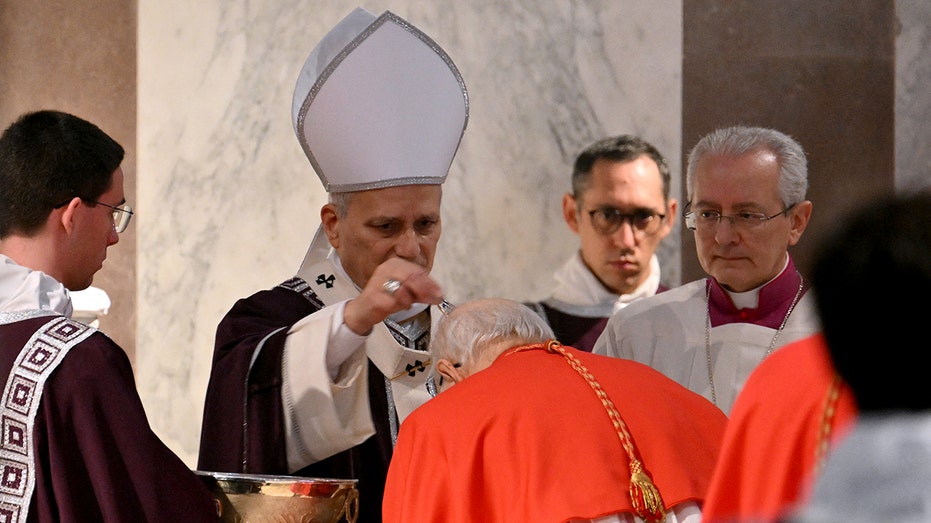
Pope Leo XIV bestows ashes upon the head of a Cardinal during the Ash Wednesday celebration on February 18, 2026. (Photo by Alberto PIZZOLI / AFP via Getty Images)(Getty Images)
2) Distrust of institutions and a yearning for genuineness:
Generation Z and millennials are frequently skeptical of established organizations. The Church has been impacted by scandal and diminishing trust in certain areas.
However, that same skepticism can cultivate receptiveness to more deliberate forms of faith. When young adults return, they often seek consistent doctrine, rigorous spiritual exercises, and authentic fellowship.
3) Community as an antidote to fragmentation:
Younger adults inhabit an era of extensive interconnectedness and limited belonging. A parish that offers genuine camaraderie, intergenerational aid, and a common objective can offer vital succor.
4) The pursuit of tangible engagement, beyond mere viewpoints:
Many young adults are weary of spirituality that remains purely intellectual. Catholicism constitutes a comprehensive belief system: prostration, abstinence, feasting, pilgrimage, sacred symbols, daily supplication, ethical discipline. For individuals influenced by digital existence, hands-on rituals can serve as a means of restoration.
5)Digital platforms enable the emergence of subcultures,Catholic communities among them:
Virtual existence presents evident drawbacks, yet it also permits geographically separated groups to unite and empowers clergy and content producers to disseminate instruction extensively. This can expedite localized spiritual awakenings, even if it is not instantly reflected in country-wide statistics.
LEADING PRIEST ON SOCIAL MEDIA RESPONDS TO TRENDING TIKTOKS ON THE DIVINE AND SCRIPTURAL MEANINGS
Father Donia referenced Bishop Robert Barron, the originator ofWord on Fire,to encapsulate the divergent impacts of digital platforms on contemporary young people.
“Bishop Robert Barron noted that social media present an ‘optimal era’ for spreading the faith and defending its tenets,” Donia said. “Yet it intensifies discord and can pit devout adherents of Catholicism against one another in manners that dismay non-believers.”
Though he stated digital media “hastens exploration and spiritual commitment for numerous individuals,” he contended the net outcome hinges on the “purposeful” manner in which individuals engage with it.
The impending confluence: Revitalization calls for clerics, and clerics themselves need revitalization
Absent clergy, the sacred rites grow more challenging to partake in — and rejuvenation becomes more difficult to maintain.
Without reinvigoration, a reduced number of individuals might respond to the priestly vocation.
The pragmatic aspect cannot be overlooked. Seminaries necessitate financial backing, training ought to be exemplary, and diocesan administrations need to restructure personnel without depleting congregational vitality.
WHAT IS THE MOST UNUSUAL OCCURRENCE THAT EVER LED YOU TO BELIEVE IN GOD’S EXISTENCE?
Simultaneously, the spiritual dimension ought not to be demoted to mere tactical planning. Even the most efficacious strategy for vocations will prove insufficient if adherents do not regain a tangible conviction of the Eucharist’s paramount importance.
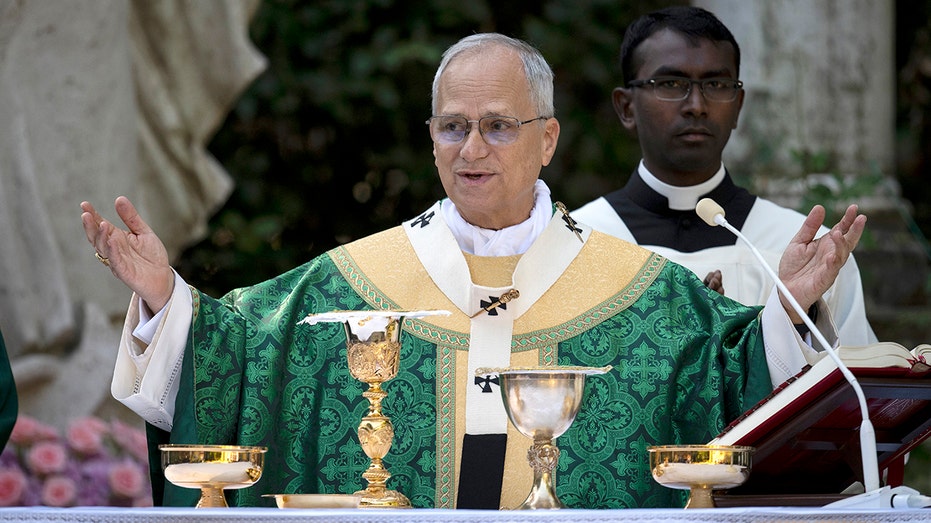
Pope Leo XIV celebrates the first Mass for the Care of Creation at the Laudato Si’ Village of Castel Gandolfo on July 09, 2025 in Albano Laziale, Italy. (Photo by Cristian Gennari via Vatican Pool/Getty Images)(Getty Images)
Father Donia labeled that discernment as “deeply accurate” and implored Catholics to give it earnest consideration.
“It stands as one of the most crucial understandings concerning the present condition of Catholic existence, particularly concerning religious callings,” he said.
And that is what numerous youthful Catholics seem to be indicating — at times subtly, at other times overtly, as exemplified in Indianapolis during 2024 — an eagerness to revert not to an exclusively cultural form of Catholicism, but to a more rigorous, ritualistic, and Christ-focused belief system.
The ecclesiastical institution’s formidable task lies in whether it can satisfy that aspiration with an adequate number of clergy, comprehensive training, and the organizational capability to reconstruct — extending beyond mere structures to actual conviction.