
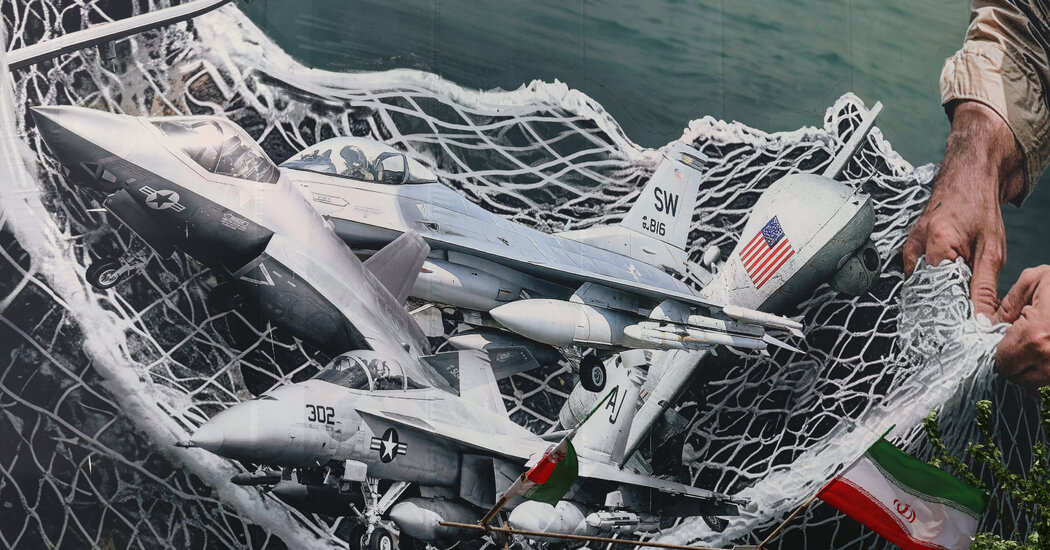
In 2018, the administration of then-President Donald Trump withdrew the United States from the Joint Comprehensive Plan of Action (JCPOA), commonly known as the Iranian nuclear accord. At the time, President Trump stated his intention to negotiate a “better deal” with Iran. Following the U.S. withdrawal and the re-imposition of sanctions, Iran subsequently began to increase its nuclear program activities, as documented by international monitoring bodies.
In February of this year, a period of heightened tensions escalated into military engagements between the United States and Iran. President Trump reportedly indicated that he anticipated a swift resolution to the conflict, which he described as potentially a “minor excursion” that would lead Iranian leaders to concede. However, contrary to these expectations, reports indicated that Iran asserted control over or significantly disrupted shipping in the Strait of Hormuz, a critical international maritime choke point for oil transit.
Currently, the Trump administration appears to be emphasizing a strategy of blockade and sustained economic pressure on Iran, following the cessation of direct military actions. On Saturday, a planned round of nuclear talks was canceled. The White House, in a statement, expressed the belief that “the United States holds the cards” in the ongoing standoff. President Trump reiterated this sentiment in a Sunday interview with Fox News, stating that the conflict would “come to an end very soon.” He also suggested that Iran’s oil storage capacity was nearing its limit, anticipating a critical point around Wednesday, after which he predicted the situation would “explode.”
These projections regarding Iran’s oil sector and the timeline for its collapse have been met with varying assessments from petroleum experts. While it is acknowledged that Iran is experiencing significant economic pressure, evidenced by reports of the country filling tankers and exploring alternative export routes, such as rail lines, to circumvent the blockade, there is no widespread consensus on the immediacy of an oil storage crisis. The act of shutting off oil wells can indeed cause long-term damage to oil fields and reduce income, but analysts hold a range of views on the severity of Iran’s current storage challenges. Some experts suggest that the problems may be overstated, indicating that Iran could have weeks or even months before reaching a critical storage capacity.
Esfandyar Batmanghelidj, an Iran analyst and chief executive of a London-based research organization, stated, “No credible experts believe that Iran’s oil sector is about to collapse.” He further suggested that “Trump’s commitment to the blockade and his repeated statements that Iran is on the verge of collapse suggest that someone outside of government is feeding him unrealistic and politically motivated assessments of the situation in an attempt to undermine diplomacy.”
Similarly, Danny Citrinowicz, a former Iran analyst for Israel’s military intelligence agency, commented, “Contrary to the administration’s belief, especially the president’s, that a naval blockade would bring Iran to its knees, Tehran is unlikely to yield on its core strategic demands. Even under severe economic pressure, the regime is more likely to dig in, extending the deadlock, while the global economic fallout from disrupted maritime routes and potential strait closures steadily escalates.”
President Trump has consistently expressed optimism regarding the swift resolution of the conflict. For instance, he stated on March 7, “We’ve already won,” and two days later asserted the war would be over “very soon.” On March 11, he announced, “We’ve won.” By March 20, he indicated the United States was considering “winding down,” and six days later, he claimed Iran was “begging to make a deal.” By April 16, the war “should be ending pretty soon,” and the next day, he added that peace talks were progressing well, with “most of the points already negotiated and agreed to.”
Internationally, there has been commentary on the situation. Chancellor Friedrich Merz of Germany, speaking on Monday, stated, “The Americans clearly have no strategy,” adding, “An entire nation is being humiliated,” in reference to the United States.
A core dynamic in the current standoff appears to be a reciprocal belief by both the US and Iranian administrations that they hold a stronger position and that the other side will eventually concede due to internal pressures. While both sides are reportedly experiencing difficulties, each seems to believe that time is on its side. This dynamic is sometimes observed in situations where leaders are perceived to be surrounded by advisors who reinforce their existing views, potentially leading to overconfidence.
Historically, Iran has made strategic decisions that have led to significant consequences. The 1979 seizure of the United States Embassy and the subsequent 444-day hostage crisis resulted in international sanctions and diplomatic isolation. Similarly, Iran’s decision to continue the Iran-Iraq war for six years after recovering its territory incurred immense human and economic costs. Furthermore, its alleged involvement in terrorist activities abroad and domestic repression have contributed to its international isolation and hindered economic development. This tendency for assertive or uncompromising stances may be amplified by the increased influence of hard-liners within the Islamic Revolutionary Guards Corps during the current conflict.
The current situation involves two administrations that analysts describe as exhibiting confidence in their respective positions, each potentially wary of appearing weak domestically and each believing they possess the strategic advantage. This scenario creates challenges for achieving a diplomatic resolution. The Wall Street Journal has reported that President Trump has instructed aides to prepare for an extended blockade. Such a prolonged situation could have significant global economic repercussions, potentially leading to sustained worldwide shortages of oil and gas, and increasing prices across various sectors, from essential goods like medicines and fertilizers to consumer products like helium and condoms.
Iran has reportedly proposed an initial agreement to reopen the Strait of Hormuz, suggesting that broader issues such as its nuclear program could be addressed at a later stage. The United States, however, has indicated dissatisfaction with this offer for now. Amidst these developments, Pakistan has reportedly been engaged in diplomatic efforts aimed at facilitating a rapprochement between the two sides. Engaging in serious negotiations, even if initially focused solely on reopening the strait, could potentially de-escalate tensions. While any initial agreement might involve compromises, such as allowing Iran to benefit from shipping through its territorial waters while addressing the issue of lingering mines, such an outcome might be considered preferable to an extended blockade.
Should an initial agreement to normalize shipping in the Strait of Hormuz be reached, a key policy consideration for the United States would be to preserve its leverage, particularly in the form of potential sanctions relief, to pursue restraints on Iran’s nuclear program. While the immediate crisis involves maritime security, the long-term objective of preventing nuclear proliferation remains paramount. President Trump has previously stated that a new nuclear agreement was “the only point that really mattered.”
The current situation presents a complex paradox: while earlier threats of military action may have prompted Iran to offer a seemingly favorable nuclear deal in February, the prolonged conflict has seemingly solidified the perception on both sides that they are in a stronger negotiating position. Faced with the prospect of making concessions, both administrations may opt for continued delay or escalation, thereby prolonging the uncertainty and potential impact on the global economy.
Why This Matters
The ongoing standoff between the United States and Iran carries significant global implications across multiple dimensions:
- Global Economic Stability:The Strait of Hormuz is a vital international waterway, through which a substantial portion of the world’s oil supply passes. Disruptions, blockades, or military confrontations in this region directly impact global oil prices, potentially leading to increased costs for energy, goods, and services worldwide. An extended blockade or prolonged instability could trigger a global economic slowdown, affecting supply chains and consumer prices for a wide range of products.
- Regional Security and Stability:The conflict heightens tensions across the Middle East, a region already prone to instability. Escalation could draw in other regional and international actors, potentially leading to a wider conflict with devastating humanitarian consequences, displacement, and increased refugee flows. The security of neighboring states, as well as international shipping and trade routes, remains under constant threat.
- Nuclear Proliferation:A key concern is Iran’s nuclear program. The US withdrawal from the JCPOA and subsequent Iranian actions to increase its nuclear activities raise questions about the future of nuclear non-proliferation efforts. Without a diplomatic resolution, there is a risk of Iran further advancing its nuclear capabilities, which could prompt other regional powers to pursue their own nuclear programs, leading to a dangerous arms race.
- International Diplomacy and Rule of Law:The lack of a clear diplomatic pathway and the prevalence of unilateral actions challenge existing international frameworks for conflict resolution and global governance. It tests the effectiveness of international sanctions as a policy tool and the ability of multilateral institutions to mediate disputes between powerful nations.
- Humanitarian Impact:Beyond geopolitical and economic concerns, prolonged conflict and severe economic sanctions directly impact the civilian populations in Iran and potentially across the region. Economic hardship can lead to shortages of essential goods, medical supplies, and social unrest, exacerbating human suffering.
The decisions made by both the United States and Iran in the coming weeks and months will therefore not only shape their bilateral relationship but also profoundly influence global energy markets, security architecture, and the future of international diplomacy.