
Remain apprised with complimentary alerts
Merely register for the Science myFT Compilation — dispatched straight to your email.
The author serves as a scientific analyst
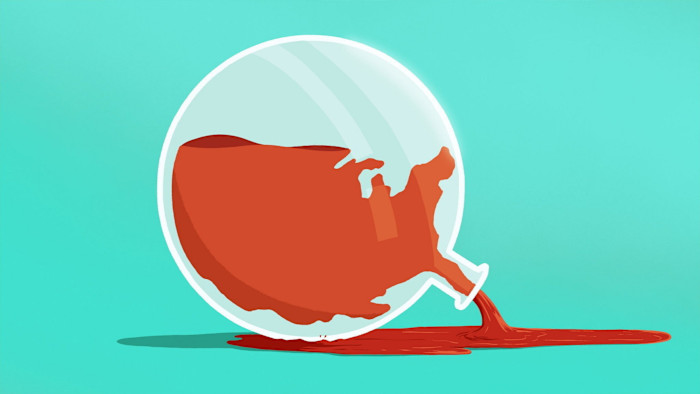
Uncomfortable realities demand candid speakers. Consequently, the subsequent Trump government has striven diligently to disparage, discredit, and even discharge scientists. The harsh consequences of Trump’s assault on science are readily apparent. Over 10,000 professionals holding doctoral degrees in science, technology, engineering, mathematics, and health departed the federal labor force during the past year due to terminations, resignations, and retirements. This figure represents approximately triple the attrition experienced in the concluding year of the Biden administration, as recent research published in the journal Science indicates.
While a few new staff members were recruited, across 14 agencies involved in domains such as health, meteorology, and ecology, the general situation revealed a net departure of over 4,000 extensively skilled employees. This diminishing realm of scientific proficiency is apparent in recent declarations: the revocation of the “endangerment” determination stating that greenhouse gases jeopardize human well-being, a ruling foundational to climate laws; the demotion of pandemic readiness investigations by the health body responsible for addressing infectious illnesses; and the regulators’ rejection this month of a review for Moderna’s novel mRNA influenza vaccine.
These judgments appear rooted less in scientific principles and more in Maga narratives, like the fabricated climate deception and the myth that youngsters get an excessive number of immunizations. What ensued? American investigators are departing overseas in an intellectual flight; pharmaceutical firms are openly doubting prospective capital injections into the nation; and the US currently reports the largest count of documented measles occurrences since the illness was eradicated domestically in 2000. Regarding scientific affairs, the White House could not have devised a more potent America Last approach.
Personnel statistics released by the White House Office of Personnel Management indicate that the National Institutes of Health leads in staff departures, with 1,100 individuals exiting in 2025 versus 421 in the preceding year. The National Oceanic and Atmospheric Administration, the Environmental Protection Agency, and the US Forest Service similarly suffered significant impacts. The National Science Foundation experienced a net decrease of 40 percent in its doctoral-level staff. This constitutes an astonishing loss of specialized knowledge, marked by the vanishing of a combined 107,000 years of professional background.
Though retirement and resignation are considered willful departures, governmental actions have undeniably accelerated this mass exit: severe and capricious budget reductions, notably by the so-called Department of Government Efficacy; the placement of dogmatists in senior roles (observe Robert F Kennedy Jr’s gratuitous incitement of anxieties regarding acetaminophen and autism); and oppressive control over what scholars are permitted to articulate and disseminate. Last year, three-quarters of the investigators surveyed indicated they were contemplating relocating from the US.
In response, the EU allocated €500 million to entice scientists to the continent, specifically providing legal assurances of scholarly autonomy and a dedication to variety and integration. Last year, the University of Aix-Marseille initiated an “asylum program.” The detrimental combination of anti-scientific attitudes and perceived prejudice against researchers of Chinese ancestry has been labeled “a boon from Trump” as Beijing aims to recruit skilled individuals in critical sectors like AI, microelectronics, and quantum innovations.
The issue remains that theatrical pronouncements claiming climate alteration is a deception, or that widespread epidemics pose no danger, do not transform fabrications into veracities. The National Institute of Allergy and Infectious Diseases is de-emphasizing pandemic readiness and biosecurity, as disclosed by Nature this week, with personnel purportedly directed to remove pertinent content from its online platform. As Nahid Bhadelia from Boston University noted:“Merely asserting we will cease concern for these matters does not cause the problems to vanish — it simply renders us less equipped.”
Personnel rotation might have also contributed to the disarray concerning the Moderna inoculation. The corporation had established an experimental procedure with the Food and Drug Administration — yet was informed this month via a letter endorsed by FDA chief Vinay Prasad that it was insufficient.
Stephen Hoge, Moderna’s president, conveyed to Stat, a health news source, that the vacillation could discourage capital expenditure: “How can we commit funds if, upon completion, the [supervisory] guidelines are altered and the targets are shifted?”
Intriguingly, authorization, had it been granted, could very likely have aligned with the November midterm elections. Concurrently, the US government has terminated all publicly financed mRNA vaccine investigations, including those related to cancer.
A skeptic might suggest that authorizing such a vaccine precisely as the Maha populace arrived to cast ballots might have proven highly inconvenient.