
Unlock the White House Watch newsletter for free
Your guide to what Trump’s second term means for Washington, business and the world
### Key Takeaways
1. **High-Stakes Diplomatic Gambit Amidst Skepticism:** The visit by Trump’s envoys, Steve Witkoff and Jared Kushner, to Moscow with a peace proposal introduces significant geopolitical uncertainty. While offering a glimmer of hope for de-escalation, the mission faces deep skepticism from both Russian and Ukrainian sides, underscoring the formidable hurdles to a substantive resolution and maintaining a high geopolitical risk premium across global markets.
2. **Market Volatility Driven by Perceived De-escalation vs. Escalation:** Temporary ceasefires around the diplomatic visits, juxtaposed with continued military actions like the drone strike on Ukraine’s SBU headquarters and warnings about unsafe airspace, create a volatile market environment. This push-pull dynamic directly impacts energy prices, defense sector valuations, and investor sentiment towards risk assets, with any sustained peace talks potentially triggering a significant market re-pricing.
3. **Future U.S. Policy Implications for Global Stability:** The mission foreshadows a potential shift in U.S. foreign policy under a future Trump administration, particularly regarding the Ukraine conflict. Investors are keenly watching for signs that could alter the landscape of international alliances, defense spending, and global trade dynamics, with profound implications for sectors ranging from commodities and logistics to technology and financial services.
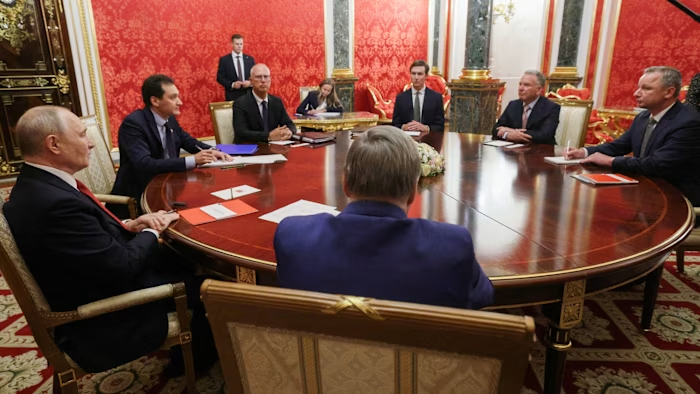
In a move closely watched by global markets for its potential to reshape geopolitical risk and commodity flows, Donald Trump’s envoys, real estate developer Steve Witkoff and son-in-law Jared Kushner, embarked on a high-stakes diplomatic mission to Moscow. Their Saturday meeting with Russian President Vladimir Putin, carrying what the former U.S. president describes as a “peace proposal,” injects a new layer of uncertainty into the protracted conflict in Ukraine, with immediate implications for energy markets, defense stocks, and broader investor sentiment.
The visit, the third known trip by the pair to the Russian capital, underscores the persistent search for an off-ramp in a conflict that has profoundly impacted global supply chains, fueled inflation, and driven significant shifts in defense spending. Russian state news agency TASS broadcast a short video capturing Witkoff expressing gratitude to Putin for ordering a pause in air strikes, which allowed their “safe manner” of arrival. Putin, in turn, claimed no strikes on Kyiv had occurred since midnight, adding, “I want to note that the Ukrainian side also significantly reduced its strikes on the territory of the Russian Federation, including Moscow.” Such reciprocal de-escalation, however temporary, can often provide fleeting relief to risk assets, though market analysts remain wary of its sustainability.
Speaking from the Oval Office on Friday, Trump had teased the mission, stating Witkoff and Kushner were “bringing with them a proposal to end the war” in Ukraine. Crucially, details of this plan remain undisclosed, and there has been no clear indication from Moscow of a readiness to compromise. The lack of transparency surrounding potential terms for peace adds a layer of speculative risk to markets, as investors grapple with scenarios ranging from a potential breakthrough to a complete diplomatic failure that could signal further escalation. Past visits by the envoys, including one in January, yielded no substantive progress, reinforcing market skepticism.
From the Kremlin’s perspective, Putin has consistently reiterated Moscow’s commitment to a peaceful resolution but has steadfastly rejected proposals for temporary ceasefires. His argument – that such pauses would not bring lasting peace and would merely grant Ukraine time to re-arm – directly contrasts with the immediate de-escalatory hopes often associated with peace talks. This hardline stance maintains a geopolitical risk premium, particularly for energy commodities like oil and natural gas, which have seen significant volatility tied to the conflict’s ebb and flow. The recent snub of CIA Director John Ratcliffe by Putin, favoring communication with individuals “Trump appointed and trusted,” highlights Moscow’s strategic calculations regarding future U.S. leadership and its influence on potential peace negotiations.
Despite Putin’s recent remarks at an economic forum in Vladivostok, suggesting “chances” of a peaceful settlement, Kremlin spokesperson Dmitry Peskov quickly tempered expectations, noting “unfortunately, there are no concrete preconditions for this yet.” This mixed messaging from Moscow keeps markets on edge, preventing any decisive “risk-on” shifts that would typically follow strong signals of de-escalation.
Upon their arrival at Moscow’s Vnukovo Airport, the U.S. officials were met by Russian envoy Kirill Dmitriev, underscoring the structured nature of the interaction. Videos of their motorcade heading towards central Moscow, flanked by security vehicles, further emphasized the high-profile nature of the mission. Following their Moscow engagements, Kushner and Witkoff are slated to travel to Ukraine on Sunday, marking their first known visit to the country since the full-scale invasion began in 2022. Ukrainian President Volodymyr Zelenskyy confirmed their upcoming visit on X, emphasizing Kyiv’s low expectations.
The Zelenskyy administration views the visit as crucial for the envoys to grasp the real impact of Russia’s war, expressing gratitude for their willingness to visit Kyiv after months of persistent efforts. However, senior Ukrainian officials harbor no illusions of immediate breakthroughs, anticipating Russia’s continued escalation in the coming months rather than a genuine pursuit of peace. This grim outlook from Kyiv suggests that even as diplomatic efforts unfold, the fundamental drivers of market risk—prolonged conflict and instability—are likely to persist.
In a gesture aimed at facilitating the diplomatic efforts, Zelenskyy announced that Kyiv would unilaterally refrain from air strikes against Russian targets during the envoys’ visit, demanding reciprocal action from Moscow. Putin, through Peskov, confirmed Russian forces would also avoid striking Kyiv for three days from midnight Friday, aligning with the diplomatic schedule. Yet, this temporary respite was marred by accusations from Zelenskyy that Russian forces bombed Kyiv’s two main airports overnight, allegedly to scuttle plans for Kushner and Witkoff to land directly in the capital—a symbolic move that would have marked the first time an official foreign delegation reached Kyiv by plane since the full-scale war began. Such actions, regardless of intent, directly impact regional aviation safety perceptions and could influence cargo and passenger traffic through the broader European airspace, affecting airline and logistics sector valuations.
Earlier in the week, Ukraine had warned commercial airlines to cease using Russian airspace due to “increased military activity,” deeming it “completely unsafe.” Putin dismissed this as “terrorist” but paradoxically stated Russia would continue to refrain from striking Ukraine’s “decision-making centres,” preserving future interlocutors for peace talks. This strategic ambiguity, however, was quickly contradicted by a Russian drone strike on Friday that hit the headquarters of the Security Service of Ukraine (SBU), a key government building involved in targeting sites deep inside Russia. This escalation, coming just hours before the Trump envoys’ visit, starkly illustrates the enduring tension between diplomatic overtures and continued military aggression, keeping global markets in a state of heightened uncertainty.
Market Impact
The diplomatic mission by Trump’s envoys carries significant, albeit complex, market implications. On one hand, any credible signal of de-escalation or progress towards peace could trigger a “risk-on” rally, particularly benefiting European equities, which have been weighed down by regional instability. Energy prices, especially crude oil and natural gas, would likely see downward pressure on reduced supply disruption fears, impacting inflation expectations and central bank policy outlooks. Conversely, defense sector stocks, which have seen robust performance since the invasion, could face headwinds. However, the deep skepticism surrounding these talks, coupled with Russia’s rejection of temporary ceasefires and ongoing military actions, suggests that a substantial “peace dividend” is unlikely in the short term. The SBU headquarters strike, in particular, reinforces the continued geopolitical risk premium, supporting defense sector valuations and maintaining a floor under commodity prices. A potential shift in U.S. foreign policy under a future Trump administration, signaling a less interventionist approach, could further realign defense spending patterns globally and reconfigure NATO alliances, creating both opportunities and challenges for companies exposed to international trade and security. Currency markets, particularly the Euro and Polish Zloty, remain highly sensitive to regional stability, while the Russian Ruble will continue to reflect commodity prices and sanctions pressure. Ultimately, the high degree of uncertainty surrounding the conflict’s trajectory means investors will remain vigilant, prioritizing assets that offer resilience against geopolitical shocks.