
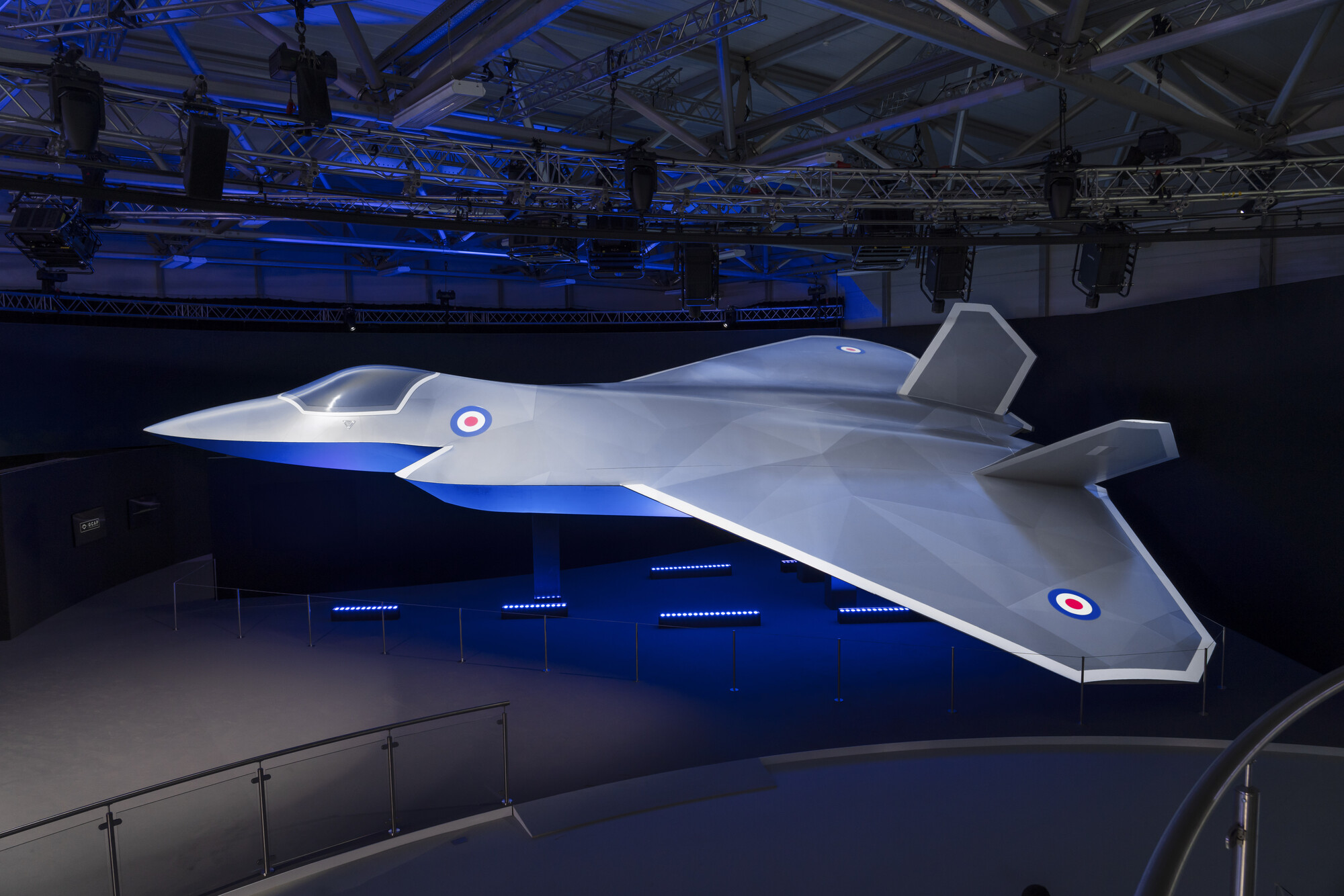
UK’s Future Combat Air System Programme: A Major Driver of Regional Employment and High-Skilled Jobs
New figures released by Defence Minister Luke Pollard confirm that the United Kingdom’s Future Combat Air System (FCAS) programme currently supports over 4,500 jobs across the country, with nearly half of these positions concentrated in the North West of England. The disclosure offers crucial insights into the regional economic impact of one of the UK’s most ambitious defence projects, which aims to develop a next-generation combat air capability for service in the 2030s.
The statistics were provided in a series of written parliamentary answers to Conservative MP Stuart Anderson, who had sought detailed information regarding the geographical distribution of FCAS employment, efforts in mid-career reskilling, and the retention rates of graduates and apprentices recruited by Team Tempest – the consortium of industry partners delivering the programme.
Minister Pollard underscored the programme’s role as an “engine for growth” across the UK. “The Future Combat Air System (FCAS) programme supports jobs across the UK, including all nine regions of England plus Scotland,” he stated. Providing a detailed breakdown, Pollard confirmed that approximately 43% of the jobs are situated in the North West of England. Significant portions of the workforce are also located in the South West of England, accounting for 19%, and the Midlands, which supports 16% of the jobs. Scotland represents about 8% of the programme’s workforce, with the remaining 22% distributed across other regions, including London and the East of England.
This regional allocation aligns with the Defence Investment Plan’s objective, which stipulates that 90% of jobs supported by FCAS programmes are located outside London and the South East of England. MP Anderson’s questions were specifically aimed at clarifying the regional breakdown behind this broader commitment, seeking to understand the granular impact across different parts of the country.
The FCAS programme, with the Global Combat Air Programme (GCAP) at its core, is described as a generator of highly skilled employment opportunities. “The advanced knowledge, skills, and competencies required by the Future Combat Air System (FCAS) programme, with the Global Combat Air Programme (GCAP) at its core, is getting more people in highly skilled jobs,” Pollard affirmed. He reiterated that FCAS currently supports over 4,500 jobs across the UK, with expectations for thousands more to be created as the programme progresses through its development phases.
However, specific figures regarding mid-career reskilling and the retention of new talent proved more elusive. When asked by MP Anderson about the number of individuals reskilled mid-career as part of FCAS and GCAP, the Ministry of Defence (MOD) did not provide a precise figure. Minister Pollard explained this by stating, “Each Team Tempest industry partner offers a range of career pathways however neither the process nor underlying detailed information are managed centrally.” This indicates that while reskilling efforts are undertaken, a consolidated, overarching dataset at the MOD level is not maintained.
Similarly, a question concerning the retention of the approximately 3,000 graduates and apprentices recruited by Team Tempest since 2022 also received a response highlighting decentralized data management. Pollard noted, “The Future Combat Air System (FCAS) programme is creating opportunities for young people across the UK. Around 3,000 graduates and apprentices have been recruited by the Team Tempest industry partners since 2022, providing the opportunity to work on a range of combat air programmes, including sixth-generation combat aircraft development through FCAS.” He reiterated that detailed employment information, including retention rates for these new recruits, is not centrally managed by the MOD, but rather by the individual industry partners within Team Tempest.
The Future Combat Air System (FCAS) represents the overarching UK programme designed to deliver future combat air capability. Central to this is the Global Combat Air Programme (GCAP), a landmark trilateral initiative bringing together the United Kingdom, Italy, and Japan. This international collaboration is focused on developing a state-of-the-art, next-generation combat aircraft and its associated advanced systems, with an ambitious target for operational service in the 2030s. This programme is critical for maintaining the UK’s and its partners’ air superiority and technological edge in a rapidly evolving global defence landscape.
Why This Matters
The Future Combat Air System (FCAS) and its core component, the Global Combat Air Programme (GCAP), represent far more than just a defence procurement initiative; they are a cornerstone of the UK’s industrial strategy, economic development, and international security posture. The details revealed by Defence Minister Luke Pollard provide a tangible measure of this impact, highlighting several key areas of significance:
Economic Growth and Regional Rebalancing:The creation of over 4,500 jobs, with thousands more expected, directly contributes to the UK economy. The concentration of nearly half of these jobs in the North West, alongside significant proportions in the South West and Midlands, underscores the government’s “levelling up” agenda to stimulate economic activity and create high-value employment outside of London and the South East. These regions often have a rich history in aerospace and advanced manufacturing, and FCAS helps to sustain and evolve these vital industrial bases. This investment in high-tech defence manufacturing supports local economies, fosters supply chain resilience, and attracts further investment.
Skills Development and Future Workforce:The programme’s emphasis on “advanced knowledge, skills, and competencies” signifies its role in developing a highly skilled workforce crucial for the UK’s long-term economic competitiveness. The recruitment of 3,000 graduates and apprentices since 2022 illustrates a significant commitment to nurturing young talent and providing pathways into cutting-edge engineering and technology fields. While specific retention figures are not centrally tracked, the sheer volume of new entrants suggests a substantial pipeline for future innovation and expertise, ensuring the UK maintains critical capabilities for decades to come.
Strategic Defence and Technological Edge:FCAS/GCAP is fundamental to the UK’s future national security. Developing a sixth-generation combat aircraft ensures that the Royal Air Force, alongside its Italian and Japanese counterparts, will possess the necessary technological superiority to address evolving global threats. This programme is not merely about replacing older aircraft; it’s about pushing the boundaries of aerospace engineering, integrating advanced sensors, artificial intelligence, and autonomous capabilities. This strategic investment guarantees the UK’s ability to operate effectively in complex future operational environments and maintain its standing as a leading defence innovator.
International Collaboration and Geopolitical Influence:GCAP, as a trilateral partnership, demonstrates the UK’s capacity for strategic international collaboration on critical defence projects. Working with Italy and Japan pools resources, shares expertise, and spreads the financial burden of such an ambitious undertaking. This partnership also strengthens alliances, fosters interoperability, and projects a unified front in an increasingly complex geopolitical landscape, enhancing the influence of all three nations on the global stage.
Transparency and Accountability:While the MOD has provided valuable insights into job numbers and regional distribution, the inability to provide centralized figures for mid-career reskilling and the retention of graduates/apprentices highlights a potential area for further parliamentary scrutiny. Understanding these metrics would offer a more comprehensive picture of the programme’s success in developing and retaining the specialized human capital essential for its long-term success. This ongoing dialogue between government and parliament ensures accountability for public investment in major defence programmes.