
Gain complimentary access to the Editor’s Summary
Each week, Roula Khalaf, the FT’s Editor, curates her preferred articles for this bulletin.
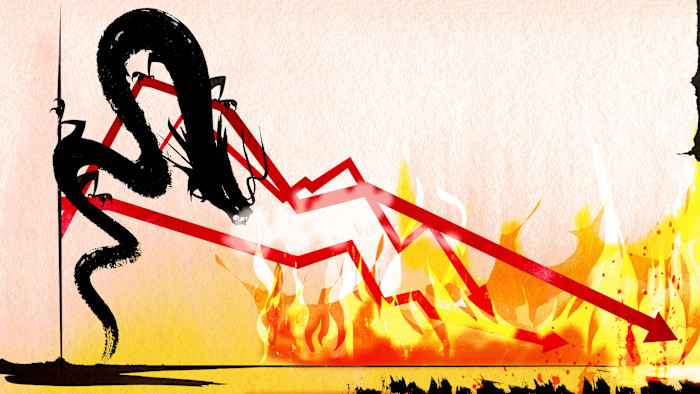
The administrations of the United States and the United Kingdom exhibit markedly distinct stances regarding their trade imbalances. While the Americans adopt an aggressive, dragon-like posture, unleashing fiery measures (duties) upon presumed offenders, the British appear largely composed. Such a disparity is scarcely astonishing, considering the contrasting temperaments of the nations’ leaders. However, is this stance warranted? Upon closer examination, I harbor doubts.
Following the economic rationale of the ‘dragon’, Britain too ought to be incensed. In the preceding year, the United Kingdom’s merchandise trade shortfall reached 8 percent of its Gross Domestic Product, marking its highest point since reliable data collection commenced nearly thirty years prior. This sum approximated twice the American equivalent for the identical year (drawing from data up to November), notwithstanding Trump’s aggressive imposition of tariffs. Furthermore, it surpassed the considerable expansion America witnessed in the 2000s, an event that similarly provoked intense indignation among politicians.
Even the typically more conservative International Monetary Fund has grouped both nations, identifying them as the primary drivers of excessive current account shortfalls—a wider indicator of global economic discrepancies that experts generally monitor more intently than merchandise trade deficits. Granted, the UK’s share was considerably less significant than that of the US, owing to its comparatively modest economy. Compared to the aggressive ‘dragon’, Britain might be viewed as a more composed ‘chameleon’. (Nevertheless, it remains a reptile.)

The ‘chameleon’s’ more subdued reaction to these disparities might signify acceptance. Britain is too minor an entity to consider strong-arming its way through economic difficulties. It is also remarkably pragmatic, adept at modest self-assessment, and keenly cognizant of numerous domestic elements contributing to its lackluster merchandise export achievements. (By 2025, the quantity of exported goods had diminished compared to 2014 levels.) Among these factors are elevated industrial energy expenses, a recently robust currency, and an event phonetically similar to ‘Schmexit’.

A more favorable explanation for Britain’s calm demeanor lies in its substantial services surplus, which is ample enough to nearly neutralize the merchandise trade shortfall (provided fluctuating precious metals transactions are disregarded). While other nations supply the British with furnishings, automobiles, and electronic devices, they concurrently eagerly procure UK travel, information technology, and intellectual property services. When merchandise and services are considered together, the UK’s total trade deficit in 2025 amounted to approximately one-fourth of that of the United States.
The ultimate justification for the ‘chameleon’s’ modest bearing is that, despite a potentially somewhat inflated current account deficit, its financial standing vis-à-vis other global entities has appeared sound over the last two decades. Fluctuations in prices, which have rendered British assets situated overseas comparatively more valuable, have counterbalanced the nation’s persistent current account shortfalls, thus maintaining a generally steady net international investment position throughout the past twenty years. By this particular measure, the United States has fared exceptionally poorly.

Prior to the ‘chameleon’ becoming overly confident in its composed approach, these comparisons are accompanied by certain reservations. Firstly, to my knowledge, the British do not furnish the globe’s foremost secure asset, rendering them comparatively susceptible to investors abruptly concluding that the yields derived from financing the disparity between Britain’s receipts and expenditures (the current account deficit) do not, in fact, warrant the associated peril.
Furthermore, Britain possesses deficits that are comparatively consistent and quantifiable, whereas its surpluses demonstrate the inverse characteristics. For instance, its net global investment standing is derived from subtracting one colossal figure (£14.8 trillion in obligations) from another colossal figure (£14.6 trillion in holdings as of September 2025). (Given its role as a financial center, Britain’s statistics are notably substantial.) Consequently, even slight adjustments to data can profoundly alter the narrative surrounding the nation’s fiscal well-being. (The most recent data publication saw the net position undergo a substantial revision of £100 billion.)
Regarding the services surplus, the most pessimistic ‘dragons’ discard these statistics as mere imaginative fantasy. While this perspective is somewhat radical, it is undeniable that accurately quantifying international service movements proves more challenging than tallying physical goods crossing frontiers. Even assuming precise data, over-specialization might prove detrimental should a significant technological upheaval destabilize an entire industry. A commendable surplus indeed. It would be regrettable if an AI-related event were to impact it.
In summary, it appears favorable that the British are not experiencing as much agitation as the Americans concerning their global economic disparities. Perhaps the irate ‘dragon’ might benefit from adopting some of the ‘chameleon’s’ calm and self-reflection, particularly regarding how industrial fragility couldlead tomerchandise trade shortfalls. And we ought to hope this exchange of tangible goods for intangible words persists. (I note this as one who exports words.) However, if the ‘chameleon’ is contemplating a hue for its epidermal layer, I would suggest a richer crimson.
soumaya.keynes@ft.com
The Economics Show with Soumaya Keynes is apodcast from the FT bringing listeners a deeper understanding of the most complex global economic issues in easy-to-digest weekly episodes. Listen to new episodes every Friday on Apple, Spotify, Pocket Casts or wherever you get your podcasts