
Key Takeaways:
- Government Intervention vs. Market Dynamics:President Trump’s decision to increase tariff-free beef imports by 300,000 metric tons represents a direct governmental intervention aimed at tempering soaring domestic beef prices, signaling a political prioritization of consumer affordability over protectionist agricultural policies amidst persistent food inflation.
- Structural Supply Shortage & Producer Headwinds:The policy directly addresses a U.S. cattle herd at a 75-year low, a multi-year supply constraint exacerbated by drought, disease, and the long rebuilding cycles of livestock. While intended to alleviate consumer costs, it simultaneously creates competitive pressures for domestic ranchers already facing significant operational challenges and investment risks.
- Global Trade & Price Elasticity:This move highlights the U.S. dependence on global beef markets to balance domestic supply-demand imbalances, potentially shifting trade flows and impacting international beef prices. The effectiveness hinges on the elasticity of consumer demand and the ability of imported lean beef trimmings to meaningfully depress ground beef prices at the retail level, as monitored by the administration’s unique 25% discount clause.
American farmer and rancher Steven McBee Jr. joins ‘Varney & Co.’ to discuss soaring beef prices, the cattle shortage, the reopening of livestock imports and AI’s growing impact on farmland values.
In a significant move poised to reverberate through the U.S. meat supply chain and consumer pocketbooks, President Donald Trump formally enacted a policy increasing the allowance of foreign beef into the U.S. at a reduced tariff rate. This measure, adding 300,000 metric tons (MT) to the existing tariff-rate quota (TRQ) for lean beef trimmings, is a direct response to persistently elevated ground beef prices and a domestic cattle herd struggling with historic lows. Effective September 1, the additional tonnage will be released in three 100,000 MT tranches, underscoring a strategic pivot towards leveraging global supply to address domestic inflationary pressures.
The White House proclamation details the temporary increase, designed to inject much-needed supply into a market characterized by tight inventories and robust demand. This policy, initially previewed last week, aims squarely at lowering grocery costs for American consumers, who have faced rising food prices across the board. The decision reflects a broader governmental concern over inflation, particularly as it impacts staple goods and household budgets, making it a politically salient economic issue.
TRUMP ALLOWS 300,000 METRIC TONS OF TARIFF-FREE BEEF IMPORTS IN BID TO CUT PRICES, DRAWING RANCHER BACKLASH
President Donald Trump signs an executive order in the Oval Office.(Bonnie Cash/UPI/Bloomberg via Getty Images / Getty Images)
This aggressive intervention, however, has not been met without contention. Republican lawmakers from key cattle-producing states have voiced strong opposition, warning that an influx of foreign beef could undercut domestic ranchers. These producers are currently navigating a challenging environment, working to rebuild herds depleted by years of adverse conditions and substantial operational costs. Their concerns highlight the delicate balance policymakers must strike between consumer relief and the economic viability of a critical domestic agricultural sector.
The administration’s stance is that domestic supplies are simply insufficient to meet current demand at reasonable price points. Data from the Department of Agriculture (USDA) paints a stark picture: U.S. beef production is forecast to decline by approximately 4% this year compared to 2025. This downturn is attributed to a confluence of factors, including restrictions on live cattle imports from Mexico – a measure implemented to prevent the spread of New World screwworm – and the devastating impact of prolonged drought and wildfires across major cattle-producing regions. These environmental challenges have forced many ranchers to cull herds prematurely, reducing breeding stock and extending the timeline for recovery.
The U.S. cattle herd has indeed reached its lowest level in 75 years, a statistic that underscores the structural nature of the current supply deficit. While recent USDA data suggests early signs of herd growth in July, the multi-year cycle required to rebuild cattle populations means that significant increases in domestic beef production are still years away. This lag between herd expansion and market-ready supply creates a window where import dependency becomes a more attractive policy lever to address immediate price concerns.
TRUMP’S FOREIGN BEEF PUSH TO CUT GROCERY COSTS SPARKS GOP REVOLT FROM RANCHING COUNTRY
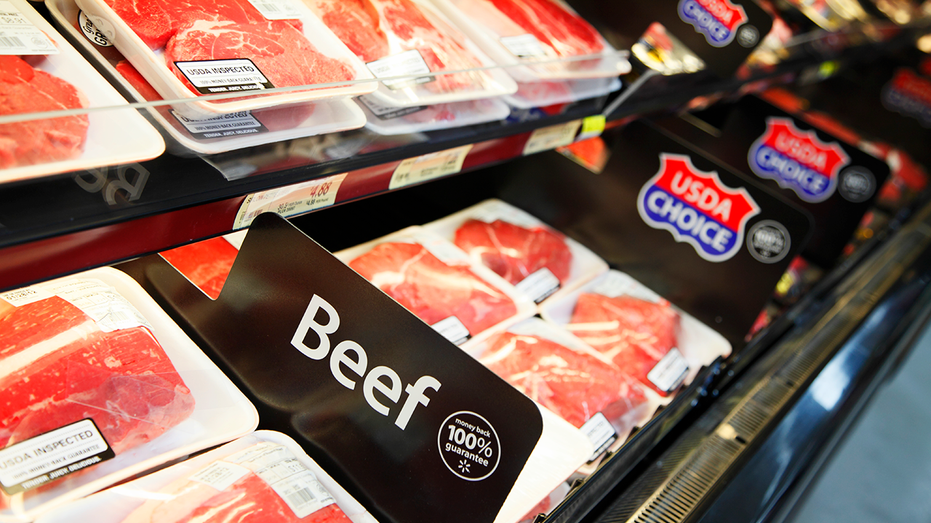
Beef on display at a grocery store in Chicago.(John Gress/Corbis / Getty Images)
Compounding the supply-side pressures, the administration notes that the USDA forecasts domestic beef consumption to continue increasing through the remainder of 2026. This sustained demand, even in the face of elevated prices, suggests a relatively inelastic market for beef, particularly ground beef, which remains a versatile and popular protein staple. The combination of declining production and rising consumption creates a widening supply-demand gap, exerting upward pressure on prices and necessitating alternative sourcing strategies.
This latest action follows a similar move earlier this year, where the 2026 quota for lean beef trimmings from Argentina was increased by 80,000 MT. The current 300,000 MT expansion is distinct and applies to “other countries or areas,” indicating a diversification of import sources. Potential beneficiary countries could include Australia, New Zealand, Brazil, and other major beef exporters capable of meeting U.S. quality standards and lean beef specifications. The global beef market is highly interconnected, and such a large increase in U.S. import demand could influence international pricing and trade flows.
The phased release of the additional quota is strategically structured: the first 100,000 MT will be available from September 1 through September 30, followed by another 100,000 MT from October 1 through October 30. The final tranche will open on October 31 and remain available until the quota is filled or November 30, whichever comes first. This staggered approach may be designed to prevent a sudden market shock while providing a sustained, albeit temporary, boost to supply through the critical holiday consumption period.

The U.S. cattle herd has fallen to its lowest level in 75 years.(Jonne Roriz/Bloomberg/Getty Images / Getty Images)
A novel aspect of this policy is the inclusion of a monitoring mechanism tied to pricing. The agriculture secretary and U.S. trade representative are directed to actively monitor whether beef entering under the additional quota is sold at prices at least 25% below the market price for lean beef trimmings. Should this discount not materialize, officials must notify President Trump, who retains the authority to eliminate any remaining increase in the quota. This clause serves as a direct accountability measure, attempting to ensure that the tariff concession translates into tangible savings for consumers and is not simply absorbed by importers or retailers. It also underscores the administration’s focus on observable price reductions as the primary objective of the policy.
CLICK HERE TO GET FOX BUSINESS ON THE GO
Market Impact:
The immediate market impact of this policy is likely to be multifaceted. For consumers, the intended outcome is a reduction in ground beef prices, particularly as the additional supply hits retail shelves in the fall. While the 300,000 MT represents a significant volume, the actual price decline will depend on the elasticity of demand, logistical efficiencies in import and distribution, and the ability of retailers to pass on savings. For domestic ranchers, the policy introduces increased competitive pressure, potentially softening cattle futures prices and further challenging their efforts to rebuild herds by depressing the economic incentive to expand. Retailers and food service providers, on the other hand, may benefit from greater sourcing flexibility and potentially improved margins, assuming they can secure these lower-tariff imports efficiently. Globally, the increased U.S. demand could support international beef prices, especially for lean trimmings, and strengthen trade relationships with major exporting nations. However, the temporary nature of the quota and the unique price monitoring clause introduce an element of uncertainty, suggesting that while designed for immediate relief, the long-term structural challenges of the U.S. beef supply chain remain paramount.