

Fox News legal analyst Gregg Jarrett and FOX Business correspondent Lydia Hu discuss the Supreme Court’s decision rejecting President Donald Trump’s bid to remove Federal Reserve Gov. Lisa Cook on ‘Kudlow.’
**Key Takeaways:**
1. **Threat to Fed Independence:** The renewed effort to remove Federal Reserve Governor Lisa Cook, backed by mortgage fraud allegations, represents a significant challenge to the Fed’s statutory independence, a cornerstone of market stability and credible monetary policy.
2. **Precedent for Presidential Power:** The ongoing legal battle, including the Supreme Court’s conditional ruling, will establish a crucial precedent regarding a President’s ability to remove “for-cause” appointees, potentially impacting the perceived political insulation of other independent agencies.
3. **Market Uncertainty & Policy Implications:** Prolonged political interference or the successful removal of a sitting governor could inject uncertainty into financial markets, raise questions about the future trajectory of monetary policy, and challenge the Fed’s ability to act solely on economic data.
President Donald Trump is reportedly renewing his push to remove Federal Reserve Governor Lisa Cook over mortgage fraud allegations. This move, coming amidst an ongoing legal debate over the President’s authority to dismiss members of the independent central bank, has ignited significant market discussion regarding the sanctity of the Federal Reserve’s autonomy and its profound implications for monetary policy credibility and broader economic stability.
The White House is seeking a response from Governor Cook within the next three weeks concerning the allegations that prompted an earlier, thwarted attempt at her termination. A letter from White House Personnel Office Director Dan Scavino informed Cook that the President is “considering removing you from your position” as a member of the Fed’s Board of Governors. The letter specifically alleges “sufficient reason to believe that you made false statements on one or more mortgage agreements” and demands a written response with an explanation and accompanying evidence within 21 days.
SUPREME COURT RULES ON TRUMP’S ATTEMPT TO FIRE FED GOVERNOR LISA COOK
This is not the first time the issue has surfaced. Trump initially announced his intention to fire Cook last summer, triggering an immediate legal challenge that quickly escalated. Earlier this summer, the Supreme Court delivered a narrow 5-4 ruling that allowed Cook to retain her role while the underlying case challenging her dismissal proceeds. Chief Justice John Roberts, writing for the majority, underscored the critical importance of “for-cause” protections afforded to independent agency officials. Roberts stated the court could not accept the administration’s argument that it possesses the unfettered ability to “remove a member of the Federal Reserve at any time, for any reason, without any notice before, and without any judicial check after.” Such an interpretation, the Chief Justice argued, “would turn for-cause protection into little more than at-will employment.”
Trump first attempted to fire Cook last summer, and the courts blocked that move while her legal challenge plays out.( Chip Somodeville/Al Drago/Getty Images / Getty Images)
The Chief Justice’s opinion highlighted the delicate balance between presidential appointment powers and the indispensable need for independent agencies like the Federal Reserve to operate without undue political interference. While the ruling did not delve into the factual merits of the allegations against Cook, it firmly established the legal standard under which any removal attempt must be evaluated. For market participants, this emphasis on due process and statutory protection for Fed officials is critically important. It reinforces the perception that monetary policy decisions are insulated from short-term political whims, a factor heavily weighted by investors assessing the stability and predictability of the U.S. economic framework.
Governor Cook, in a statement following the Supreme Court’s decision, vehemently denied the political nature of the allegations. She asserted that the case “was never about mortgage documents signed years before I became a Federal Reserve governor,” arguing instead that the President sought her removal using a “manufactured pretext” because she refused to allow politics to influence her monetary policy decisions. Cook further emphasized that the ruling “reinforced the traditional independence of the Fed, which she explained was a ‘principle that has underpinned sound economic stewardship for generations,'” and that her policy decisions are “guided by evidence and independent judgment, free from political interference.”
FED DISSENTERS WARN INFLATION COULD BECOME ENTRENCHED WITHOUT MONETARY POLICY TIGHTENING NOW
Her defense resonates deeply within financial circles, where the Fed’s independence is considered paramount for sound economic management and investor confidence. Any perception that Fed governors could be removed for policy disagreements rather than genuine misconduct could severely undermine the institution’s credibility, making it harder for the central bank to effectively manage inflation, maintain full employment, and ensure financial stability. In an environment where the Fed is currently navigating complex inflationary pressures and delicate interest rate decisions – with some dissenters already warning about the need for immediate monetary policy tightening – any question mark over its autonomy creates unwelcome volatility and complicates forward guidance.
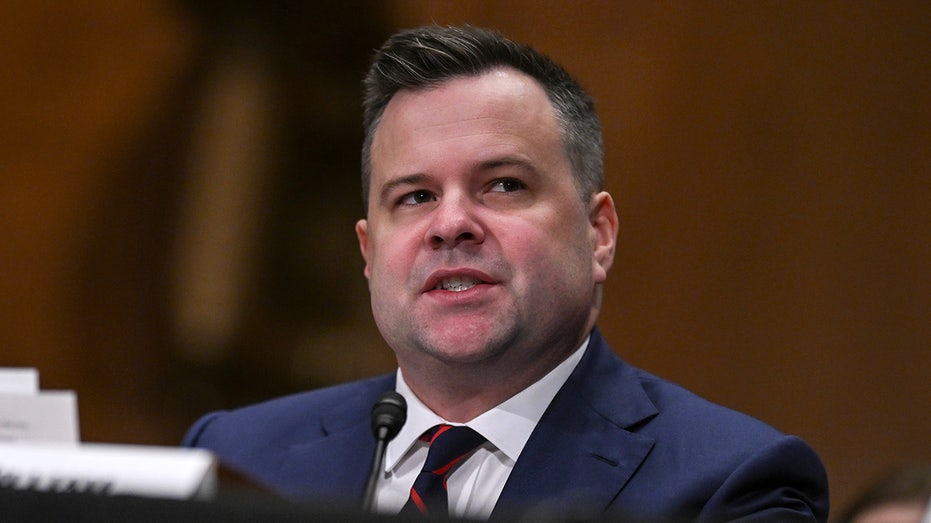
FHFA Director Bill Pulte submitted a criminal referral alleging Cook committed mortgage fraud last year.(Ricky Carioti/The Washington Post via Getty Images)
The mortgage fraud allegations against Cook originated from a criminal referral submitted to the Justice Department last year by Federal Housing Finance Agency Director Bill Pulte. Pulte, known for his outspoken criticisms of the Fed, had previously urged then-Fed Chair Jerome Powell to cut interest rates and even called for his resignation. This historical context adds another layer to the current situation, suggesting a pattern of executive branch pressure on central bank officials. It is worth noting that former Fed Chair Jerome Powell, after facing a Justice Department probe regarding a Fed renovation project (which was ultimately dropped), ultimately served out his term as Fed Chair, signaling the resilience of the institution against such pressures. This precedent highlights the high bar for removing a Fed official, a standard the current administration must now meet.
Scavino’s letter directly referenced the Supreme Court’s determination that Governor Cook is “entitled to notice of the allegations against you and an opportunity to respond prior to your removal.” This procedural requirement, now being followed, indicates the administration is attempting to navigate the precise legal framework established by the highest court, albeit with a renewed and determined effort to pursue Cook’s ouster. The outcome will not only determine Cook’s tenure but also set a critical benchmark for the limits of presidential power over independent agencies.
POWELL SAYS HE’LL STAY ON FED BOARD AFTER CHAIRMANSHIP ENDS BUT WON’T BE A ‘SHADOW FED CHAIR’
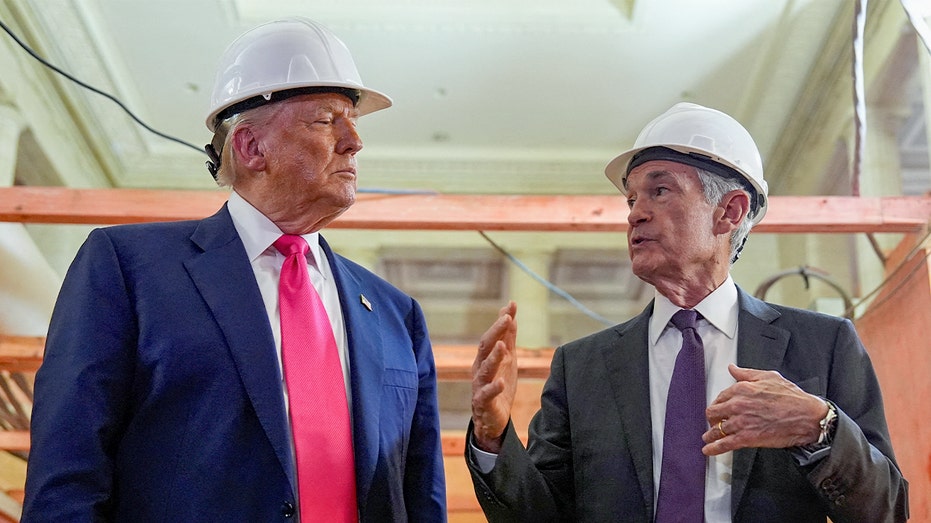
The Justice Department investigated former Fed Chair Jerome Powell over the central bank’s renovation project.(Kent Nishimura/Reuters)
The broader implications for the markets are substantial. The Federal Reserve, tasked with a dual mandate of maximizing employment and maintaining price stability, relies heavily on its perceived political neutrality to effectively execute monetary policy. When investors believe the Fed’s decisions are based purely on economic data and its statutory objectives, it fosters confidence, reduces uncertainty, and anchors inflation expectations. Conversely, any hint of political motivation behind personnel changes or policy influence can destabilize expectations, impact bond yields (as a risk premium may be demanded), equity valuations (due to increased uncertainty), and the dollar’s strength (as global investors reassess the stability of U.S. institutions).
GET FOX BUSINESS ON THE GO BY CLICKING HERE
**Market Impact:**
The renewed attempt to remove Governor Cook introduces an unwelcome layer of political uncertainty into financial markets. While the immediate impact might be contained as the legal process unfolds, the longer this saga continues, the greater the risk of eroding investor confidence in the Fed’s institutional integrity. Should Cook ultimately be removed, particularly if the grounds are perceived as politically motivated rather than genuinely legal, it could be interpreted as a significant victory for presidential power over central bank independence. This scenario could lead to increased market volatility, a measurable risk premium on U.S. assets, and a questioning of the Fed’s future ability to act decisively and independently in managing the economy. Conversely, if Cook successfully defends her position, it would reaffirm the strength of the Fed’s statutory protections, bolstering investor confidence in the central bank’s autonomy and its ability to pursue its mandate free from political interference. The market will closely watch the 21-day response period and subsequent legal developments for critical signals on the future trajectory of central bank governance in the U.S., particularly as the global economy continues to grapple with inflation and potential recessions.
This is a developing story. Please check back for updates.