
Key Takeaways for Investors and Businesses:
- **Short-Term Cost Relief vs. Long-Term Supply Issues:** The executive order offers immediate savings on fuel costs for heavy users like trucking and agriculture, providing a temporary buffer against high diesel prices. However, it doesn’t address the underlying structural challenges of global diesel supply shortages and constrained refining capacity, suggesting price volatility may persist.
- **Inflationary Pressures and Supply Chain Easing:** By reducing fuel costs for logistics and agriculture, the measure aims to alleviate inflationary pressures that have impacted consumer goods and food prices. Success hinges on widespread adoption and whether cost savings are passed through the supply chain.
- **Policy Risk and Implementation Complexity:** The temporary nature and reliance on state-level cooperation introduce uncertainty. Businesses must assess whether federal tax deferrals will convert to full waivers and if state excise taxes will follow suit, as inconsistent policies could create market distortions and operational challenges across different jurisdictions.
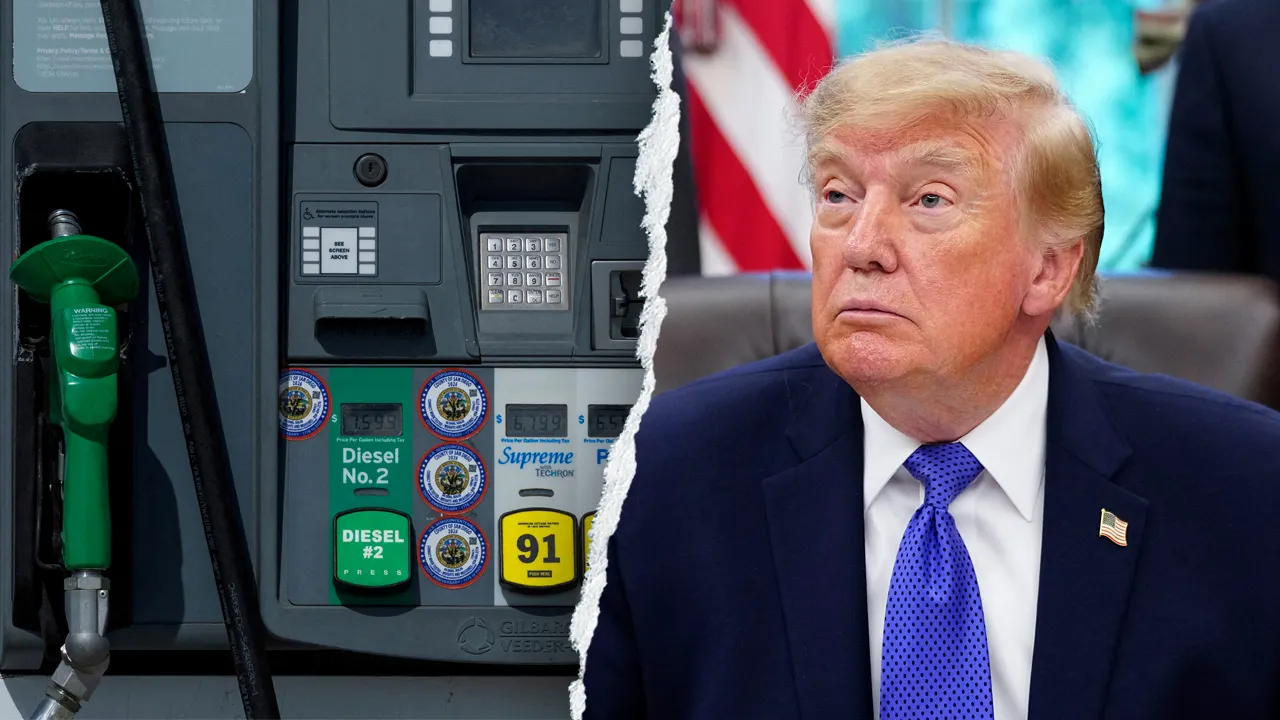
A newly signed executive order officially waives the off-road requirement for red-dye diesel. This allows anyone to purchase the fuel tax-free to lower costs.
Executive Order Targets Diesel Costs: A Market Analysis of Trump’s Fuel Relief Strategy
President Donald Trump has unveiled a significant, albeit temporary, intervention in the nation’s energy markets, signing an executive order designed to ease the burden of soaring diesel prices on critical sectors. This directive allows for the highway use of red-dyed diesel, typically reserved for off-road applications, and defers the federal excise tax (FET) on the fuel through year-end. While lauded by the administration as a direct path to lower costs for truckers and farmers, the move introduces a complex interplay of market dynamics, supply chain implications, and policy uncertainties that warrant close examination by financial stakeholders.
“They’re going to be very happy in about two seconds,” Trump remarked in Grand Island, Nebraska, signaling a policy aimed at immediate economic relief amidst persistent inflationary pressures. The White House projects potential savings of over $100 per refill for commercial vehicles, a figure that, while impactful for individual operators, underscores the scale of current fuel expenditures faced by the logistics and agricultural industries.
TRUMP TOUTS ACCESS TO 65 BILLION BARRELS OF VENEZUELAN OIL IN DEAL HE SAYS WILL SLASH GAS PRICES
A fuel pump at a Love’s gas station in Loxley, Alabama, on Thursday, Sept. 3, 2026. (Micah Green/Bloomberg/Getty Images / Getty Images)
Understanding the Financial Mechanics of the Diesel Order
The core of the executive order revolves around two mechanisms: granting highway access to red-dyed diesel and deferring the federal excise tax. Red-dyed diesel is chemically identical to clear diesel but is untaxed because it’s intended for off-road machinery, where it doesn’t contribute to highway infrastructure funding. The federal excise tax on highway diesel currently stands at 24.4 cents per gallon. For a typical commercial truck with a 300-gallon tank, this translates to nearly $75 in federal tax alone. The administration’s projection of “$100 per refill” suggests an assumption of additional state tax relief or an emphasis on larger fuel purchases, as the federal deferral alone would not reach that figure.
Crucially, the order *defers* the federal tax payment, rather than permanently waiving it. While the directive instructs Treasury officials to explore eliminating the deferred bill, this distinction creates a liability for businesses. Financial planning for trucking companies, for instance, must account for this deferred obligation, which could materialize as a significant, lump-sum expense if not ultimately forgiven. This uncertainty around future tax liability introduces a degree of financial risk for companies banking on these savings.
TRUMP’S DIESEL IDEA COULD HAVE UNLEASHED A PROBLEM AMERICANS NEVER SAW COMING

The record diesel prices come as President Donald Trump and Republicans campaign on affordability ahead of the midterms, creating a direct test of the administration’s promises to lower energy costs.(Andrew Harnik/Getty Images / Getty Images)
Macroeconomic Headwinds Driving the Policy Shift
The administration attributes the elevated diesel prices to a confluence of global and domestic factors. Restricted global diesel supplies, exacerbated by the ongoing Russia-Ukraine conflict and its ripple effects on energy markets, have tightened an already strained market. European nations, traditionally reliant on Russian diesel, have sought alternative sources, intensifying competition for available product globally. Domestically, limited refining capacity—a consequence of years of underinvestment, permanent refinery closures (some linked to conversions to renewable fuels or stricter environmental regulations), and deferred maintenance—has left the U.S. vulnerable to supply shocks. These structural issues highlight a persistent disconnect between demand growth and refining output, making the market highly sensitive to disruptions.
Diesel, often referred to as the lifeblood of the economy, directly impacts inflation. It fuels agricultural machinery, powers freight transportation (trucks, trains, ships), and drives construction equipment. High diesel prices translate directly into higher input costs for nearly every industry, subsequently pushing up consumer prices for everything from food to manufactured goods. The executive order is thus a direct attempt to mitigate these inflationary pressures by attacking a key cost component.
TOP ENERGY TRADER HAILS TRUMP’S VENEZUELA OIL DEAL AS A ‘GENERATIONAL WIN’ FOR GAS PRICES

A diesel fuel pump sits in a cradle at a gas station in Princeton, Illinois, on Wednesday, Sept. 23, 2015. (Daniel Acker/Bloomberg via Getty Images / Getty Images)
Sector-Specific Impacts and Implementation Hurdles
The primary beneficiaries—trucking, agriculture, and construction—are industries where fuel can represent 25-40% of operating costs. For the trucking industry, a significant reduction in fuel expense could improve already tight profit margins, potentially allowing for more competitive shipping rates or greater investment in fleet maintenance and driver retention. Similarly, farmers facing escalating costs for fertilizer, seeds, and labor could see some relief on the fuel front, which could temper rising food prices.
However, successful implementation faces hurdles. The order directs the Transportation Department to coordinate with states, industry leaders, and labor organizations, and the Agriculture Department to ensure supply for farmers. A major challenge lies in state-level excise taxes, which often exceed federal rates. Without corresponding action from individual states to waive or defer their own diesel taxes, the overall savings for businesses will be significantly less than the headline figures suggest. The potential for a patchwork of state-level policies could create logistical complexities and competitive imbalances for carriers operating across state lines, potentially leading to market inefficiencies or even instances of “fuel tourism” where truckers seek out states with lower effective diesel prices. The mention of the Treasury Secretary consulting with the “Secretary of War” in the original directive, while anachronistic, may underscore the administration’s view of energy security as a critical national defense issue.
TRUMP JUST BROKERED A DEAL WITH THE COUNTRY SITTING ATOP THE WORLD’S LARGEST OIL RESERVES
Former Energy Secretary Dan Brouillette discusses falling oil prices and President Donald Trump’s energy agenda on ‘Kudlow.’
Complementary Measures and Broader Energy Strategy
This diesel order is part of a broader administration strategy to combat high energy costs. Previous actions include a Department of Transportation waiver allowing truck drivers hauling gasoline and diesel to drive additional hours, aimed at addressing labor shortages and improving supply chain fluidity. Furthermore, the White House also mentioned a recent agreement with European allies to release 100 million barrels of refined diesel from strategic reserves over the next four months. This coordinated release, if executed effectively, would provide a direct, albeit temporary, boost to global diesel supply, complementing the tax relief measure.
From a market perspective, these measures signal a proactive, if reactive, approach to energy policy. While they provide short-term relief, they do not fundamentally alter the long-term supply and demand dynamics of the global oil market or address the structural issues underpinning refining capacity. Investors in the energy sector will be watching to see if these temporary interventions pave the way for more sustained policy shifts or simply defer more difficult decisions. The political context, with Trump using the signing to critique previous administrations, highlights how energy policy often becomes a battleground for electoral advantage, potentially adding another layer of uncertainty for long-term strategic planning in the energy sector.
CLICK HERE TO DOWNLOAD THE FOX NEWS APP
Market Impact
The executive order is poised to have a varied market impact. In the short term, trucking and logistics companies, along with agricultural producers, could see improved margins and operational cost reductions, potentially reflected in their earnings reports. This could offer some relief to consumer discretionary spending by easing freight costs embedded in product prices. However, the temporary nature of the tax deferral and the dependency on state-level cooperation introduce significant uncertainty, potentially limiting long-term investment decisions based solely on this policy. Energy markets may see a marginal easing of demand pressure, but the underlying global supply crunch and refining limitations mean that diesel prices are likely to remain sensitive to geopolitical events and crude oil fluctuations. Overall, while a welcome reprieve for specific industries, this measure serves as a temporary band-aid rather than a cure for the systemic energy market challenges, warranting caution from investors seeking sustained relief.